
Animating the World Around You
On work from India, China, Hungary and beyond.
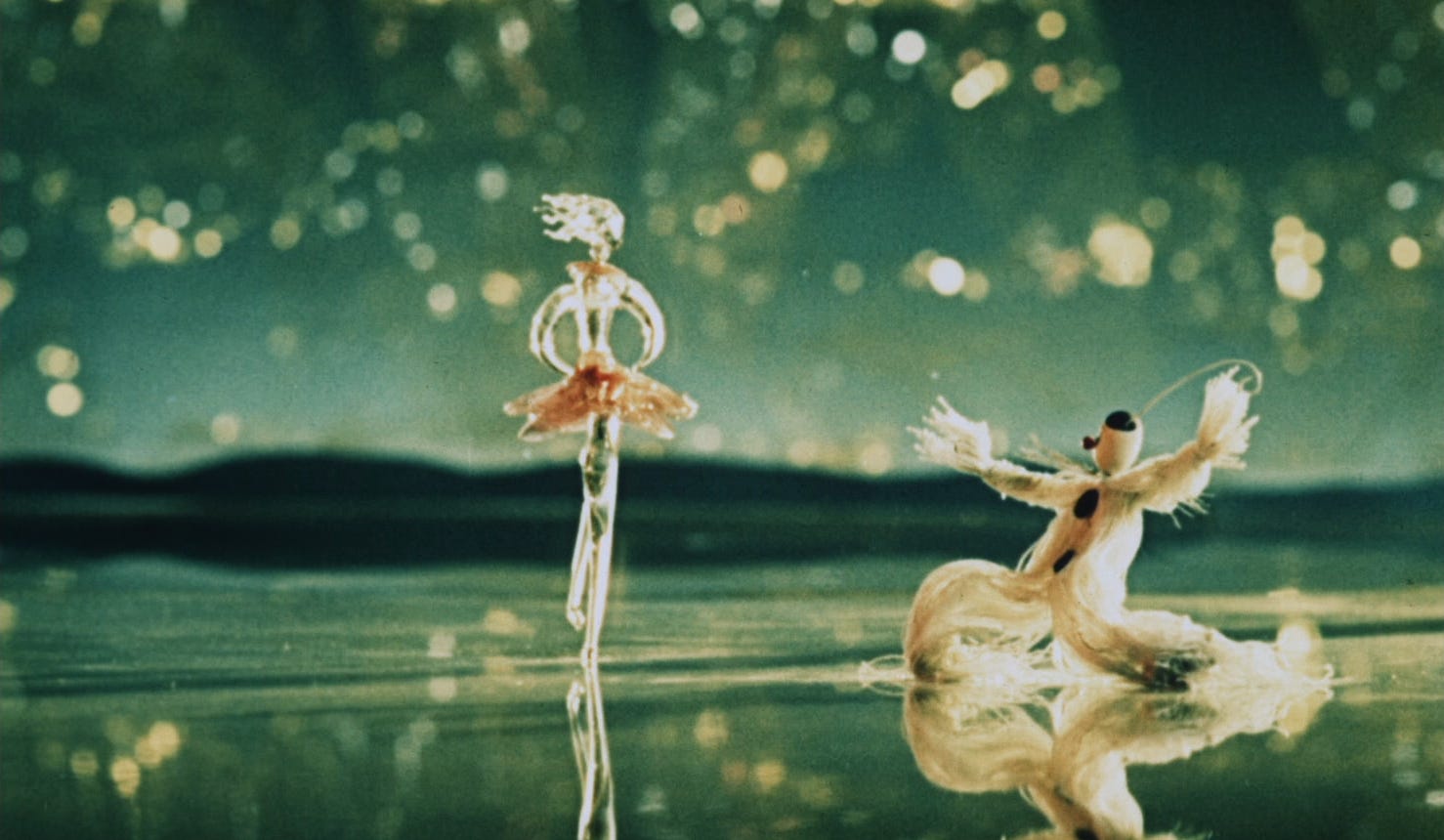
Welcome! Thanks for checking in. We’re back with more from the Animation Obsessive newsletter: our first Thursday issue of the year. This time, we’re looking into stop motion, and its unique way of reflecting the world.
Late last year, an article hit our radar. In Search of Our Own Voice is its title — and its argument is a fiery one, designed to make noise. The piece, which comes from India, alleges that young Indian animators borrow too much from America and Europe. It makes the same case about animators in multiple countries across Asia.
Again, the claim is incendiary. But the author’s name carries serious weight: he’s Suresh Eriyat, founder of Eeksaurus. His team does amazing, widely loved films like Seen It! and The Legend of Arana. So, his decision to write this is a big deal. Here’s how he puts it:
Asia is a continent overflowing with authenticity. Diverse languages, rituals, colors, food, emotions, habits, socio-cultural lineage and histories, all existing simultaneously. But when I see [Asian] student films today, that magic feels strangely diluted.
The music sounds Western.
The character designs feel European.
The emotional tone is restrained, even when our cultures are anything but restrained.
When we see a film now, we can often identify exactly which Western master the student has studied and echoed. The references are clear. And in that clarity, something of ours disappears.
And I find myself asking: why are we looking so far [away] when everything we need is already around us? Yes, our world may seem messy. Too colorful, too emotional, too sentimental, too layered. But that clutter is us.
Eriyat stresses that this “isn’t nationalism.” There’s simply value in local culture: “storytelling in a language that naturally flows through us.” It’s what you find in Japanese and Chinese animation, Eriyat feels. Elsewhere, he sees young artists catering to the world stage, like the Oscars, by adopting styles from Europe and the States in place of the “purity and authenticity” of the local.
Toward the end, he phrases it bluntly. “The world doesn’t need Asian films that resemble Western ones,” he writes. There’s more to the piece beyond that — we recommend reading it in full.
Eriyat’s beliefs are strong, and not everyone will go as far as he does. What’s impossible to doubt, though, is that he’s following his own code in his work.
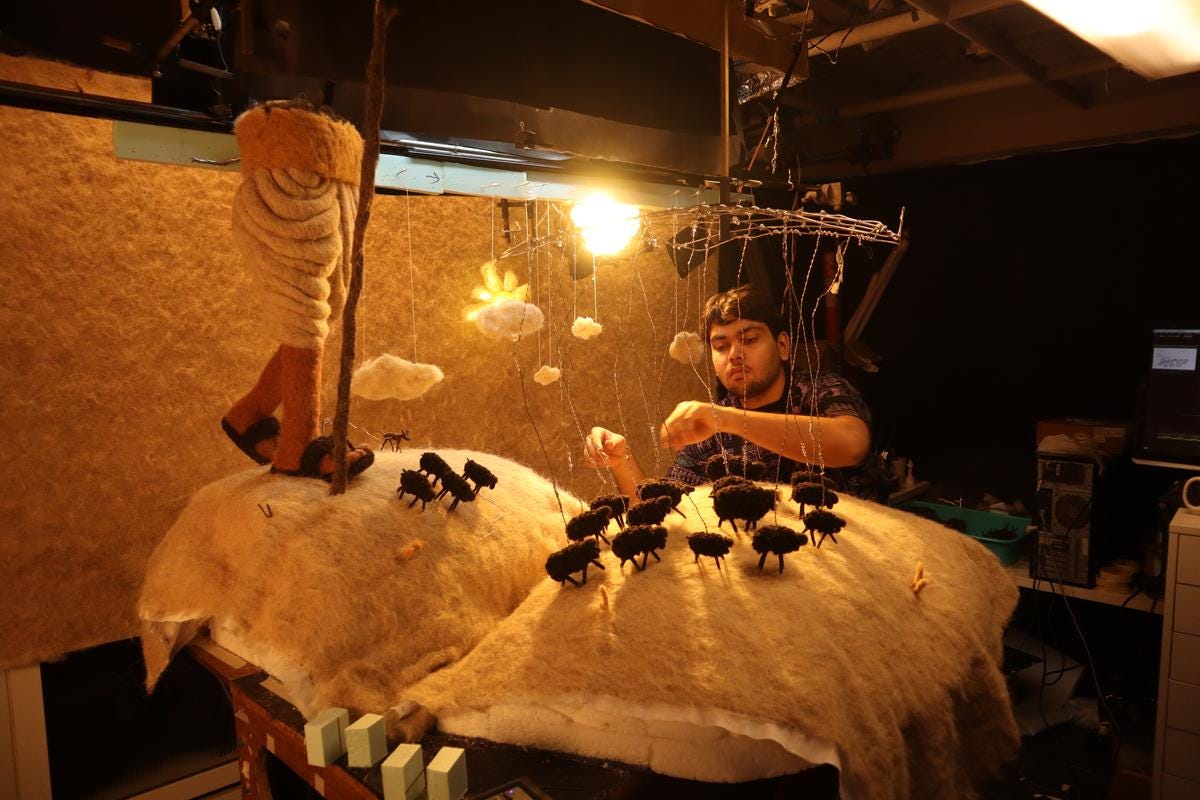
You might know his Desi Oon, among the most awarded films of 2025, and one we’ve praised often. Here, Eriyat and his team created a tribute to sheep and wool from India’s Deccan region. And they did it with stop motion, a form with an unusual power to put local things straight on screen.

Keep reading with a 7-day free trial
Subscribe to Animation Obsessive to keep reading this post and get 7 days of free access to the full post archives.