
The Serious Cartoon
On the faulty propaganda of 'Animal Farm.'
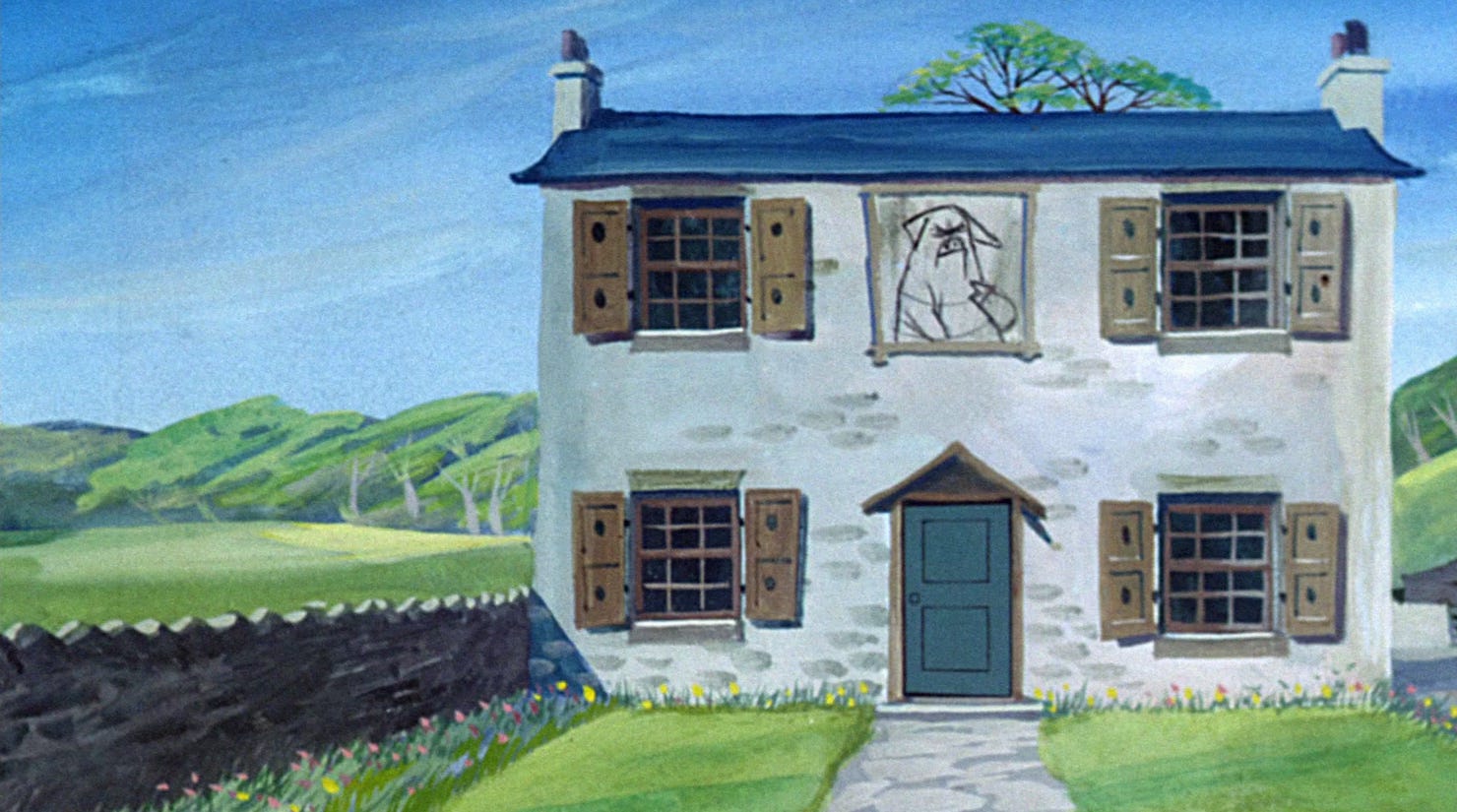
Welcome! Thanks for joining us. It’s another Thursday edition of the Animation Obsessive newsletter — all about a British classic.
By now, it’s clear that the latest Animal Farm has bombed in theaters and with critics. If nothing else, though, it’s put a different adaptation of the story back in the news. Variety, The Telegraph and The New York Times, for example, all recently brought up the Animal Farm from the 1950s.1
It was Britain’s first commercial animated feature. For years, it was celebrated. When it appeared in 1954, not many animated features existed at all, anywhere — and this one was unusual even then. Adapting George Orwell’s story required it.2
In the words of author Roger Manvell, who chronicled the production:
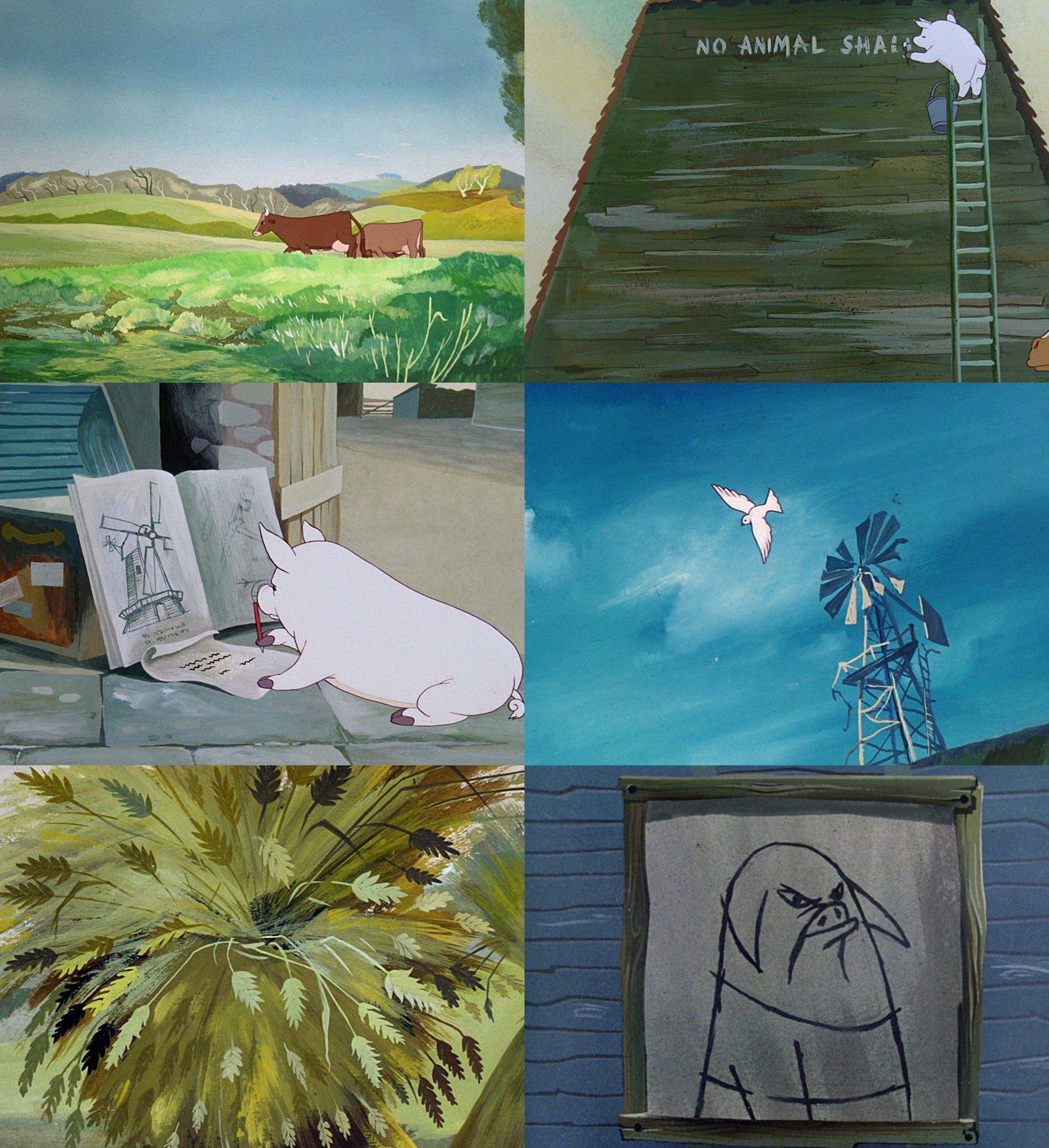
To turn this satire into an animated film was to face the issue of dramatizing an animal story in which the characters must be as seriously portrayed as in a human story. No animal could be sentimentalized for the sake of box-office ... Once this story was selected, a new kind of cartoon film was to be made — a serious cartoon. A style of presentation in sound and image must be evolved to interpret this on the screen.
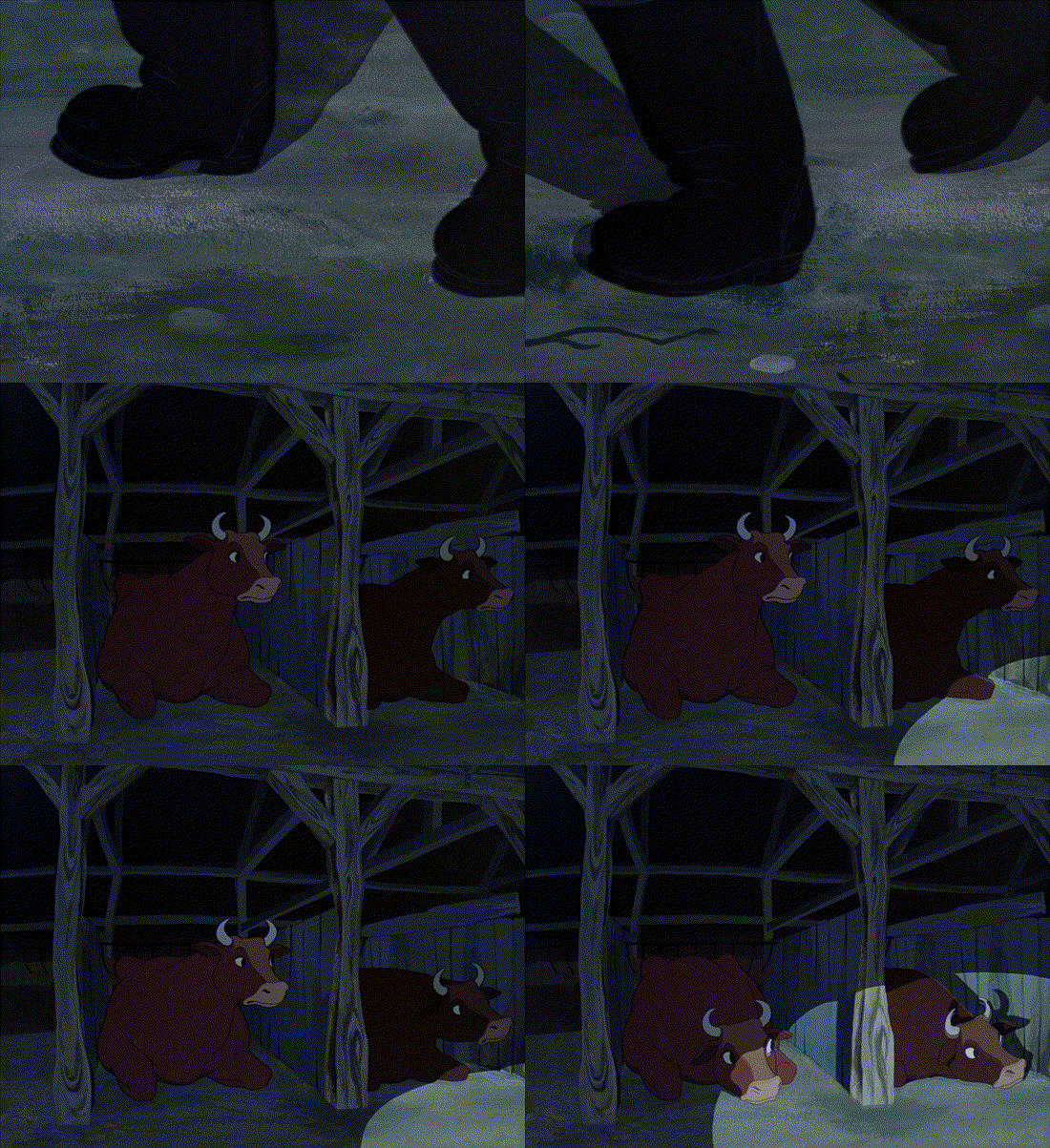
The result is dark and has a pointed message. For all its Disney elements, it doesn’t feel like a Disney film. This is a fable about a people’s uprising, and the overthrow of capitalism for communism — and the turn of communism toward dictatorship. That’s daring material to animate even today, judging by the edits to the new Animal Farm.
Still, a shadow hangs over this earlier adaptation.3 The story emerged a few decades ago: part of its budget was supplied by the CIA, and the agency influenced the project. Since then, the film has often been written off. Reviewing the recent Animal Farm, The New York Times dismissed the first animated version as something actually “produced by the CIA.”
In reality, artists were behind it. The masterminds of the 1954 Animal Farm were directors Joy Batchelor and John Halas, whose company Halas and Batchelor mattered a lot, despite its obscurity now. One historian noted that it “almost singularly defined British animation until the emergence of Aardman.”4
Batchelor and Halas were caught in a complex political moment, but they weren’t simply Cold War tools. And their Animal Farm is just as complex as the time in which it found itself. It deserves a serious look even now.
Keep reading with a 7-day free trial
Subscribe to Animation Obsessive to keep reading this post and get 7 days of free access to the full post archives.