
Congolese Animation That Needs to Be Seen
Sharing a film we love, plus news.
Welcome! This is a new Sunday issue of the Animation Obsessive newsletter — one that’s been in the works for most of 2026. Here’s the slate:
1. A release of Machini.
2. Animation newsbits.
3. The last word.
Now, let’s go!
1. Material and message
Around five years ago, at a festival, a certain film wowed us. The freshness and ingenuity of it were almost startling. Since then, we’ve waited for a wide release online — to give everyone a chance to see what was achieved here.
The wide release never came. Not, at least, until today.
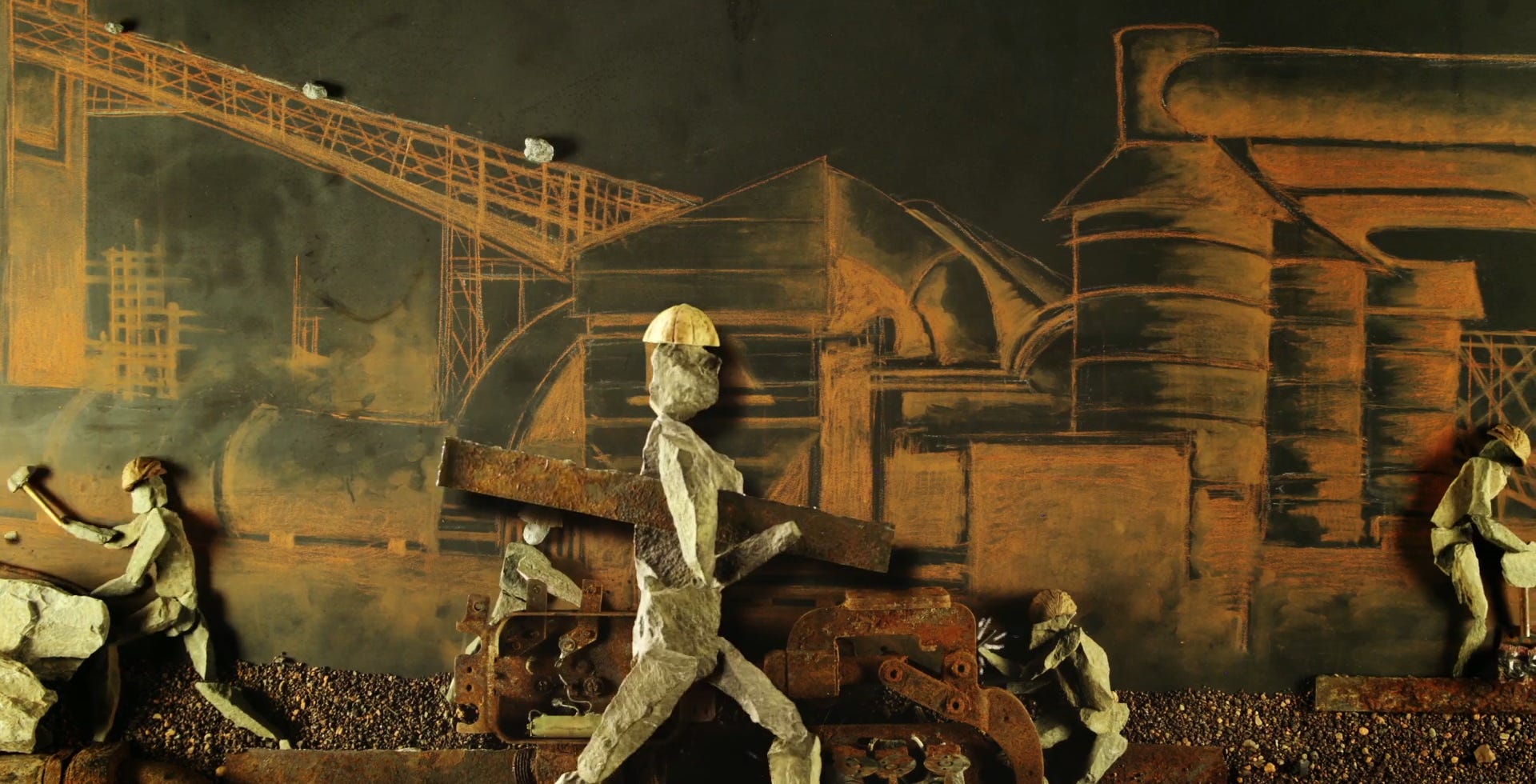
We’re talking about Machini (2019), created by Frank Mukunday and Tétshim, artists from the Democratic Republic of the Congo. The two specialize in animating with stones, chalk, scrap and other found materials, and their work is unlike anything we’ve seen elsewhere. It’s beautifully done and deserves more eyes.
So, in early 2026, we began sending emails. Thanks to the kind cooperation of the directors and Atelier Graphoui, where they animated Machini, we’re thrilled to bring you the film and a little insight into how and why it exists.
Courtesy of Twenty Nine Studio and Atelier Graphoui, you can watch Machini via the embed below for the next two weeks. For the story behind the film, read on.
Machini is about the Democratic Republic of the Congo (for short, the DRC). More specifically, it’s about the Katanga area. Frank Mukunday and Tétshim work there, in the large city of Lubumbashi.
Katanga has long been polluted. In his youth, Mukunday lived close to a disposal site for the Gécamines mining company. Around the time of Machini, the neighborhood that Tétshim’s family called home was an “acid-eaten” place. The DRC is copper-rich, and its reserves of lithium and cobalt are key components in modern batteries. Machini tells of the mining and extraction of these things.1
Because officials didn’t stop the pollution, Mukunday and Tétshim decided to make a film about it. “Choosing this theme is our cry of revolt,” they tell us by email, “against the human and ecological tragedy affecting our loved ones in neighborhoods polluted with toxic waste by mining companies.”
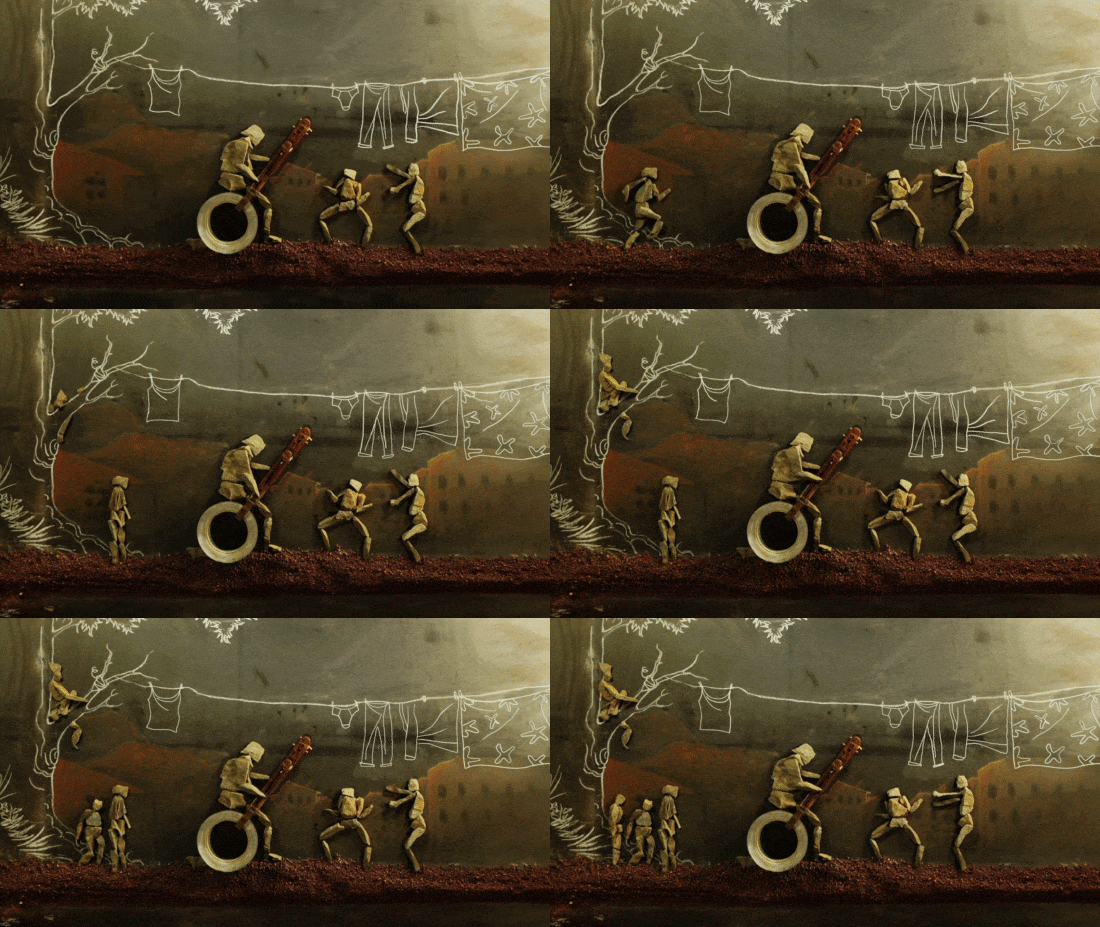
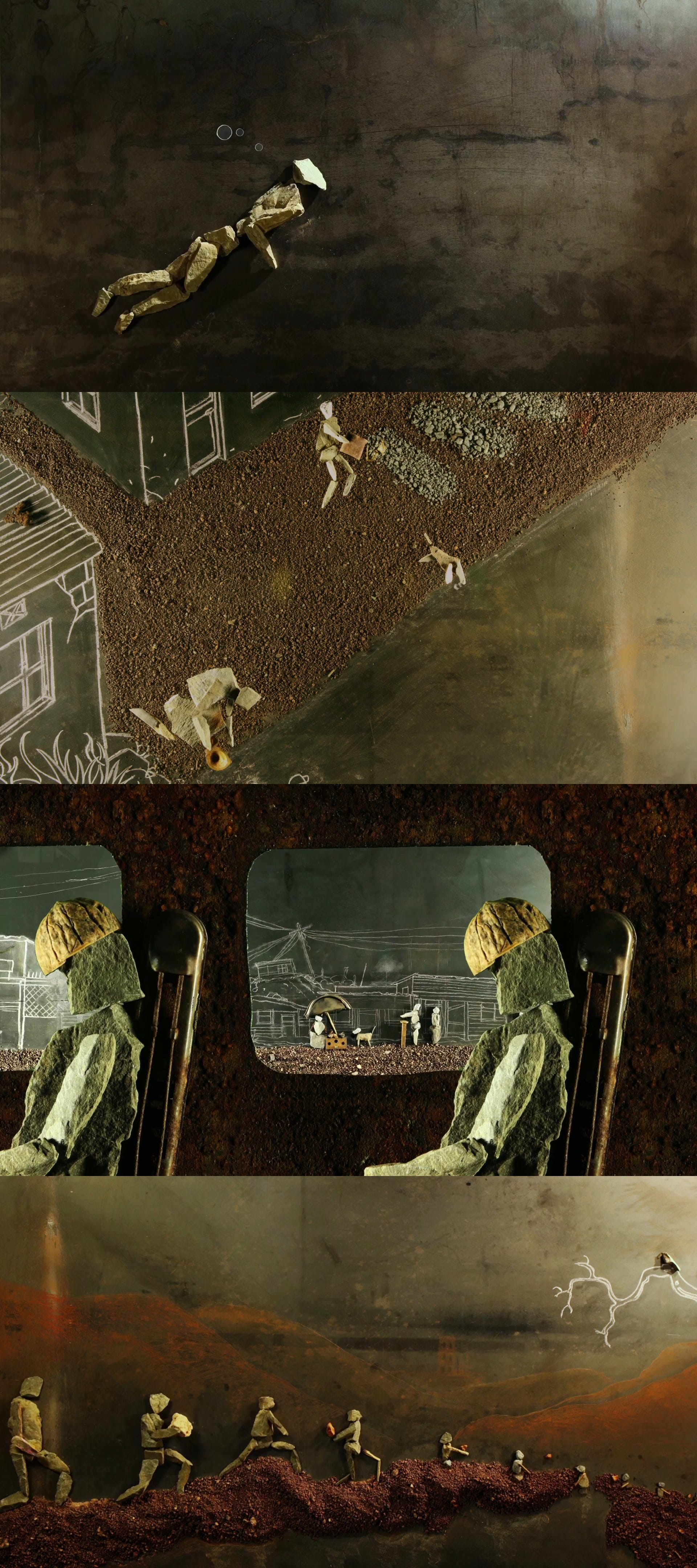
In Machini, you find stone people living beside a chalk-drawn river, with chalk houses and chalk trees in the background. The world is a collection of optical illusions; there’s always some visual trick on screen. Then you come upon the factory, and its poisonous green smoke and sludge. The film’s title refers to this factory: “a giant machine” that consumes the town.2
Machini’s main material, the rocks, came from Lubumbashi. “We started by gathering stones directly from the streets, specifically around the neighborhood of the Gécamines (Générale des carrières et des mines) factory,” they explain.
The idea was to use “the very elements of [their] exploited land to tell its story,” to let “the soil of Katanga speak.” Stones become human-shaped characters who move with an incredible sense of life. This is symbolism, the directors add: the rocks reveal a human “presence that cannot be erased,” despite the circumstances.
Their view is that “the material is the message.” What these stones say, by nature, is unique to these stones.
Mukunday and Tétshim started animating together during the 2000s. Both studied communication in college; they had to teach themselves animation, helped along by guides on YouTube.3
Their earliest attempts ran into roadblocks. “We had neither the equipment nor the assistance to locate funding,” they’ve noted before. “Technically and economically, we were at an impasse. ... [I]t was absolutely necessary for us to find a form of language that was both simple and original.”4
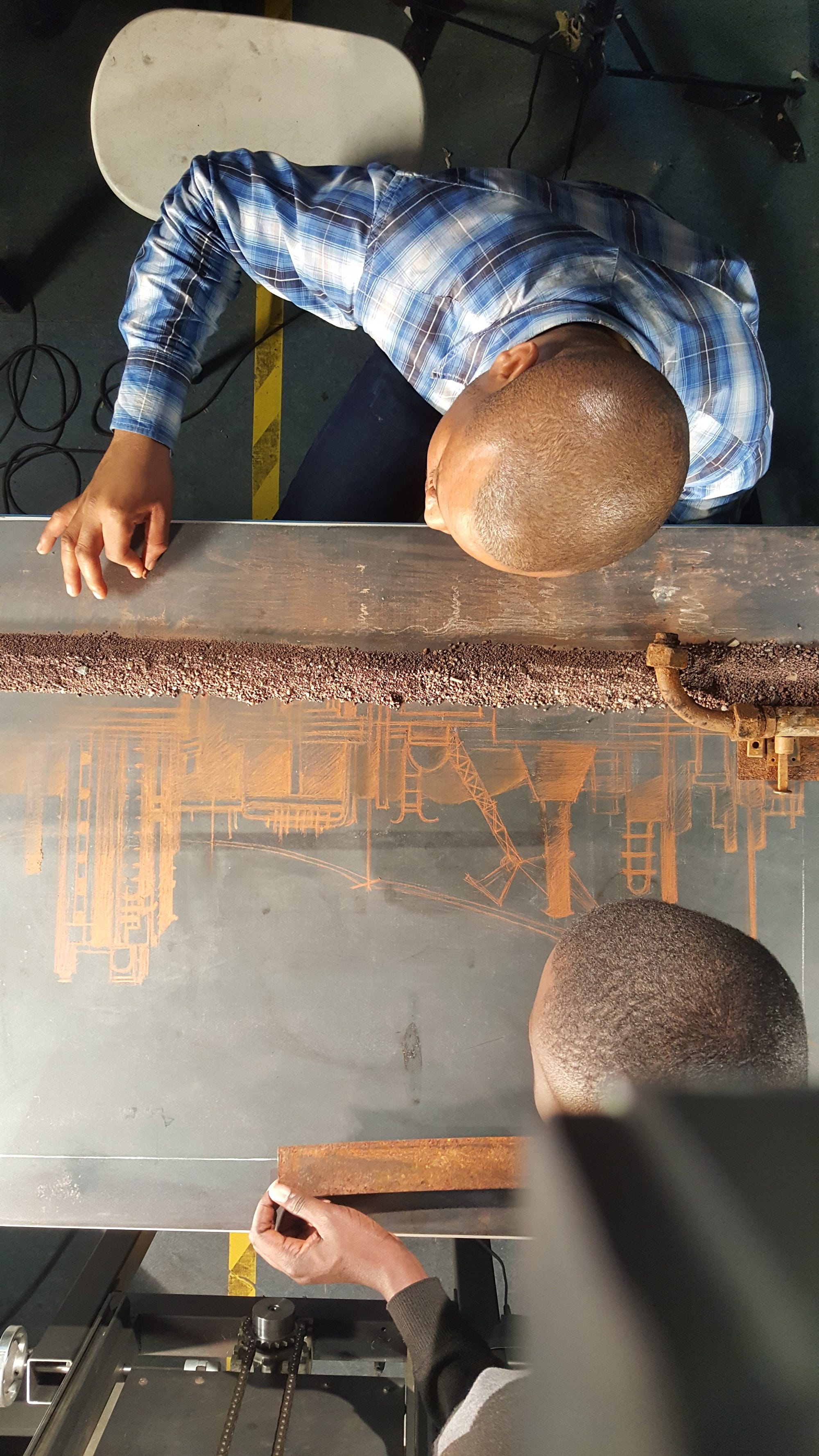
Finally, they discovered “the bas-relief stop-motion technique,” which allowed them to animate rocks on flat surfaces.5 Their first test from 2010, Cailloux (watch), is an action story about a stone man who defeats and absorbs all comers, until a tiny opponent beats him. Mukunday and Tétshim shot it in one night with a borrowed camera and — because they didn’t have electricity at the time — candles for light.
In 2015, they released Kukinga (watch), made with the same stones-and-candles method. It’s an ambitious, Kill Bill-esque tale that follows a mother’s relentless fight to save her child. As with Cailloux, the budget was basically nonexistent.6 But it also shares with Cailloux a real understanding of motion, and its storytelling and filmmaking are strong. The directors’ abilities were obvious.
With Machini, their third film, Mukunday and Tétshim had a breakthrough. As they write:
The production was made possible through a Belgian-Congolese collaboration. The initial contact came through Rosa Spaliviero, a Belgian-Italian friend who heads the production company Twenty Nine Studio. She connected the project with another key player: Atelier Graphoui, based in Brussels.
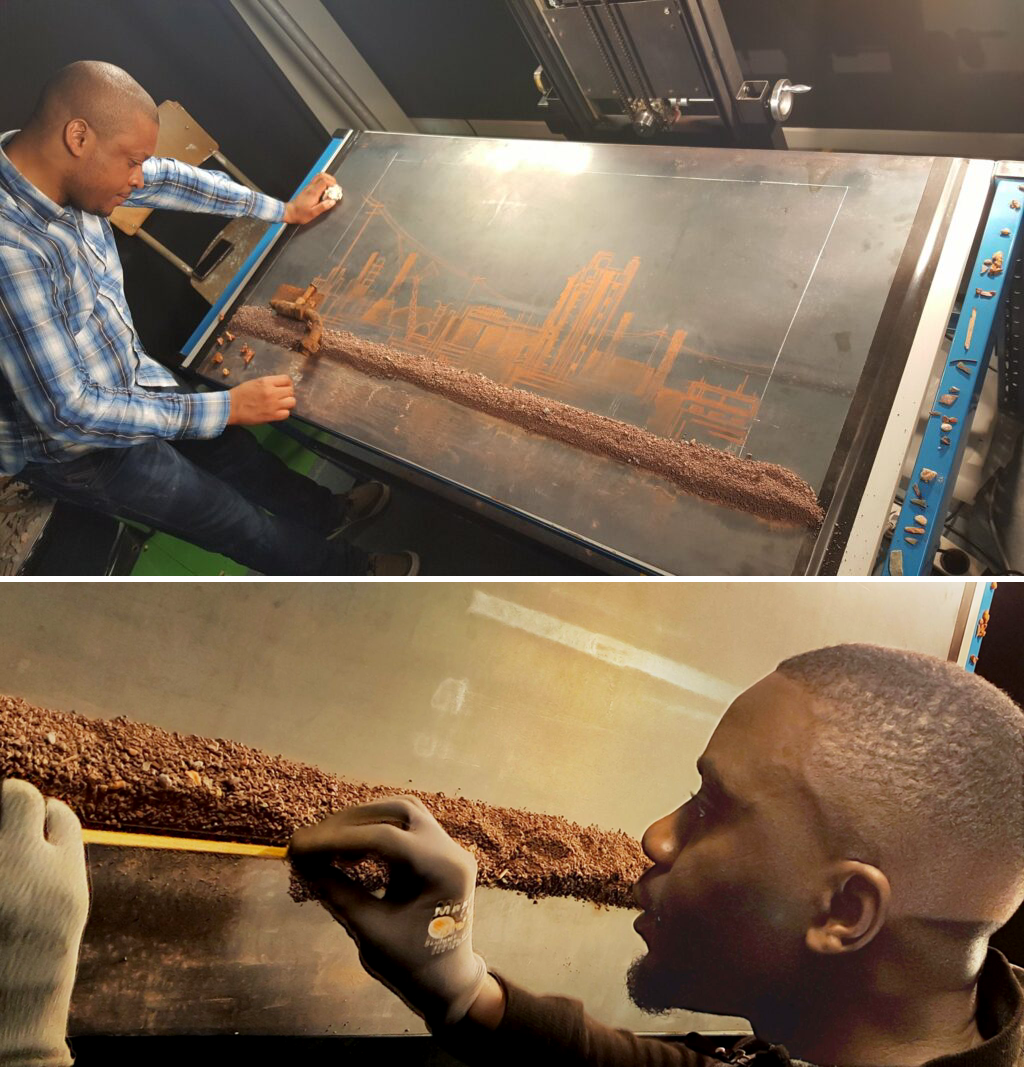
Atelier Graphoui gathered funds, and Machini became the directors’ first film to have “professional production conditions.”7 They created it during residencies at Graphoui in Brussels, and the studio’s equipment and mentorship let them shine.
For Machini, stones from Lubumbashi were paired with objects from the directors’ surroundings in Europe. “Once we arrived in Belgium, we completed our toolkit with other salvaged materials found on-site,” they tell us. Brand-new objects weren’t needed: they wanted “texture,” things with “a history within them.”
This assorted stuff became film sets, and the hope for each shot was an emotional connection with the viewer — not just an experiment in form. They “built the scenes almost like sculptures before animating them frame by frame.”
All together, around four years went into Machini, most of which weren’t dedicated to the animation part. As Mukunday and Tétshim explain:
The shoot lasted four months in total, but it was disrupted by several forced interruptions. Our stay in Brussels was dictated by short-stay visas, which forced us to take breaks and deal with administrative pauses. This required us to work through parts of the weekends and generated periods of great stress, intense fatigue and sometimes doubt.
The “almost therapeutic” experience of turning rocks and scrap into a film, seeing them move, helped to keep Mukunday and Tétshim going. They were getting results. Paired with Tétshim’s wonderful chalk animation, already so effective in Kukinga, the look was special.
It built up to:
… the “Work in Progress” screenings of our work in Brussels. Discovering the audience’s live reactions and seeing the emotion translate across the screen without needing dialogue was an immense reward.
The earlier Mukunday and Tétshim films had some success — Kukinga even landed on a DVD of African shorts. But Machini won prizes from Kenya to Canada to Spain. Its victory at a major Polish festival humbled the two directors. “[W]e hope that this trophy will give a lot of hope to Congolese filmmakers in general,” said Tétshim. By then, with Machini done, they were back in the DRC.8
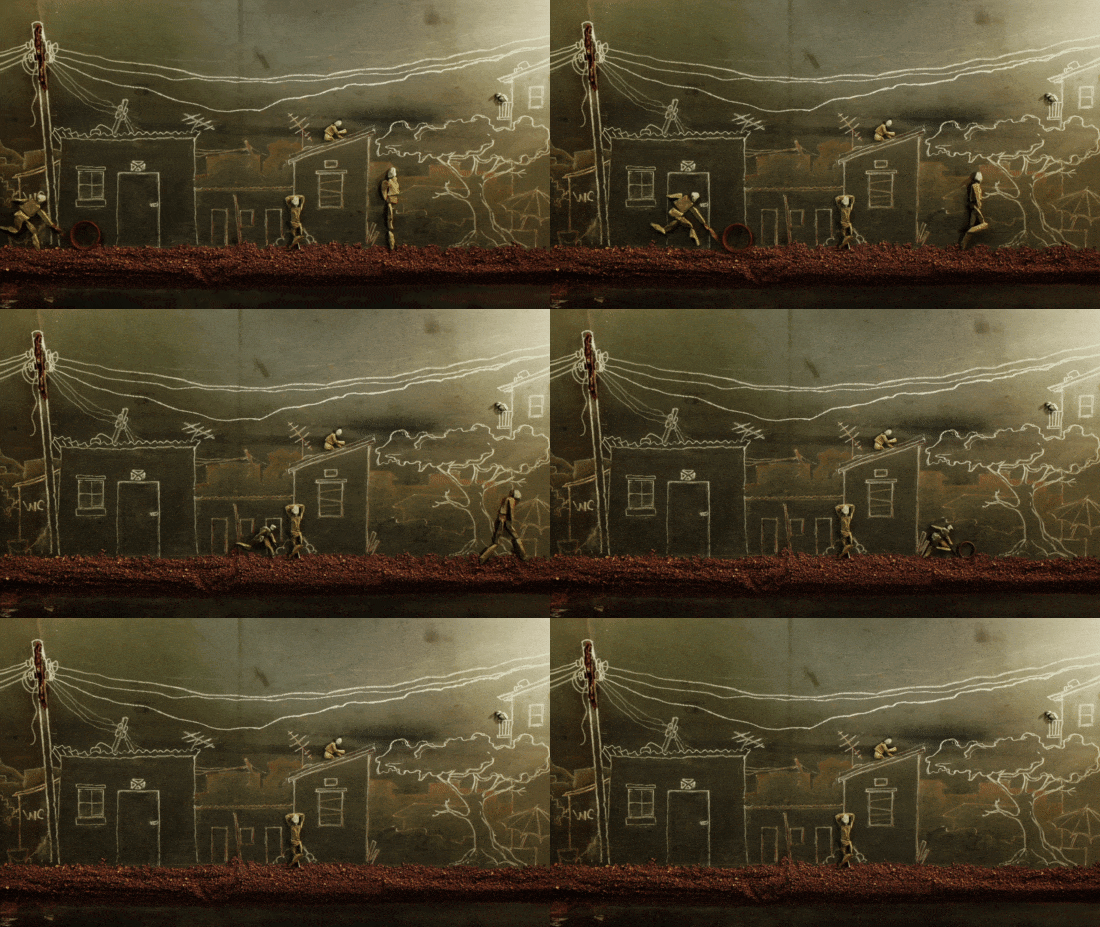
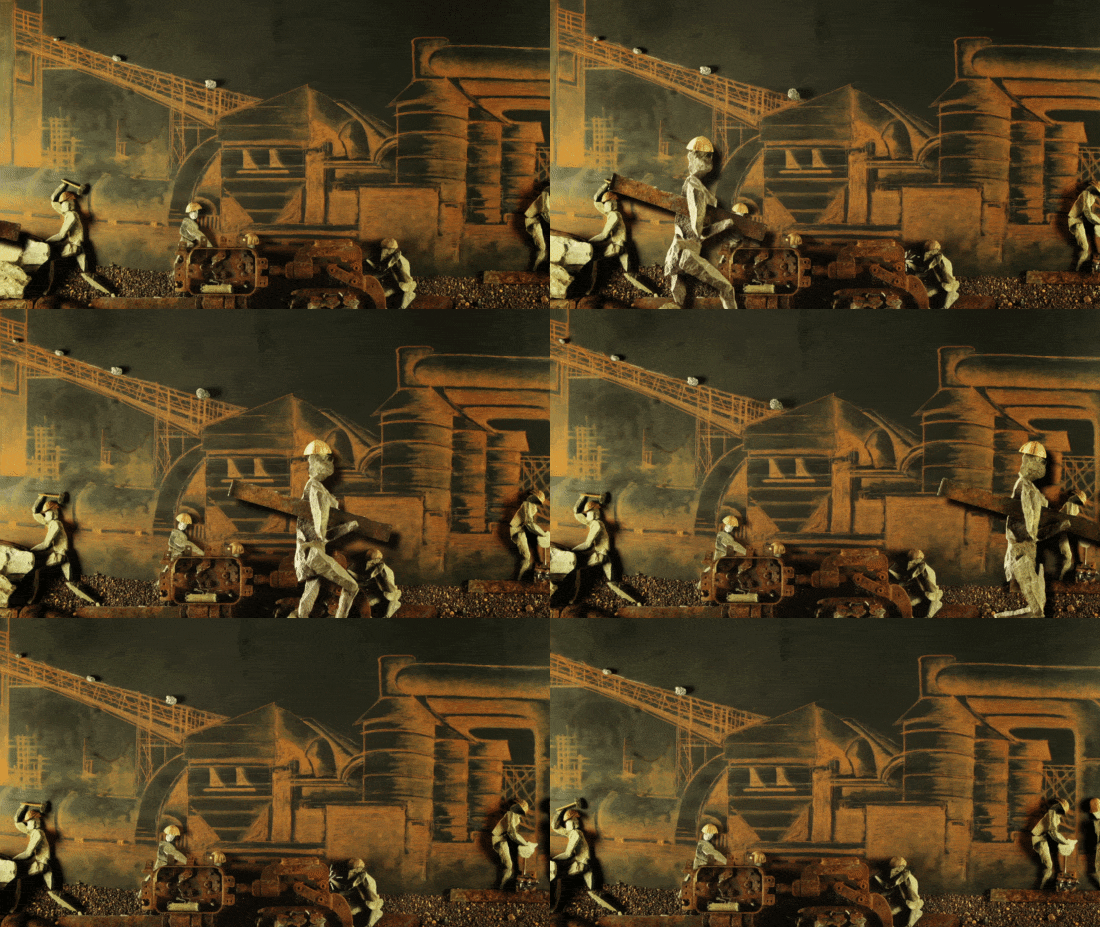
For our part, Machini hasn’t left us in five years. It’s very, very good, and one of the most visually inspiring shorts of recent times. Getting so much energy out of rocks, chalk and junk metal — attaching emotion to this stuff — isn’t something you just do. Most haven’t. But Mukunday and Tétshim did.
They’re continuing to do it. At the Annecy Festival last year, the two pitched their new film, Kesho, and we loved what we saw. They’re still using their stone technique, still speaking about the conditions in the DRC — in other words, still sticking to this path that they’re still cutting for themselves. They tell us:
For [Kesho], we are drawing inspiration from the reality of Kolwezi, a mining town where the earth and the daily lives of its inhabitants are literally shaken by industrial activities. Through this work, we want to explore the dignity and resilience of those who, despite everything, continue to envision a future.
We’re looking forward to Kesho, and can’t wait for the project to get the support it needs.
In the meantime, it’s an honor to present Machini to a few more people. Thanks again to Graphoui, Mukunday and Tétshim for their openness to this idea. We hope you’ll take a moment, during the two-week release window, to enjoy their fantastic film.
2. Newsbits
In America, Jonni Peppers posted a clip of her new series Field Notes from the Orphanage, due on YouTube in August. We’re excited.
The Mexican film I Am Frankelda appeared on Netflix worldwide. Coinciding with its release, Cartoon Brew did a great interview with the Ambriz brothers, featuring behind-the-scenes art and photos.
In Cuba, an article digs into the state of the country’s animation industry. America’s long-standing embargo makes it tough to get new computers or to distribute films, and the oil blockade is now leaving just “three or four hours of electricity per day,” hugely expanding animation schedules and costs.
In China, director Yu Shui says that planning is underway for a sequel to his film Nobody.
The theatrical release of The Amazing Digital Circus opened to $36.6 million worldwide last week. This weekend, its revenue in America rose to $29 million, according to Deadline.
Watermelon Rind Boats, a Russian animation outlet new to Substack, is sharing a vast trove of older interviews and films, and adding new ones.
The American business Crunchyroll has become “the most prolific investor in anime productions, participating in more production committees than any other company, Japanese or otherwise,” reports Animenomics.
In France, calls to shut down the CNC (which provides state funding to films) have led the agency to defend itself. A new release of data reveals that the country’s state-backed films are, in fact, slightly profitable on the whole.
Two British animation legends, Peter Lord and David Sproxton of Aardman, were knighted.
Last of all: we wrote about the origins of master animator Yasuji Mori.
3. Last word
Hope you’ve enjoyed today’s issue! We’re wrapping up with personal comments from the two of us:
John: Now that I Am Frankelda is streaming in most countries, we got to rewatch it for the first time since Annecy 2025. I’d heard that the team revised the film for its theatrical release — cutting out and newly shooting quite a bit — and was excited to see the changes. What I didn’t expect was such a tighter, clearer and more propulsive story. It’s kind of a different film, and an even better one. Cinema Fantasma (and Guillermo del Toro, who consulted on the edits) did excellent work, and Frankelda is now, safely, one of my favorites of the 2020s.
Jules: On the topic of Frankelda (which I also loved), I was amazed by the freewheeling approach the movie takes to its visuals. While watching, it felt like what they filmed was often treated as raw material to manipulate, like the scenes where colors are so drastically hue-shifted or increased in saturation that they distort. There were images they wanted to create, and the sterilizing fear that the effect wouldn’t look “perfect” didn’t stop them. It’s a way of making art I have a lot of affinity for, and — when combined with the detail of the sets and clothing filmed at such high resolution — it adds up to that feeling of overwhelming detail, texture and vibrancy that makes the visual experience of the movie so incredible.
Until next time!
See Le Monde Afrique (used a few times) and Abir Pothi.
The quote comes from “Studiovisit Tétshim,” a video published by Popular Images. Tétshim used this language of consumption in a video for Annecy.
This quote comes from the 2025 MIFA pitch document for Kesho, put together by Le Lokal Production. It provided several details about their early work.
From Studiovisit Tétshim.
Kukinga’s budget and story were discussed on this Afrika Filmfestival page.
Quote from this Africalia page.
See this video for the quote. The full list of Machini’s awards can be seen here. Meanwhile, the DVD that includes Kukinga is Animation Indépendante Africaine (Volume 2).
The ingenuity of Africans never ceases to amaze me 😊
Beautiful! Can you reshare the link perhaps? The embedded link doesn't work. ✨