
Welcome! It’s another Sunday edition of the Animation Obsessive newsletter, and this is the plan:
1. The importance of Japan’s early animated TV ads.
2. Animation newsbits
3. The last word.
With that, let’s go!
1. Commercial art
There’s been Japanese animation for more than a century. But the version most people recognize is a postwar thing, built after the fall of fascism in the country.
Japan, defeated and occupied, spent the late ‘40s and early ‘50s struggling. Animation barely existed at the time. Studios that once made ambitious movies for theaters were limping along, and there was a sense that the industry was “on the brink of death,” recalled animator Taiji Nagai.1
Then, in 1953, commercial television came to Japan. And animation was there from the beginning, through advertising.
Some of the first tests, before broadcasting started in earnest, were animated. Nagai worked on one — an ad for Bireley’s orange juice. He was involved, too, in the famous Seiko clock spot that aired when Nippon Television officially went live in August 1953. People knew that American TV had cartoon commercials, so they tried the same.
Making this stuff was tricky in Japan just after the war. The equipment was poor, as Nagai explained, and the cels were so flammable that fires were commonplace.
Even so, for the animation business, TV ads were a lifeline — or the lifeline. One scholar has argued that the rise of animated TV commercials was the “most impactful” factor in the rise of the Japanese industry as a whole.2
At first, Japanese TV advertisements were mostly live action — and similar to the patience-testing, hard-sell affairs that dominated early American television. The animated ones weren’t masterpieces, either, by many accounts.3 But the business grew. By 1958, it was blooming.
That year was the start of the Norihei spots. A food company called Momoya wanted to advertise its products through entertainment, rather than hectoring. It brought in actor Norihei Miki, who narrated and (as a cartoon caricature) starred in the ads. They got hugely popular and reran endlessly — in one case, even an original negative wore out.4
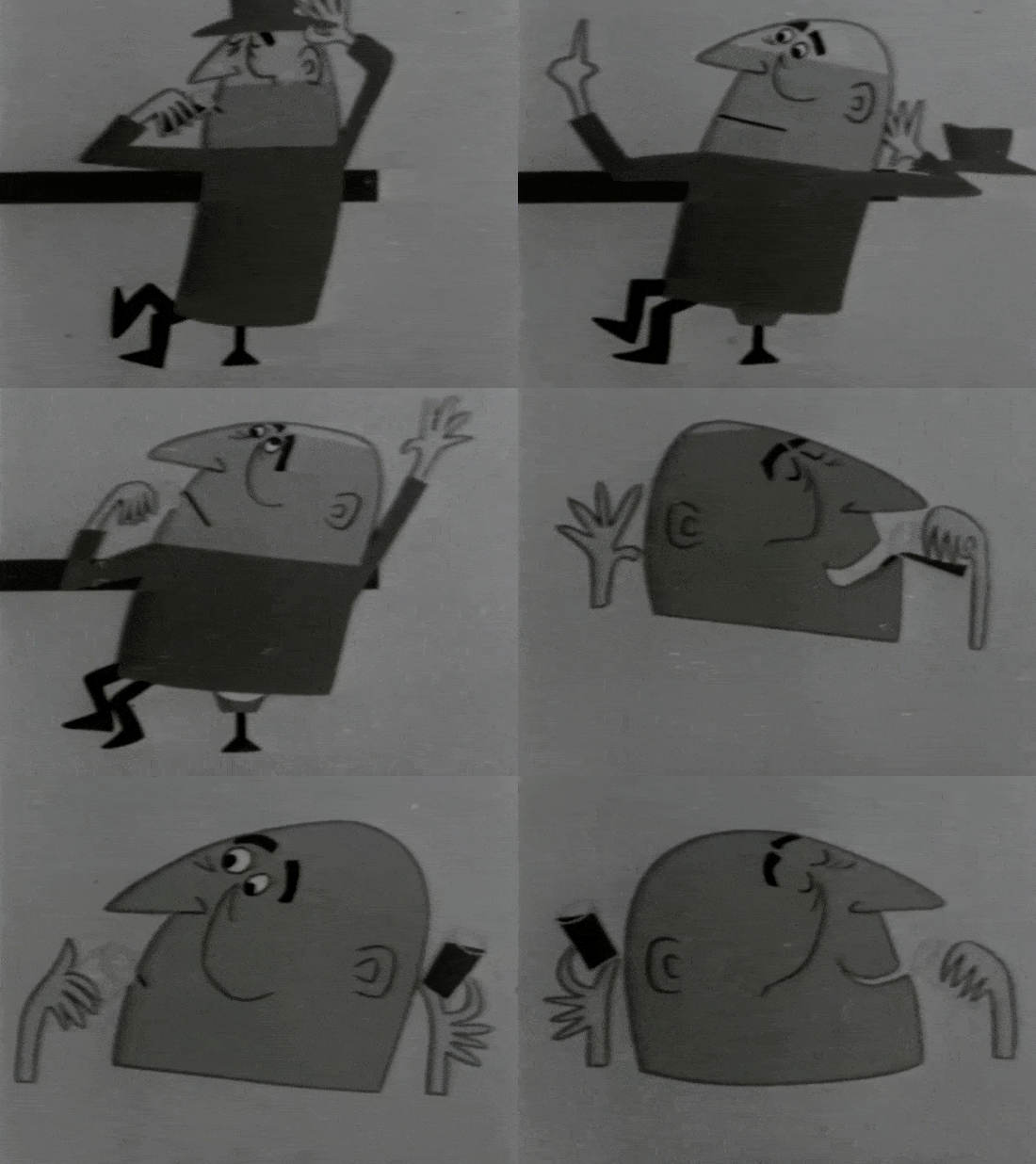
The Uncle Torys commercials began in ‘58 as well. They’re for whiskey, and the lead is a middle-aged man who loves to drink. His creator, artist Ryohei Yanagihara, aimed to make “a cartoon that grown-ups could enjoy.” The result was one of the most iconic ad series of the ‘50s and ‘60s.
Both the Norihei and Uncle Torys campaigns are mid-century in their look, which was new for Japanese cartoons. Yanagihara, for example, took from UPA and from Ward Kimball’s modern-style Toot, Whistle, Plunk and Boom. Another member of the Uncle Torys team noted that the ads pulled from limited animation as a “response to Disney’s perfection” — highlighting instead “the interest of imperfection.”
As those series took off, a third event hit the ad world in ‘58. A stop-motion studio called Shiba Productions appeared, co-founded by one Kihachiro Kawamoto.5
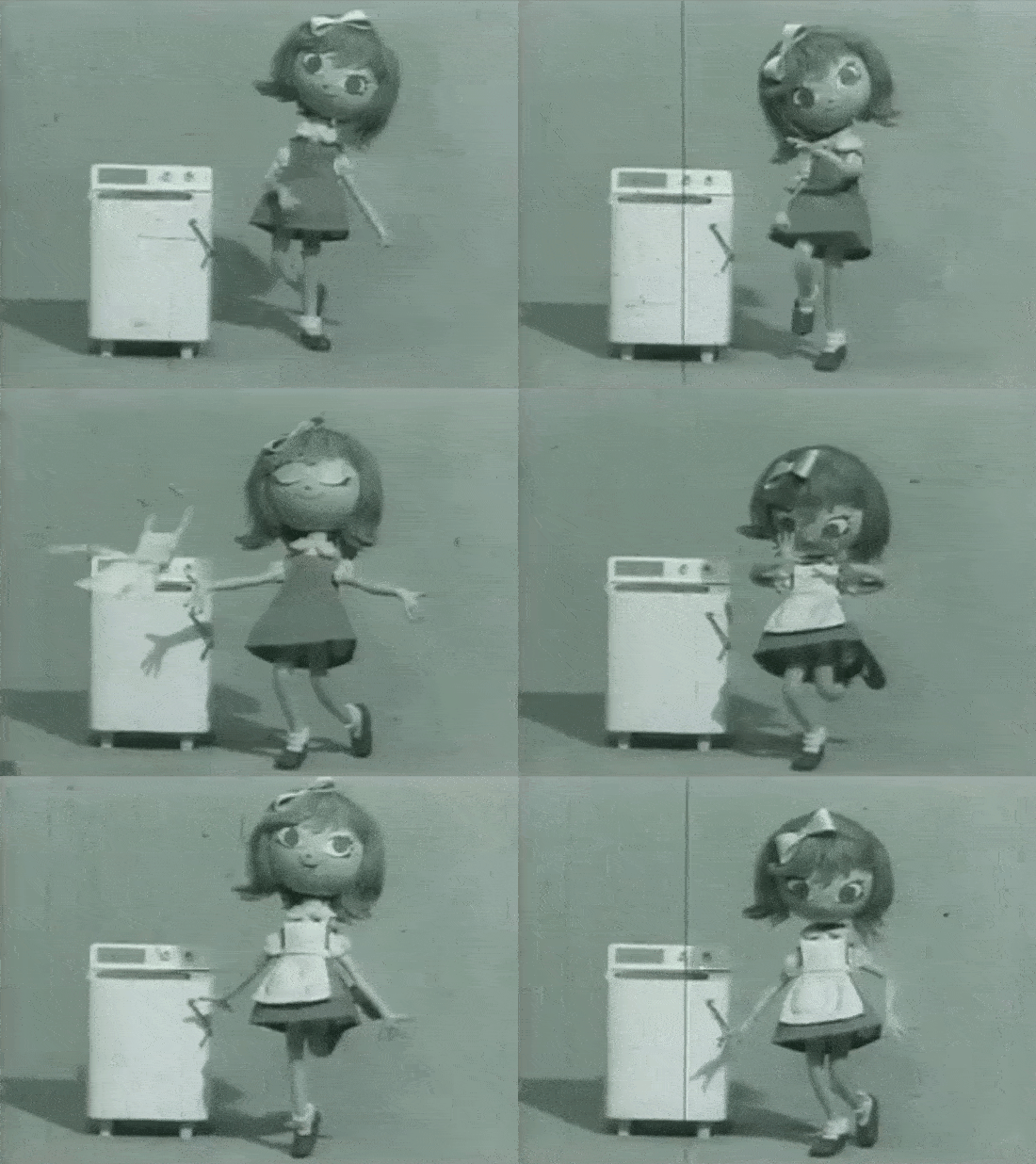
Kawamoto’s mid-century puppet commercials were a phenomenon of their own. He animated cowboys for Asahi Beer, a trio of women for Mitsuwa Soap. That second one went very, very big. Kawamoto built the dolls based on poppy designs by artist Shigemi Hijikata, and worked with an actor to shoot reference footage — on which he modeled the action. It was a frantic job: one minute of animation took less than three weeks (sometimes just one), after which the puppets were ruined.
Even during periods when Kawamoto wasn’t at Shiba, the Mitsuwa Soap ads kept running in the style he’d established.6 The series went into the ‘70s — just as the Norihei and Uncle Torys campaigns did. All became mainstream Japanese culture, and all offered steady work.
These things were part of a wave, which they helped to accelerate. According to Taiji Nagai, by their peak in the early ‘60s, maybe 80% of Japan’s filmed television ads were animated.

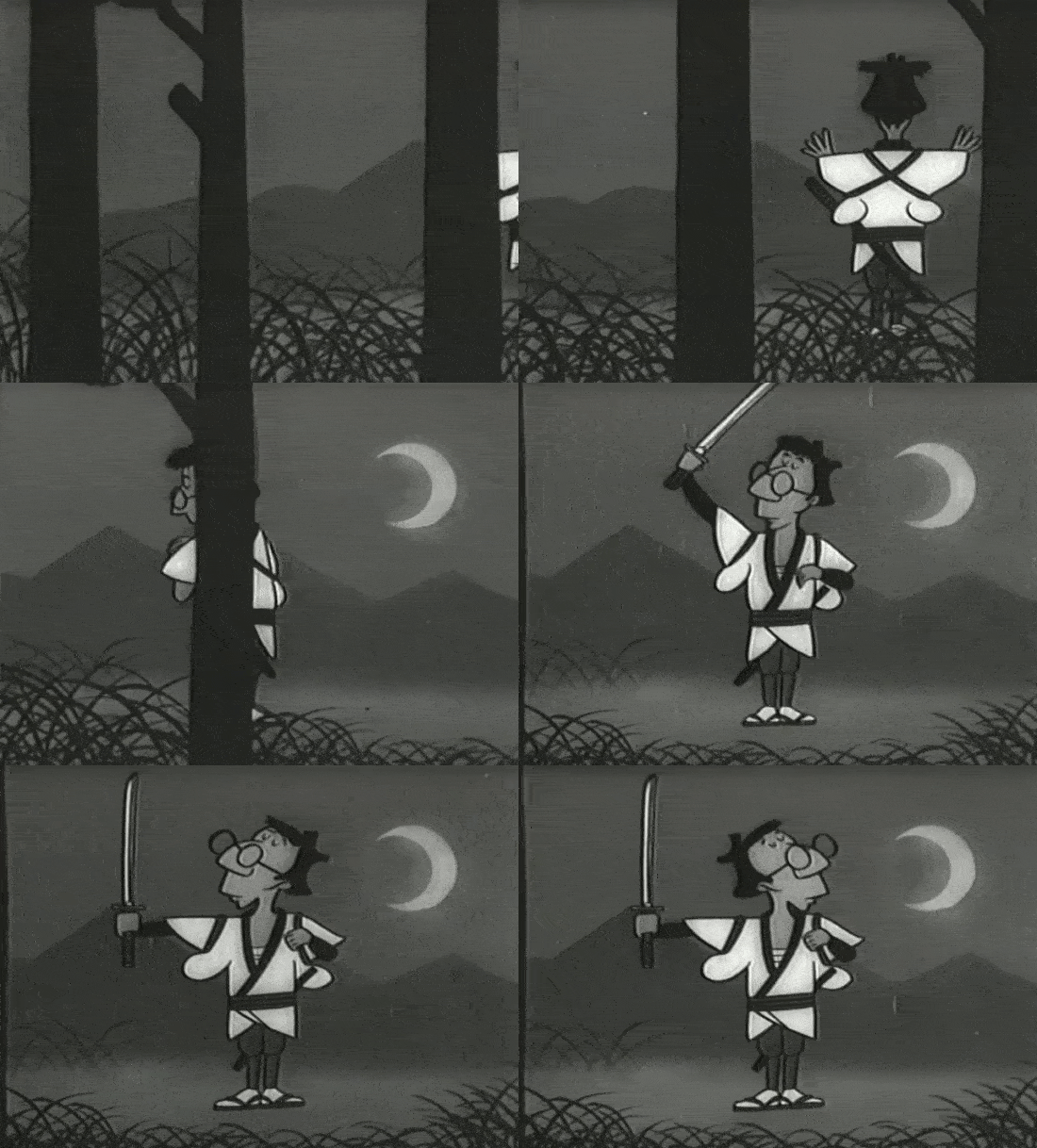
Ads were something of a revolving door in the early years. After Ryohei Yanagihara blew up with Uncle Torys, he got into avant-garde animation as a member of Japan’s “Animation Group of Three,” doing shorts like Two Samurai (1963). Kawamoto made a name with his personal films, which television helped to pay for.7
Meanwhile, there were other artists — people from the TV and feature animation industries — who opted to advertise instead. They were after the freedom.
That was true of Toshio Hirata (Bobby’s Girl). In the ‘60s, he worked at Osamu Tezuka’s company on shows like Kimba, until a downturn in the business sent him into ads. He wanted more room for creativity. “After all, the commercial world was very advanced, and everything we did felt like experimental animation,” Hirata said.8
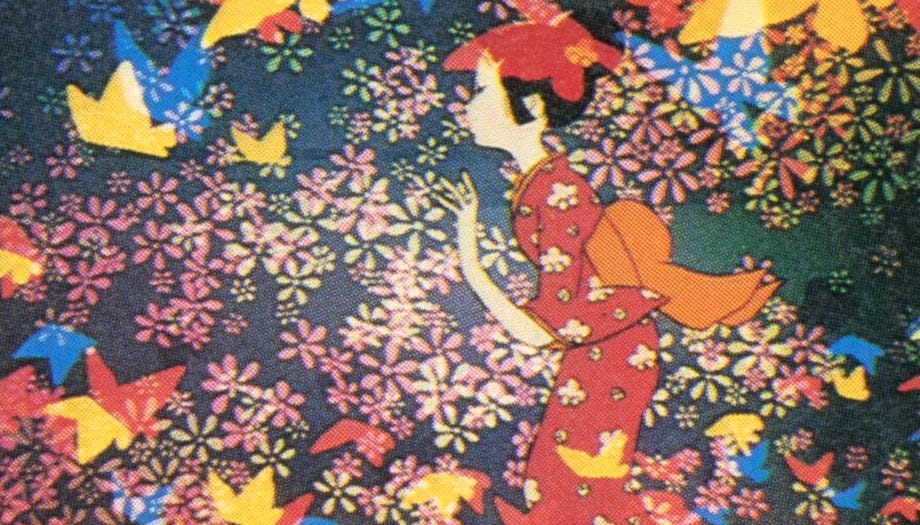
In 1967, he worked on the animation for Yé-Yé, inspired by pop art and op art and the illustrations of Mizue Kawamura. The spot is an exercise in moving graphics (an industry name for the approach was “graphical animation,” in contrast to character animation). Yé-Yé’s overwhelming style got it noticed by the public and the business, and it proved to be a large-scale, trendsetting success.
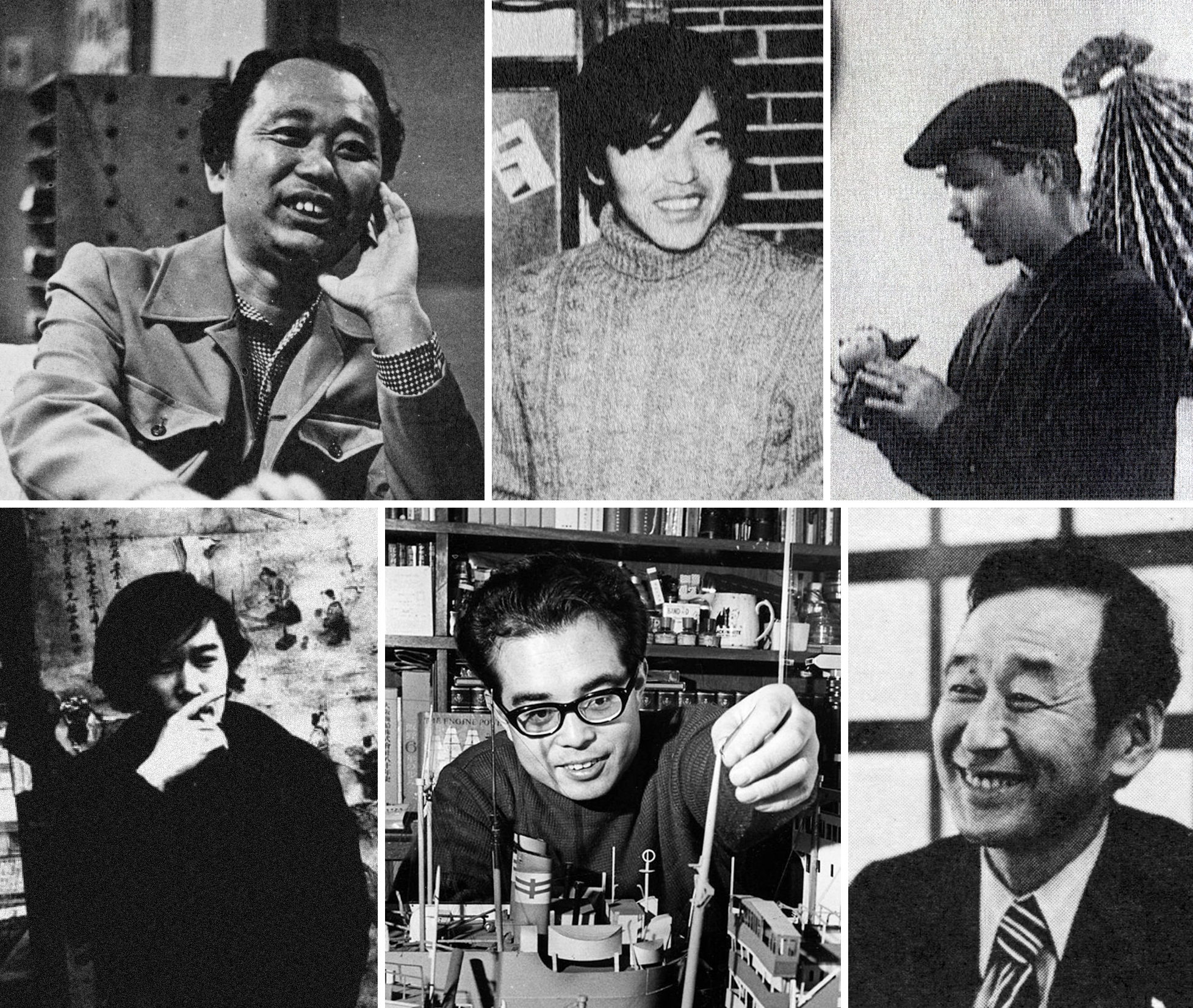
Another escapee from films and TV shows was Norio Hikone. He was a Toei Doga animator — you can see his work in the Little Prince and the Eight-Headed Dragon dance sequence, with the background characters. After Toei pivoted more to TV shows in the ‘60s, he left for Tezuka’s studio, hoping to make movies again. When that failed, he wound up in commercials.9
Unlike Toshio Hirata, Hikone was looking to animate traditionally. When a magazine asked him about the enjoyment he got from TV advertising, Hikone said this:
In a word, it’s the ability to “perform.” In my case, the reason I liked feature films was that I could make the characters perform. With TV series, the limits to the schedules and the number of sheets and so on mean that you can’t perform very freely, whereas you can move quite extravagantly in commercials, which is why it became so interesting.
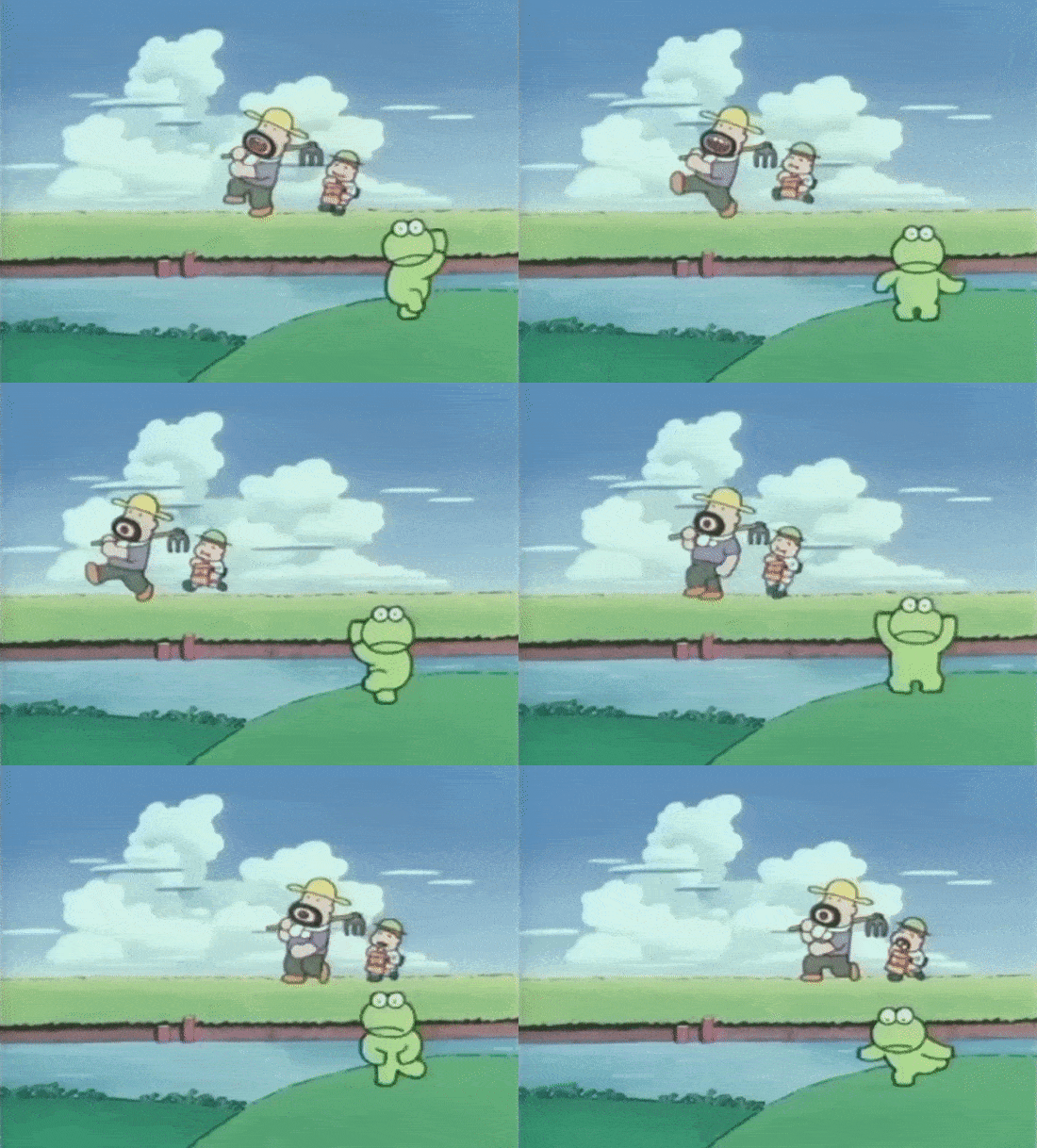
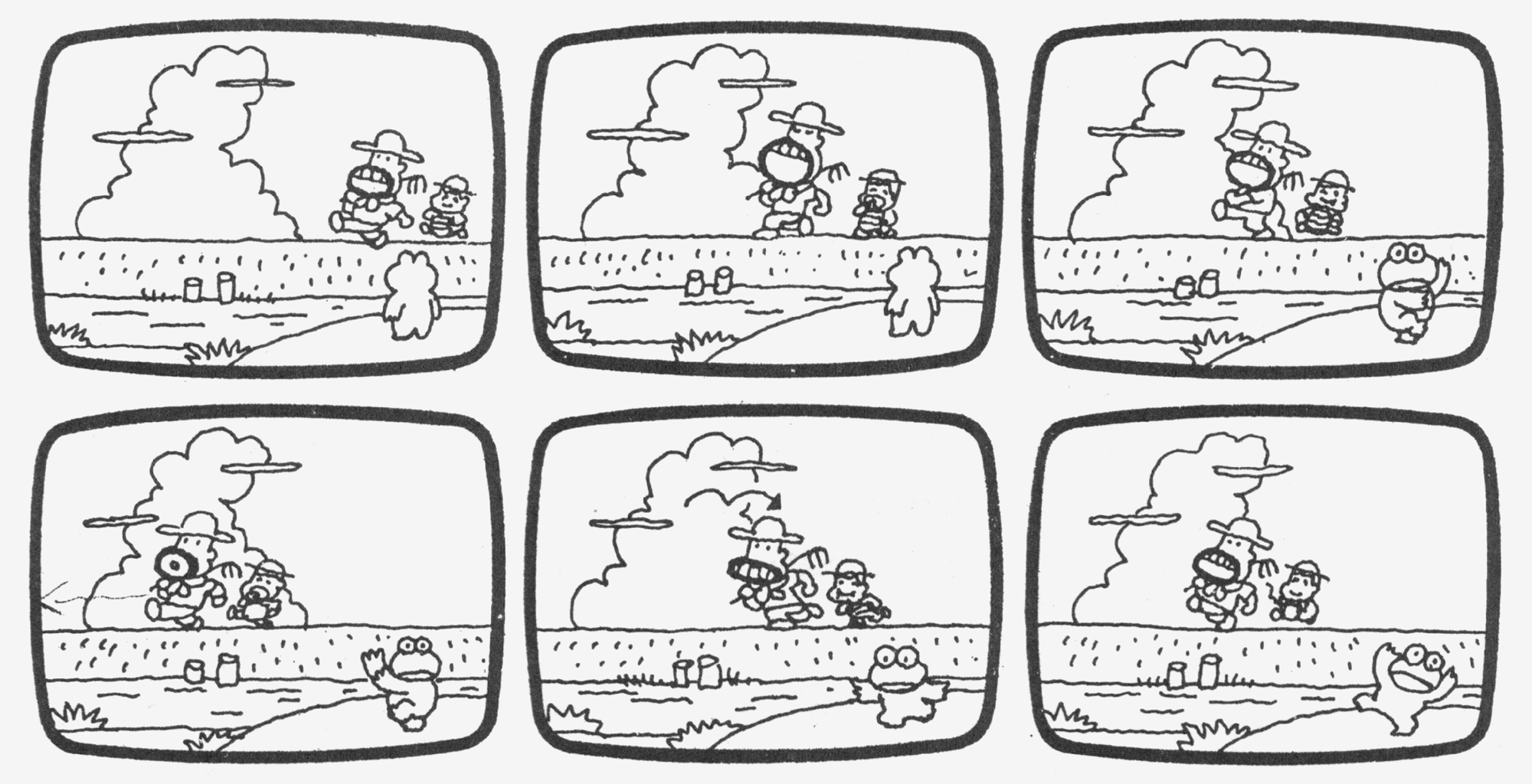
He joined the advertising industry around the late ‘60s. In ‘74, he introduced Uncle Karl, the goateed mascot for Curls snacks — still well known today.
Hikone and his team filled the classic Karl spots with funny, lively character movement and really inventive lip sync. (He’s a Fleischer fan, for the record.) This type of animation was rare in the industry then, but ads let him do it, and people responded.10
There were lots of other cases. Take Seiichi Hayashi, for example. He was a young illustrator and former Toei Doga artist — and he stumbled into a massive commercial series during the ‘70s. The spots he designed for Lotte candy won awards even outside Japan. To this day, their look is impressive.11
The list goes on: ads for Hi-Me seasoning (1971), ads for Yakult Miru Miru (1979). Tadanari Okamoto did remarkable mixed-media work for Kirin Lemon in ‘74. He was one of Japan’s independent giants, and a close friend of Kawamoto’s (during part of the ‘70s, they hosted the annual Kawamoto–Okamoto Puppet Animashow).
Compared to movies, animated commercials rarely get mentioned in the history books. The work was done for a moment in time: TV was disposable by nature, and TV advertising was its most disposable form. It wasn’t made to last.
Yet it’s a mistake to overlook the role this stuff played. It was there when theatrical animation was in shambles during the ‘50s. It popularized Japanese cartoons in the limited, mid-century style. It brought the public New Wave, pop art animation and funded the experiments of Japan’s underground avant-garde. It was a refuge for artists even when TV shows and movies couldn’t be.
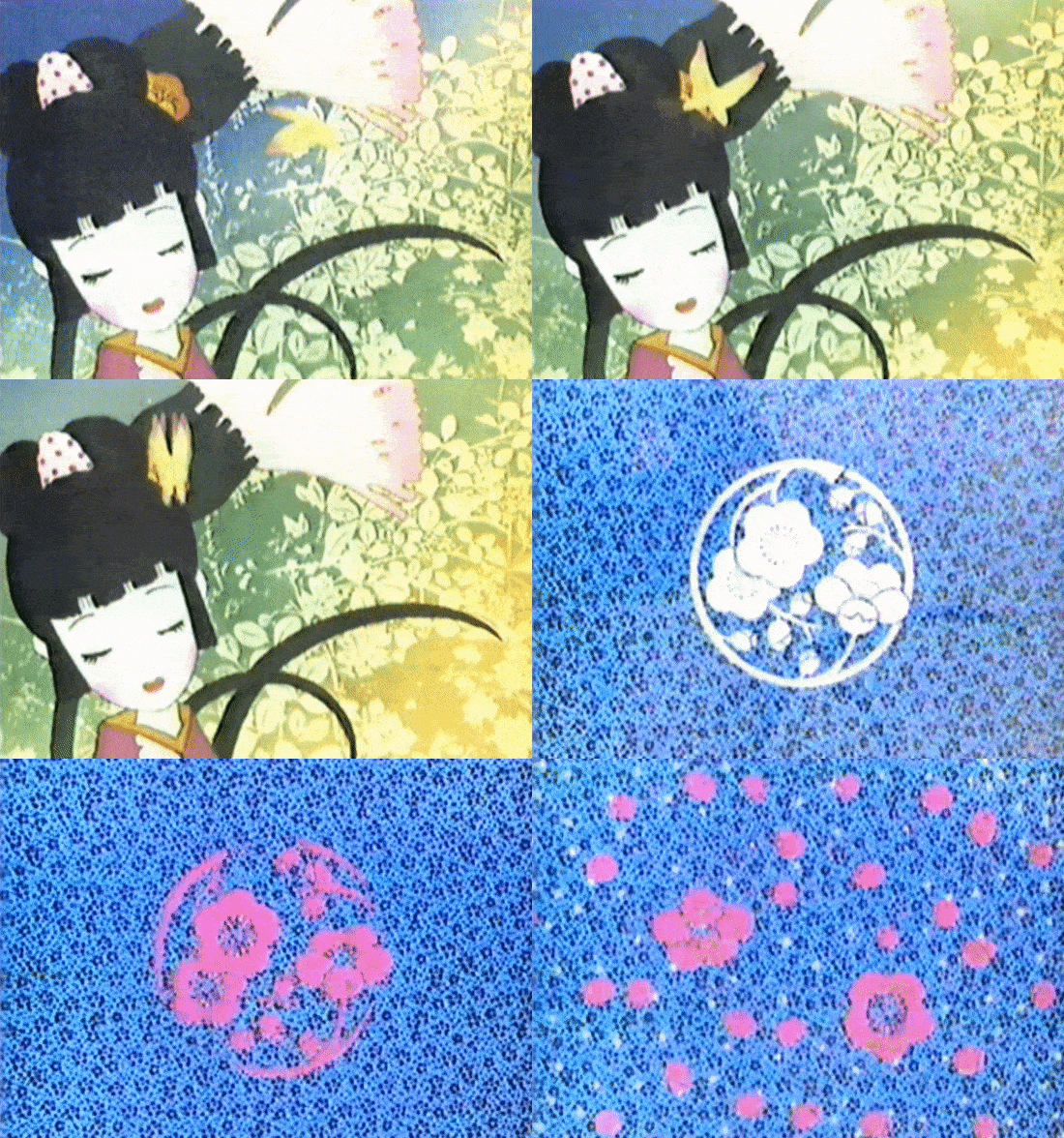
And all of it was happening in the boom years of television — exposing a large portion of Japan to animation that didn’t look like Disney or like Astro Boy. It’s hard to calculate the effect that had. Even in the 2020s, those Mitsuwa Soap spots have resurged, and someone like Kazuya Kanehisa has seen wild success with animation based on the tics of mid-century Japanese advertisements.
The country never truly disposed of this disposable work. It was a real part of culture, something that changed people and placed roots. Our world is our world, in the end — even when an element of that world is television ad breaks.
Today’s story is an edited reprint of an article that first ran in our newsletter, behind the paywall, on September 4, 2025.
2. Newsbits
We lost Nina Shorina (83), one of Soyuzmultfilm’s major directors, behind films like The Door.
In America, Jonni Peppers released the first episode of her series Field Notes from the Orphanage on YouTube.
Niu Lai has earned over 45 million yuan (around $6.7 million) in China. Forecasts keep changing, but Maoyan recently predicted a final total around $8.5 million. The Paper analyzed how online infamy made the film into a cult hit.
During the early ‘80s, a theatrical recut of the anime series Voltes V became a success in Cuba. See Cubalite for more.
The Japanese composer Joe Hisaishi was awarded three Guinness World Records, including “longest residency by a classical composer at Radio City Music Hall.”
As China’s local industry booms, the country is reportedly declining as an outsourcing destination for Japan’s anime industry.
One of Flow’s producers boarded the Mexican feature Insectarium, which is picking up speed and has collected co-production partners and support in four countries. It comes from director Sofía Carrillo (Cerulia, Pinocchio).
France’s Miyu Productions started a new interview series, Animation in Conversation, on YouTube.
This past week, Indonesia’s blockbuster Jumbo debuted in America at a consulate in Texas.
In Hungary, director Ferenc Rófusz turned 80 years old. He won the country’s first Oscar for animation with The Fly (1980), which is available on YouTube.
In Russia, a pilot resurfaced for Olonkho (1996), a visually rich but canceled project in the Yakut language. Key talents from the Soviet animation scene were involved. Find it on YouTube.
The once-lost Mexican film Roy from Space, newly restored by Deaf Crocodile, has a trailer. It’s due on Blu-ray in September. (As a note, we covered the film’s story last year.)
Finally: we looked into the storyboards of five top directors from Japan.
3. Last word
That’s a wrap! Before we go, we’re sharing personal comments from the two of us:
John: This week, we got a package from France: a new book about The Idea (1932), which came with a restored DVD copy of the film. Buying this thing has been a goal of mine since last year, and, going over the restoration, it’s more than I imagined. The Idea is a classic by an artist who’d previously worked on Prince Achmed, but rough releases have hidden some of its greatness until now, and it’s become obscure with time. This new version feels like a different film and looks incredible. I can’t wait to dig further.
Jules: I spent a lot of time this week researching goats for an art project. While looking for examples of how artists depicted them in earlier eras, I stumbled across the 15th-century illuminated manuscript known as the Breviary of Marie of Savoy. It’s one of the many medieval manuscripts viewable online, but this gallery has some of the highest-resolution scans I’ve found of art from that period, like the zoom-in of folio 68, where it’s possible to see how the gold leaf was laid down first and then outlined with black paint. More than that, though, I was struck by the sweet, joyful quality of so much of the art — like the leopard on folio 511, the little creature playing an instrument on folio 263 or even just the rendering of the leaves, swirls and birds that cover every page. Flipping through it, I could feel the tremendous love the artists had filled it with, all that time ago.


Until next time!
See the history of animated commercials in Fantoche (June 1, 1980), our main source today.
This is Masahiro Ohashi, quoted in “Trends in Animation Expression in Japanese Television Commercials in the 1950s.”
The details about early TV animation quality and the hard-sell approach come from Anime: A History, “Trends in Animation Expression” and Momoya’s history of the Norihei ads, both valuable today.
It should be mentioned that (according to “Trends in Animation Expression”) live sales pitches were the most popular form of TV advertising in the early days, and pre-filmed spots were rarer. Nagai seems to have been referring to filmed commercials when he dropped the 80% figure discussed later in the article.
See the Fantoche article, this page from Momoya and Animage (December 1978) — another of our main sources.
For the foundation of Shiba, see Kawamoto’s interview with Japan Media Arts Plaza and the book Kihachiro Kawamoto: Animation & Puppet Master. The actor he worked with was Tetsuko Kuroyanagi, who discussed the experience in the latter source.
Animator Shin Hosokawa corrected some of the misunderstandings around Kawamoto’s involvement with the 1964 Mitsuwa Soap ads.
Kawamoto mentioned this in his Midnight Eye interview. For details about Yanagihara’s career trajectory, see his section in Animation: A World History (Volume 2).
From Hirata’s interview with Anime Style.
See Fantoche (April 1, 1977), our main source for the Hikone section.
Hikone positively mentioned Fleischer in his Fantoche interview. He also named Popeye and Betty Boop cartoons among his all-time favorites in 2003.
For details about Hayashi’s involvement in the Lotte ads, see this interview.
Visiting Japan in ‘85 having worked in animation in the U.K. for about 5 years was a real eye opener as far as commercials were concerned - I have to say way more inventive than anything being done in London.
That pop art commercial from ‘67 looks so contemporary, for the 80’s at least, when everything changed in London due to the influence of very experimental pop videos that were being made at the time and which posed a serious challenge to industry giants in the TV commercial sphere, like Richard Williams Studio.
But then Japanese graphic design has always been ahead of the curve.
Sadly, in London, that experimental Punk era spirit really only lasted until the mid 90’s following the success of Roger Rabbit and animation was once again very influenced by the Disney tradition.
Re your last point - if you want to check out some videos of goats for movement then I have some footage I shot in Albania this summer for a documentary :)