
The Same Stories
A gorgeous resource on Italian art.
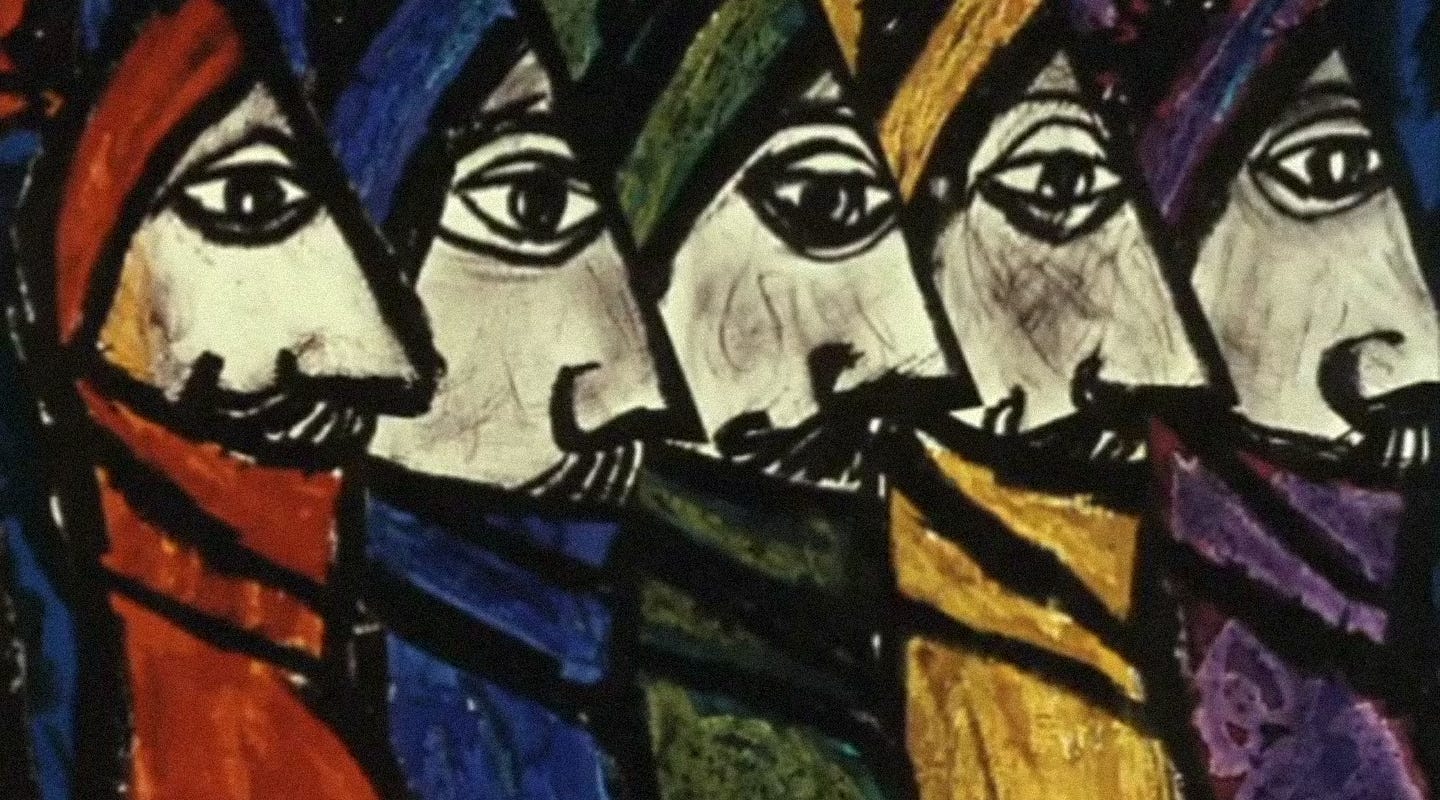
Welcome! Thanks for checking in. This is another Thursday edition of the Animation Obsessive newsletter — about a great Italian designer.
He rose right after the war, after the fall of Mussolini. The country was rebuilding; fascism had been defeated. Finally, Emanuele Luzzati could come home — ending a half-decade in exile. (“I had to flee to Switzerland to escape the racial laws,” he noted.)1
In the mid-1940s, when he returned, Luzzati was a young unknown. But he’d been formed in Switzerland during the war — learning the “applied arts” as a university student and encountering Stravinsky’s Soldier’s Tale on stage. Back in Italy, he used that knowledge.
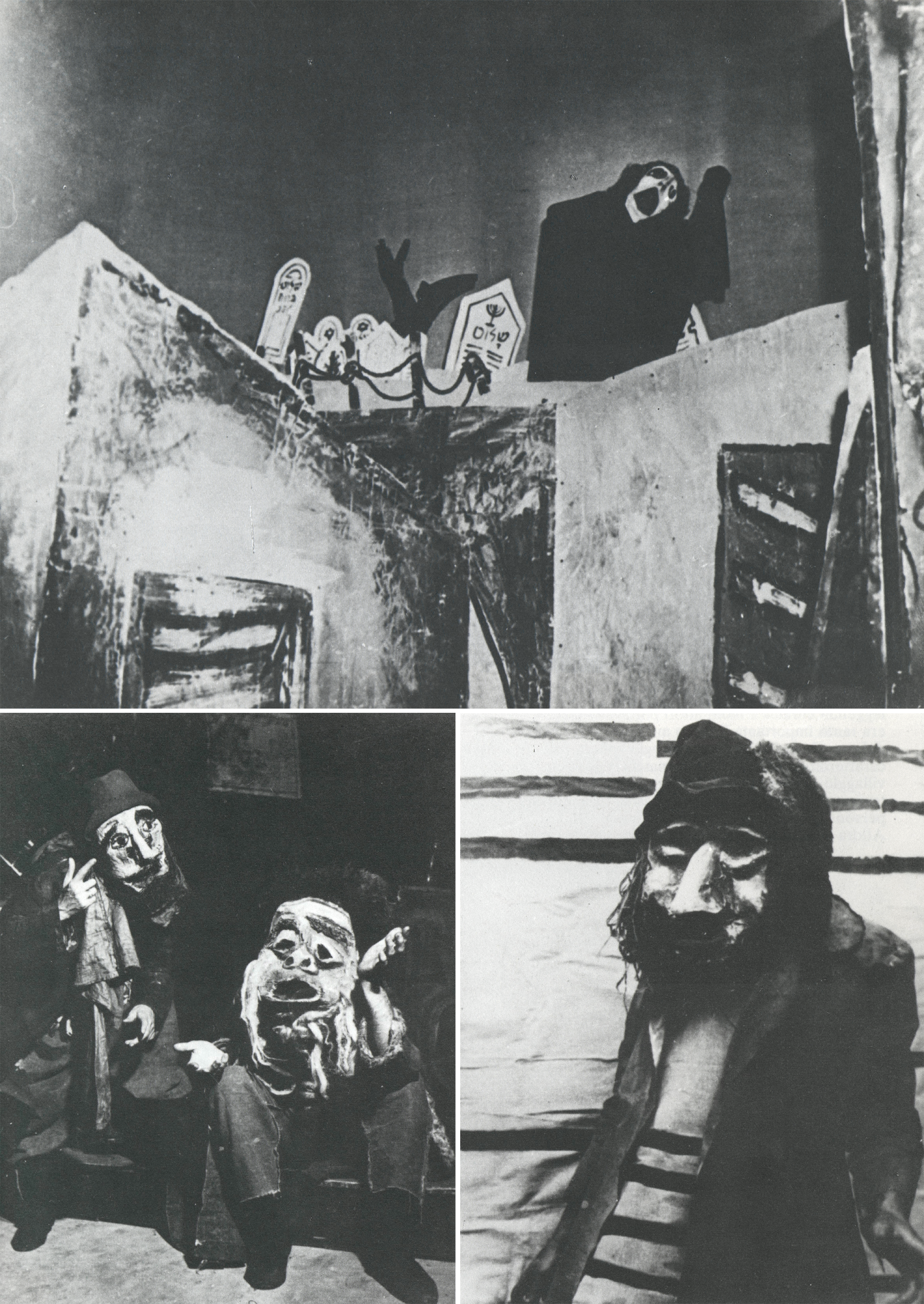
Quickly, Luzzati began to design sets and costumes for the play Lea Lebowitz (1947). Alessandro Fersen, its director, recalled the situation this way:
Lele had found free lodging in the attic of an old woman who was temporarily hospitalized for a broken leg, and worked there on the costumes for the show. He rose in the morning, cracked the thin sheet of ice that had formed over the water jug during the night, washed himself and — with wastepaper, rags, paste and brushes — started to model the masks for Lea: the famous masks that would later pass through the manuals and histories of Italian scenography, and which even today seem to me the most expressive ever to appear on a Western stage.2
Luzzati’s work was already stunning. In Lea Lebowitz, old-world grotesques were joined with modernist shapes and lines. Photos from the time suggest a kind of living, three-dimensional collage world. And Luzzati’s reputation grew.3 He got involved in illustration, ceramics and more.
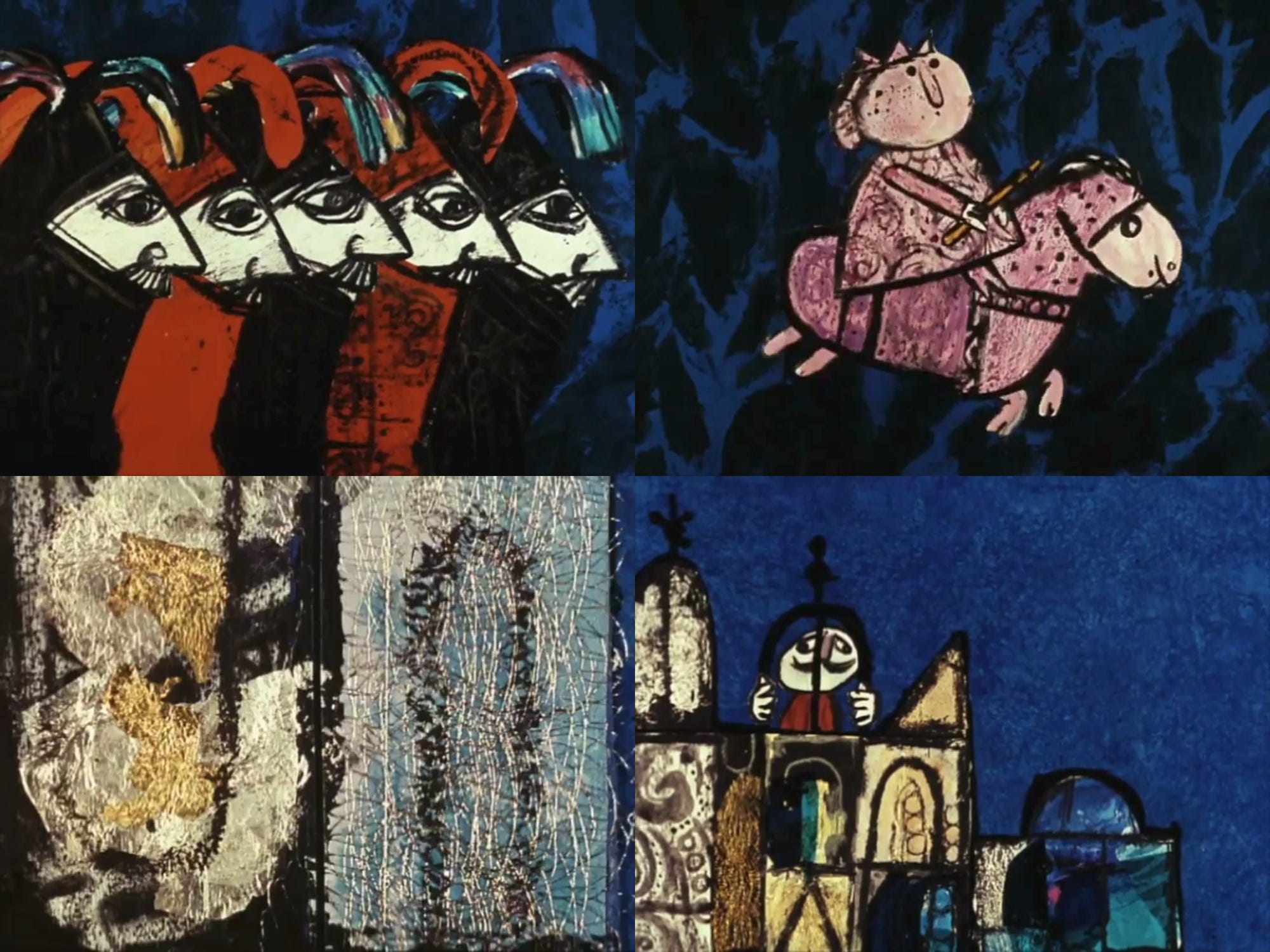
Beginning in the ‘50s, Luzzati took his style to animation — in the films he made with Giulio Gianini. They’re stop-motion masterpieces, nominated twice for the Oscar. The duo’s Ali Baba (watch) is a favorite of Yuri Norstein’s.4
Luzzati loved animation; by the ‘80s, he preferred it to the theater. At the same time, though, his work was all one thing. He switched mediums freely. As he once said, “I do nothing but tell the same stories over and over again; all that changes is the vehicle of expression. … I don’t know if I’m a painter, a storyteller or a theaterman.”
“I’d start constructing a set in Genoa, drawing the design,” Luzzati explained, “then I’d go to Albisola for the ceramics and touch the soil; then, if there were cartoons to be made, I’d come to Rome.”
In 1980, the many incarnations of Luzzati appeared together at an exhibition in that third city. His costume and stage designs, his posters, his animation work — all went on display in Rome. Luzzati was one of Italy’s defining postwar artists by then, and this show (“The Magical Stage Curtain”) made it clear why that was.
The exhibition came with a catalog. It’s a trove of design from the mid-century (and beyond), and one of the great print collections of Luzzati’s work. We love it. And we’ve decided to preserve our copy on the Internet Archive.
You can find it below. For a little more on Luzzati, and what you’ll see in this catalog, read on.
Read in browser
Keep reading with a 7-day free trial
Subscribe to Animation Obsessive to keep reading this post and get 7 days of free access to the full post archives.