
How 'Perfect' Should It Be?
Plus: news.
Welcome! It’s a new Sunday edition of the Animation Obsessive newsletter. Here’s the slate:
1. Thinking about the “flaws” of stop motion.
2. Animation newsbits.
3. The last word.
Now, let’s go!
1. The human element
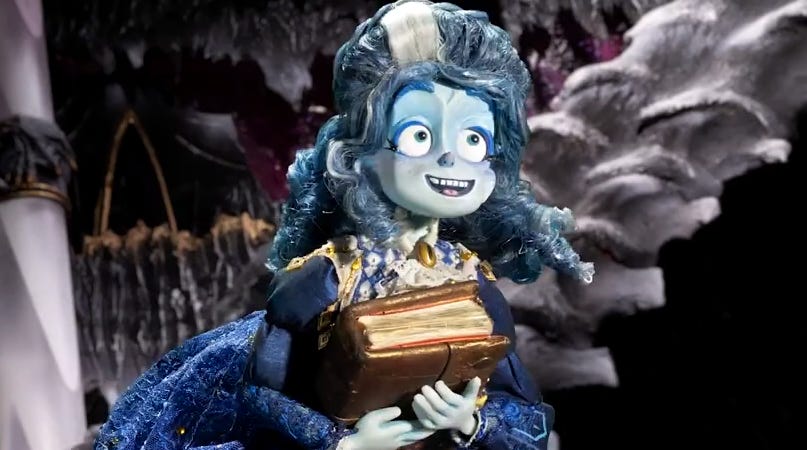
This week, there was good news in the animation world. Netflix put up the trailer for I Am Frankelda, due on the platform next month. And, on social media, a lot of people responded.
If you’ve been with us for a while, you may know that I Am Frankelda is Mexico’s first stop-motion feature, that Guillermo del Toro took part in the production and that it succeeded in Mexican theaters last year. It’s the work of Cinema Fantasma in Mexico City, and it “might be one of the cheapest stop-motion features of all history,” according to co-director Arturo Ambriz.1
Del Toro posted that Frankelda is the result of “tight resources and endless effort and imagination.” He added, in a viral follow-up, “Made by humans for humans.”
There’s no getting around the film’s human element. It’s defiantly handmade, with puppets and movement that don’t aim to be flawless. Animator Aaron Long wrote this week that it “has the perfect amount of visceral, slightly janky stop-motion flavor.” The artist Tom Smith noted that it’s “so nice to see a stop-motion feature that embraces all the quirks of the medium.”2
We saw that sentiment going around. At a moment when shiny and polished images are the norm, and the flattening effect of GenAI is everywhere, I Am Frankelda is blatantly human. Which stands out. More and more, flaws like these feel less like bugs to be fixed than they do valuable features of the form.
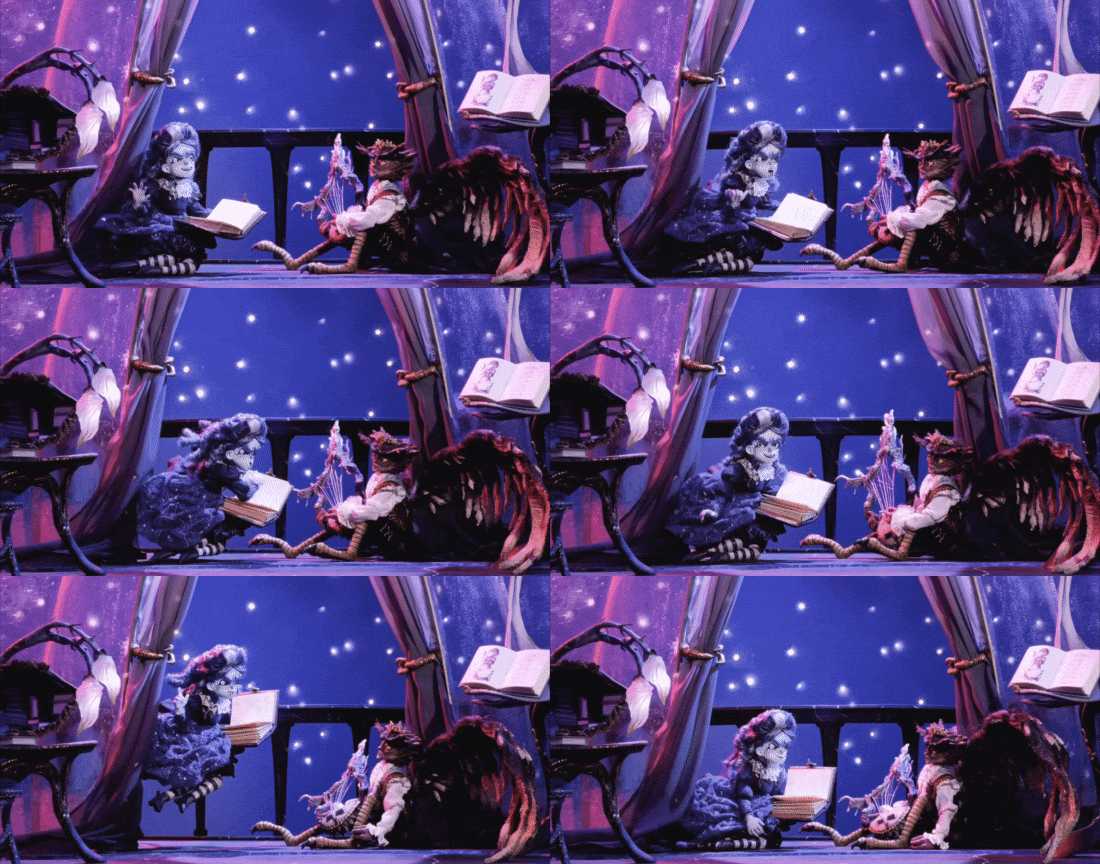
Stop motion in the 20th century had idiosyncrasies. Even the best animators couldn’t avoid them.
Purely smooth movement was rare, and the screen usually possessed a restlessness. Fingerprints appeared and vanished on clay; tiny props on the sets got jostled between frames; the strength or direction of lights subtly changed.
“Mistakes” along those lines popped up in Ray Harryhausen’s work, and in The Blue Apron by Hermína Týrlová, and in A Grand Day Out. They added an energy, though. Del Toro has argued that “the imperfection of it was so gorgeous to look at, because it told you how the thing was done.”3
By the turn of the 21st century, there were alternatives to imperfection. Computers could do without bumps, texture and accidents — unless added intentionally. And smooth, seamless computer graphics felt fancy and new. George Lucas went back and added a bunch of CG stuff to his past movies.
Now, the wind has shifted again. We’re well into a period when even computer animation is often made “jittery” on purpose.4
Steps toward tactility have been a theme — including in this year’s Hollywood blockbusters. Project Hail Mary runs on live puppetry; the Tippett studio got to do a little stop motion for the new Star Wars. The fact is, old-fashioned movie magic is cool again. Especially as GenAI spreads, people want to see evidence of real things, and a human presence, on screen.
And this is benefiting stop motion. The timing of I Am Frankelda’s worldwide release feels weirdly ideal, given that Cinema Fantasma made the film explicitly in opposition to GenAI. As Arturo Ambriz told us last year:
… in AI, you get results. And stop motion is the opposite: it’s about the process. All the flaws, everything that shakes, is a celebration of the process. With the presence of AI turning the industry inside out, we are celebrating that everything is handmade. …
We were very extreme. In some of the camerawork, the camera crew presented me a flawless camera movement. I was like, “Come on, that will never feel credible, because there were no drones in this production. I want it to look like the cameraman lets go of the handheld camera, and they put it on a crane. It’s like this [lowering his hand with an abrupt stop], it shakes and then goes up.”
So, many of those mistakes were put there on purpose — so it would feel like there was a miniature cameraman working with real dollies and such.
There’s a second reason, too, that the attention on Frankelda is promising. It reveals not only that people want tactile things, but that stop motion itself has more options than many believe.
Today, stop motion’s built a reputation as slow, expensive and agonizing — a medium out of reach for most artists. And that can be true. Del Toro’s worthwhile Pinocchio wasn’t a small production, and it cost some $35 million. But the differences between Pinocchio and Frankelda are obvious: del Toro’s film has that clean camera movement, and its animation is realistic and basically spotless.
It belongs to the 21st century, the Dragonframe era, when it’s possible for stop-motion animators to rival the slickness of CG animation. Plenty of teams have gotten good results that way. Still, it’s not the only way. Cinema Fantasma’s movie feels a bit more classical — in some respects, a bit 20th-century.
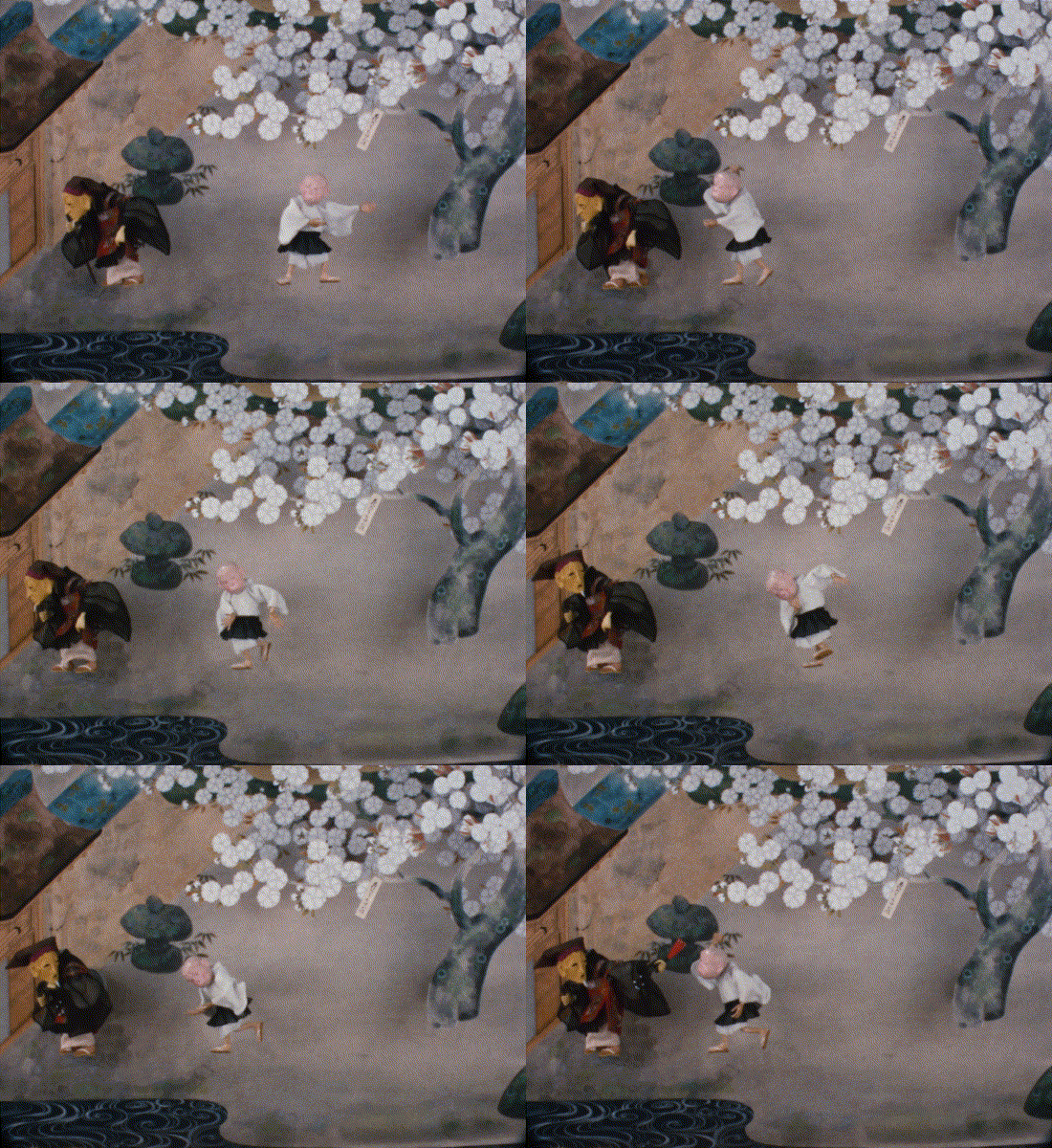
Back in the ‘60s, a Japanese animator traveled to Europe. His name was Kihachiro Kawamoto, and he wanted to learn from the stop-motion masters in Czechoslovakia, including Jiří Trnka. It’s a fascinating story we’ve told in the newsletter before. When Kawamoto got home, he published an article about his findings — the most in-depth account of the Czechs’ process we’ve read.
What Kawamoto encountered sounds kind of surreal now. Animation was a “very energetic and fast” process; he saw one animator shoot at least four seconds and some retakes in an afternoon. A few years ago, for comparison, Aardman spent more than four months on 30 seconds.5
Meanwhile, the teams were small. When Kawamoto documented Jiří Trnka’s studio, it had three lead animators, two assistants and only 23 regular staff in total, including office workers. Here’s an excerpt from Kawamoto’s article, which the researcher Matteo Watzky recently translated for us:
One day, I told them about a puppet film we made [in Japan] for the US which required more than a hundred staff members. They could hardly believe me and talked between themselves about how impossible it seemed to them.
They believe that a small number makes for greater skill and strengthens them as a team; furthermore, they hold that their close bond is what makes puppet film possible.6
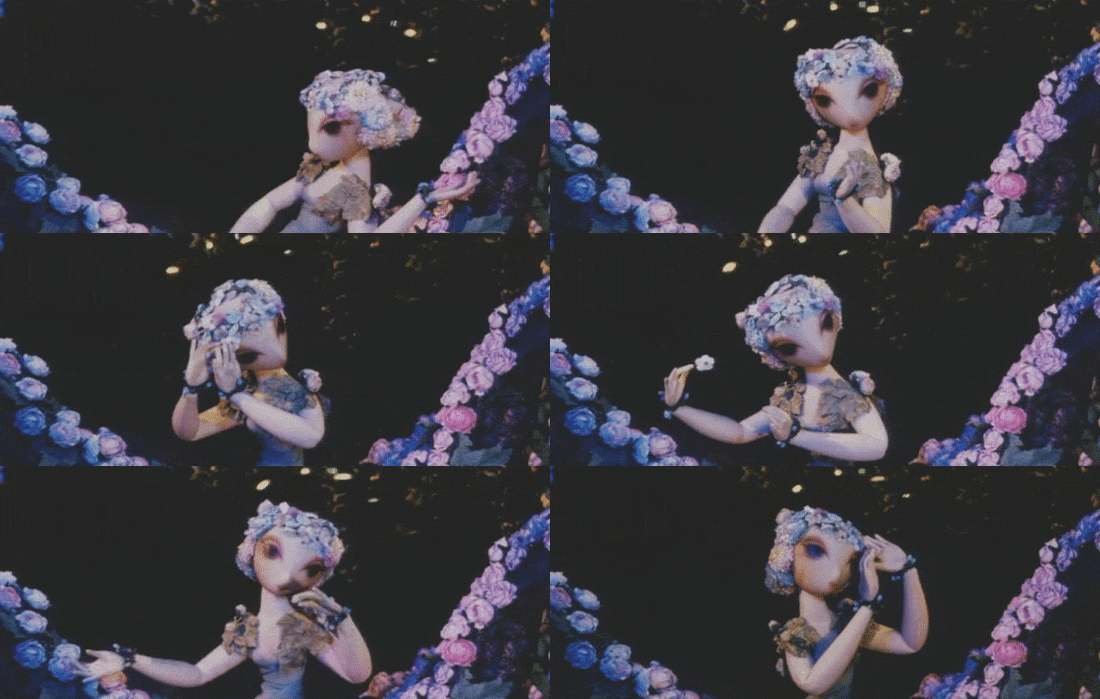
The animators didn’t have Dragonframe, or even VHS playback, to check their work. Only after a scene was shot could they watch it. They also didn’t use exposure sheets (the tools for planning animation back then), nor did they copy movements from live-action reference footage. As Kawamoto wrote:
… it is mostly on set that, following the schedule, the director explains every shot and scene. Afterwards, animators think on their own, write down a rough timing in a notebook, and then proceed to manipulate the puppets, ultimately becoming one with them. The puppets walk, make evil plans, lie, experience unrequited love…. All of these come from the animators’ own interpretation, and none of these performances is of the mechanical sort that could simply be reproduced with the same timing. …
[The team says] that the performance taking place in puppet films is not about reproducing human movement as closely as possible, but about the creation of movement itself. As such, their main concern is to take away every futile motion in human movement to keep only what is most expressively effective. In this light, the analysis of movement from reference film only gets in the way, and so they do not do it.
It’s far from the accepted pipeline today. Even so, the team created masterpieces like The Cybernetic Grandmother and A Midsummer Night’s Dream.
The films have imperfections, as was inevitable with such fast, free work. You can see the camera get bumped, the lights flicker, the characters jitter. On the other hand, the screen has a special energy — an almost overwhelming amount of life.
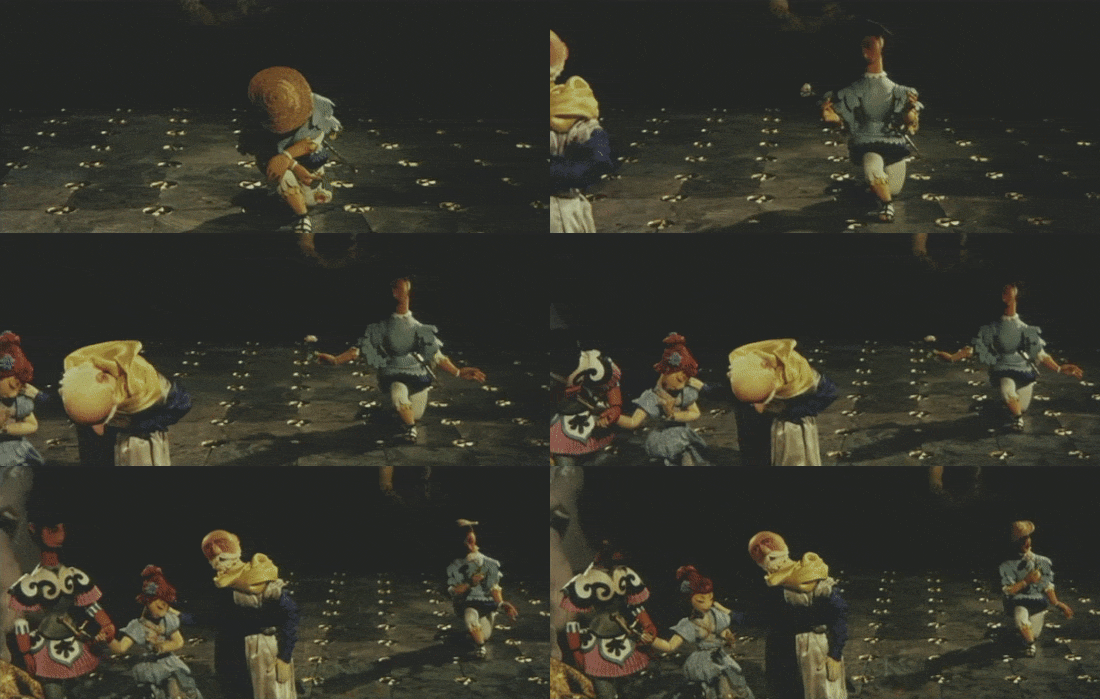
There’s amazing life in I Am Frankelda, too. Although the film wasn’t done with ‘60s Czech methods, it feels more in line with the old ways. And the flaws it contains, its all-too-visible signs of human touch, are starting to feel like advantages.
It means something right now. Take Ray Harryhausen’s old work, long since surpassed in polish and detail by other effects animators. His tight budgets and schedules meant, as he said, that “everything you see … is usually the first take.”7 Up against AI-generated Tung Tung Tung Sahur animations that move with interpolated smoothness, though, the roughness of Argonauts’ animation doesn’t simply look old anymore. Instead, it looks real.
It’s clearly work “by humans for humans,” in del Toro’s words. That in itself has appeal. Which is an opening for all artists — especially those who don’t have the money or time to aim for perfection.
What’s going on is bigger than one movie from Mexico, as intriguing as that movie is. However Frankelda ultimately performs on Netflix, the perceived value of handmade things is growing by the day. What used to seem crude and outmoded may simply have been out of fashion, for a little while.
2. Newsbits
New Zealand’s first stop-motion feature is Kiri and Lou Go Raaa! — and it’s debuting at Annecy next month.
In Japan, Nippon TV met with blowback for airing AI-generated animation on its program Zip. Meanwhile, CODA demanded that AI companies cease training on the work of its member companies, including Studio Ghibli.
In America, Jorge Gutierrez dropped out of his project for Amazon’s “GenAI Creators’ Fund.” (Also, the GenAI feature Critterz is reportedly collapsing due in part to the closure of Sora.)
In India, Vaibhav Studios’ feature Return of the Jungle had a weak opening at the box office.
Also in India, Studio Eeksaurus shared the trailer for its new series You Know Who, which starts in June.
The French school ESMA is sponsoring WIA, bringing in its mentorship program and a “scholarship, events and workshops.”
In America, the MoMA is holding an exhibition on animation this summer. It will feature art from Sally Cruikshank, the Hubleys, Michael Sporn and more.
Cartoon Brew talked to the head of Ghana’s AnimaxFYB, which recently hit its 10-year anniversary.
One more from America: production staff at Netflix Animation joined The Animation Guild.
Finally, we followed up on three topics from the newsletter this year.
3. Last word
Hope you’ve enjoyed today’s issue! To close out, we’re introducing a new regular section: a few personal thoughts from the two of us (Jules and John, co-runners).
John: Hey, everyone! I’m the lead writer of the Animation Obsessive newsletter; it’s been my role here since we began in February 2021. The inspiration for these personal notes came from an animation newsletter we like, re:frame, that does the same thing. They generously gave us the okay to swipe their idea. The re:frame guys (Rollin, Kambole and Toussaint) are pro journalists, and they run it as a free side project. I read it every week and definitely recommend it.
Jules: Hello, everybody! I’m Jules, the art director and news researcher for the newsletter (also since we began). I’m not quite as used to writing publicly as John is, but I’ve been getting into the swing of it since starting a hobby newsletter on the side a couple of years ago; I think this will be fun! To start off, I thought I’d highlight an animated video (directed by Nikhita Prabhudesai Jeena) that TED-Ed released this week on one of my favorite topics — toys in the ancient world. It’s wonderful to consider that people have grown up playing with pull-toy horses for thousands of years.
Until next time!
See our interview with Arturo Ambriz.
From the “Behind the Craft” featurette on Pinocchio.
The 18-week, 30-second scene was part of the Chicken Run sequel. See The Hollywood Reporter. Kawamoto’s details about the Czech animator come from his book Czech Letters & Czech Diary.
See “Czech Puppet Film Production Today” in Film 1/24 (January 20, 1978), used a lot.
From this interview with Harryhausen.
The longer I read Animation Obsessive the more I appreciate your efforts to share the world of animation, and to shape the way others think about the possiblilites inherent in animation to entertain, inform and stimulate new ideas. And, of course, to remind us of the successes of the past.
Even without the expensive polish, there's no getting around the meticulous process involved in a stop mo film. It's amazing to me how all that concetrated energy comes through in the final product! It's exciting to see films like Frankelda being celebrated in a moment where perfection is becoming synonymous with the empty calories of AI. Maybe handmade, quirky, AND affordable can find its way back into the mainstream. Here's hoping.