
The Left Orientation
On 'The Brotherhood of Man' by UPA.
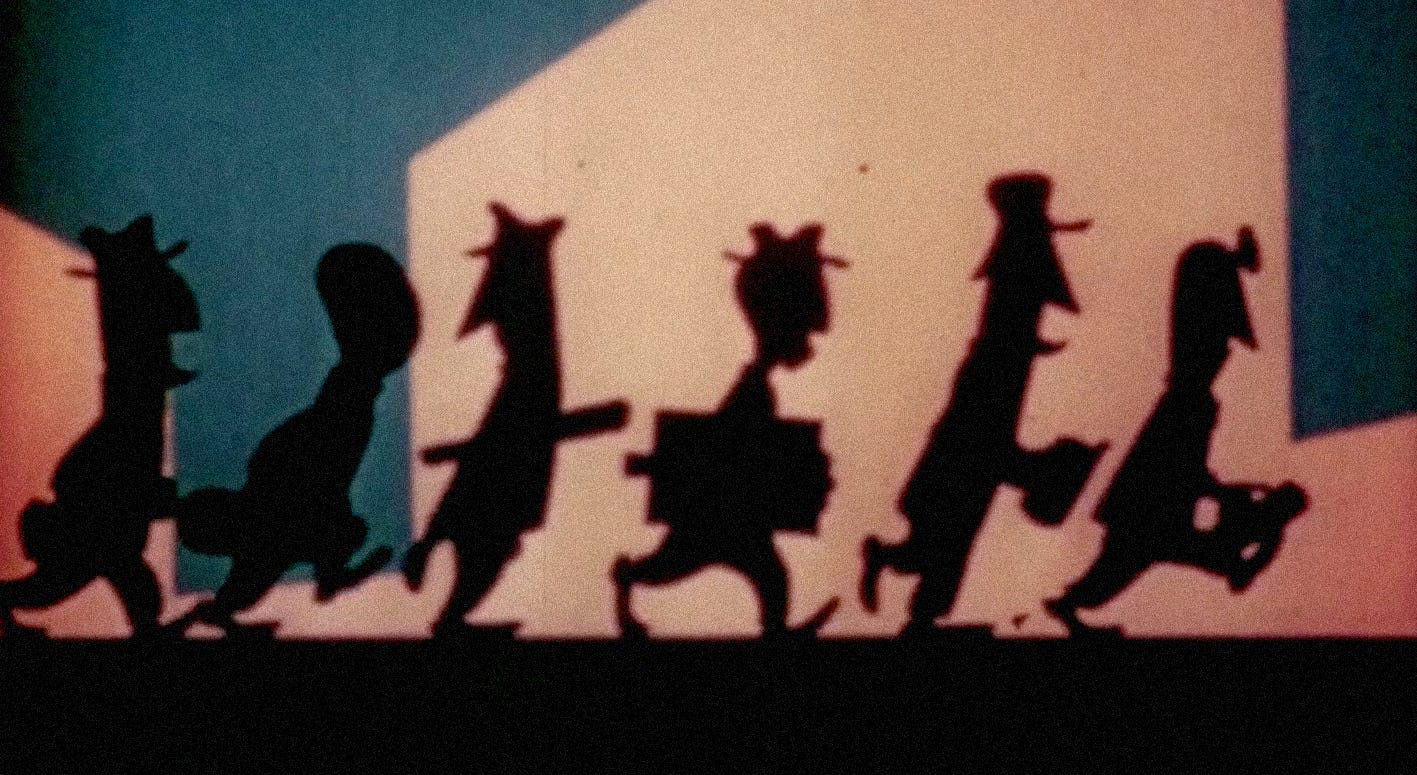
Welcome! It’s time for a new Thursday issue of the Animation Obsessive newsletter, and this one’s about a major film from the ‘40s.
It was the subject of panics, once. In the McCarthy era, some labeled it communist “propaganda.” The film adapted a pamphlet by “subversives,” fumed one editorial, and counted “a card-carrying Communist” among its screenwriters. Around a year after its debut, the FBI visited the studio responsible. Within months of that visit, the film was named in a congressional probe into the “communist infiltration of the motion-picture industry.”
It’s a 10-minute cartoon under the title The Brotherhood of Man. Its creators worked at a small Hollywood studio called United Productions of America — or UPA, for short.
UPA was young then. It hadn’t won its Oscars, taken over theaters or created Mr. Magoo. But, when the team did Brotherhood, the film was clearly special — even kind of revolutionary. UPA could tell, as could a lot of others who were willing to look.
Here was a “deftly done and powerful argufier,” noted a columnist in the ‘40s. The Daily Worker called Brotherhood “really something to cheer about both as a technical and political job.” Ebony glowed about this fresh, appealing short that “kids whites” — a far cry from recent Hollywood animation like Disney’s Song of the South (1946), which Ebony described as “lily-white propaganda” and an “insult to Negro America.”
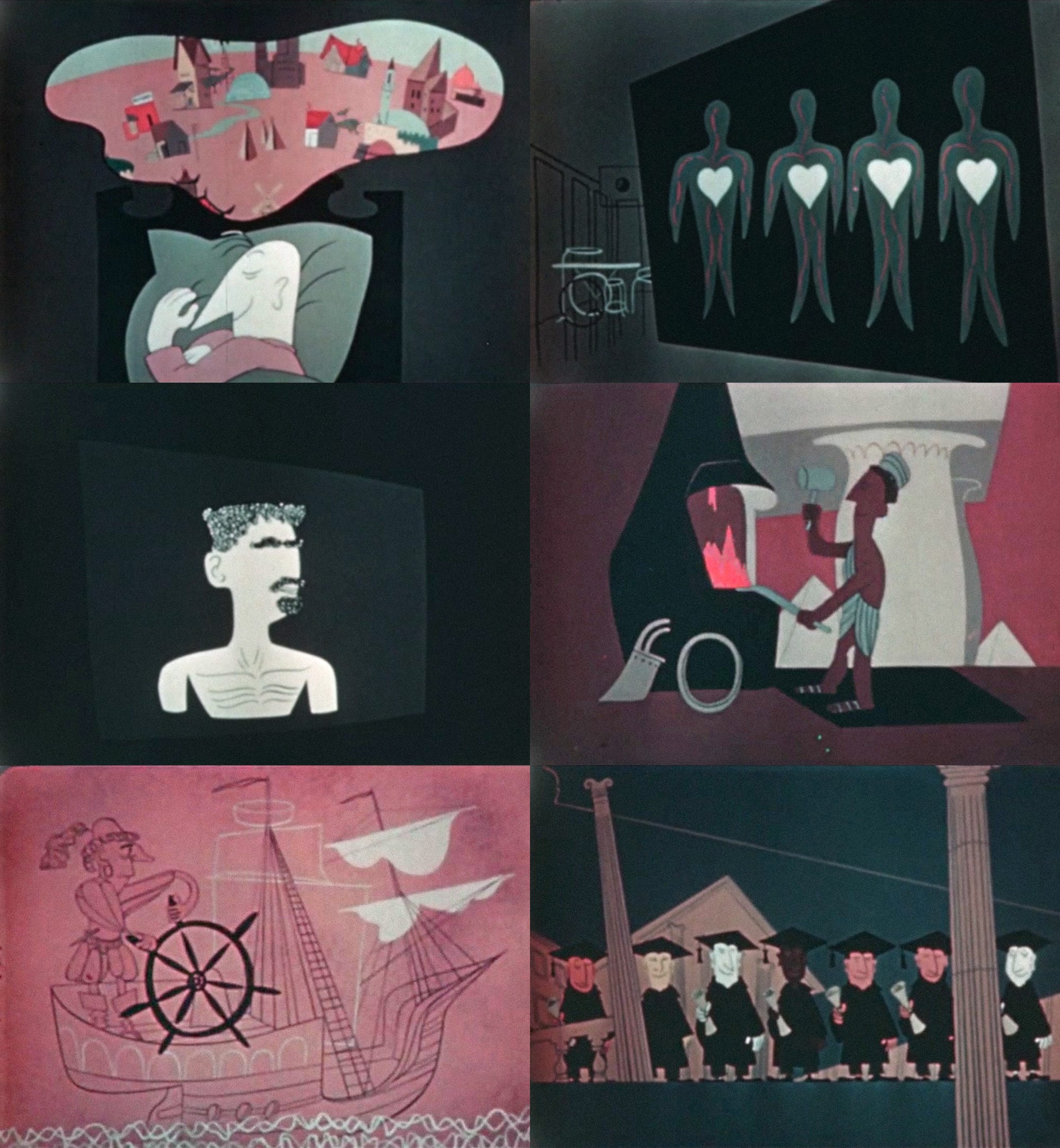
In every way, really, it was a film that escaped Disney, even beyond the message. Brotherhood’s designer, John Hubley, had been a Disney artist before the strikes. He was one of the studio’s young modernists, and he brought those ideas to Brotherhood — “a major breakthrough from the Disney tradition,” in his words.
Chris Marker, the French critic and director, went even further:
This short film broke with all Disneyesque practices. It offers an adult subject matter, human characters, a purposefully unrealistic style ... For the first time since Berthold Bartosch’s Idea [1932] and Gross and Hoppin’s La Joie de vivre [1934], the cartoon asserts itself qua drawing. It finds its path ... with a heightened credibility and power of conviction.1
Keep reading with a 7-day free trial
Subscribe to Animation Obsessive to keep reading this post and get 7 days of free access to the full post archives.