
More Than Moving Drawings
On the effects of early Disney.
Welcome! Thanks for joining us. It’s another Thursday edition of the Animation Obsessive newsletter — and our topic this time is Disney.
Sometimes, a certain idea about older hand-drawn animation floats around. As the thinking goes: these films are about drawings that come to life.
The stars of Snow White, or even of anime from the ‘80s, were the key animators. Artists like the Nine Old Men put motion into pencil sketches, and it defined the films. It’s like magic — even CG animation just can’t compete.
That’s the idea, at least. Plenty of people feel this way, and it shows up in several guidebooks. The Animator’s Survival Kit is a default text for hand-drawn animation, and nearly all of its focus goes to the mechanics of character movement.1
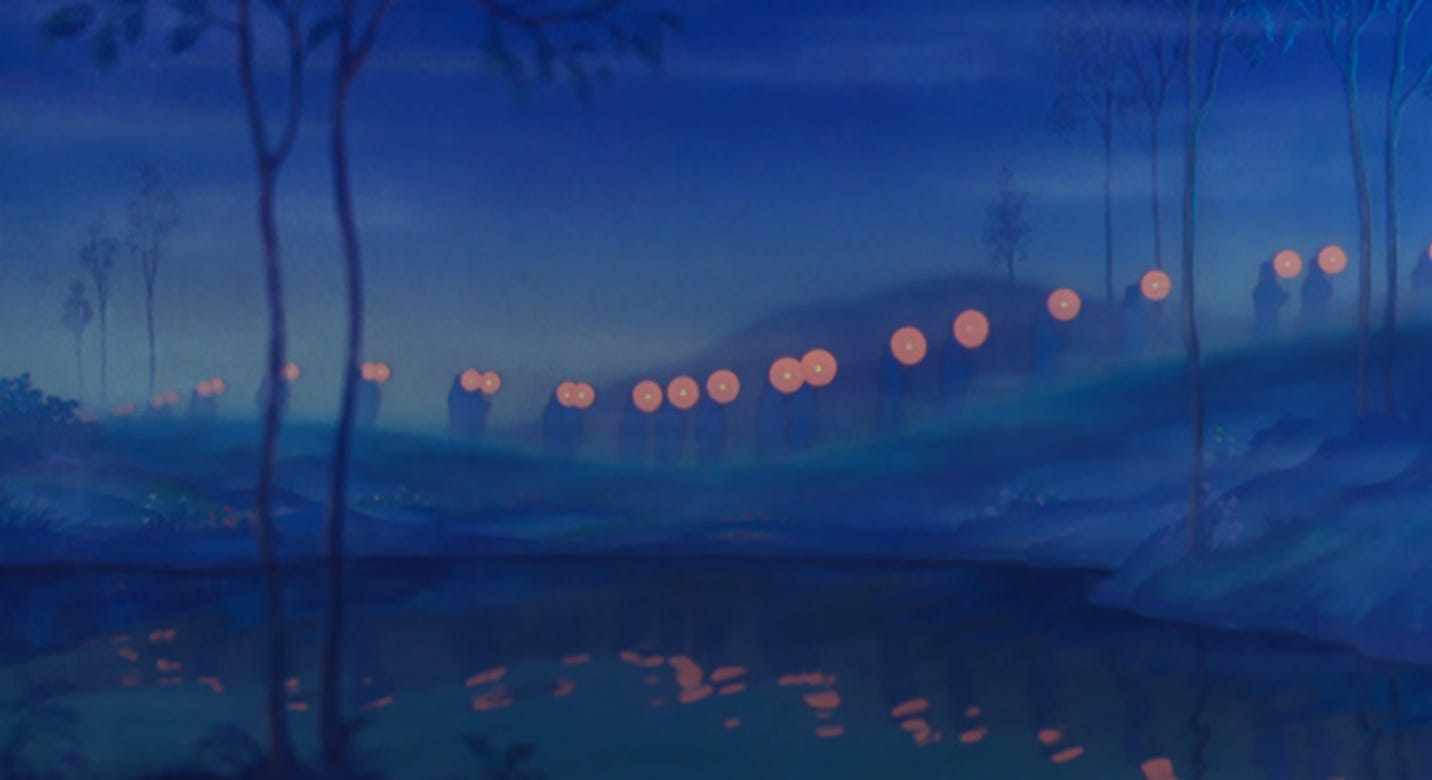
When you look closer at the classics, though, a different theme emerges. Visually, many of them have other things happening on screen — beyond traditional character animation, or even backgrounds. And these other things often provide the magic of a scene, of a whole film.
Last week, we covered the aesthetics of Rintaro, the anime great. His movies lean on effects — colored lights, reflections, shadows, water ripples and the rest. This extra visual information tends to matter as much as the characters’ movement. Or take The Secret of NIMH and Yoshiaki Kawajiri’s Running Man (1987), two films whose characters are at times overwhelmed by effects.
The effects in question went beyond pencil drawings. You can’t make NIMH or a Rintaro movie without multiple-exposure techniques like backlighting, for example — not to mention practical trickery like NIMH’s Xeroxed live footage.
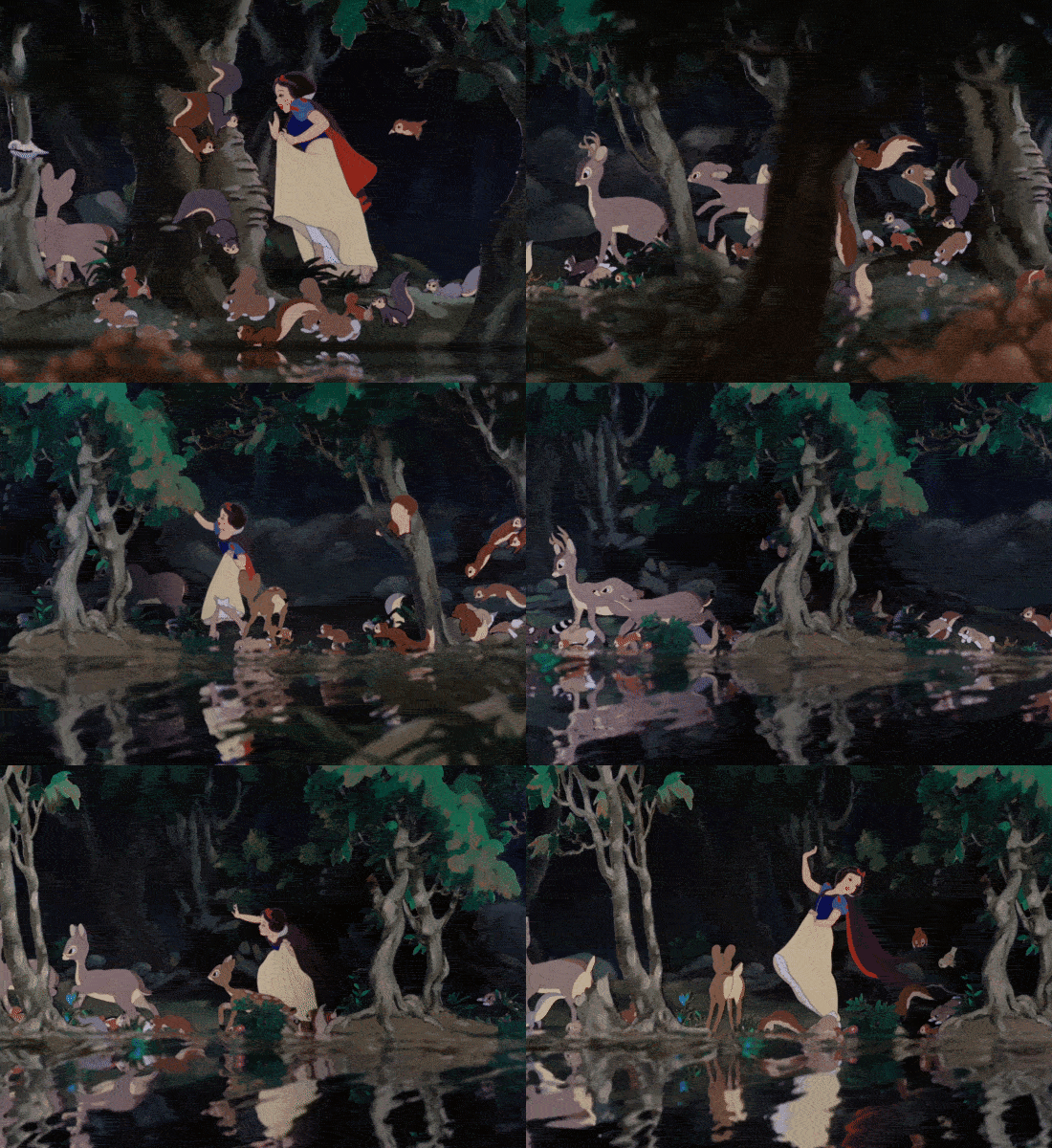
The early Disney features are full of other things, too. Although there’s no taking away from the importance of their character animation, productions like Snow White and Pinocchio were also special-effects films. Their excitement and believability regularly came down to “secondary” visuals.
Key animators had clout at Disney back in the day. Secondary stuff was done by artists less known in the studio. The impact of their work was clear, though. Like Frank Thomas and Ollie Johnston wrote, “[E]veryone saw that amazing scenes were appearing on the screen.”2
Keep reading with a 7-day free trial
Subscribe to Animation Obsessive to keep reading this post and get 7 days of free access to the full post archives.