
Stepping Inside UPA
Looking at the studio that redefined animation, plus news.
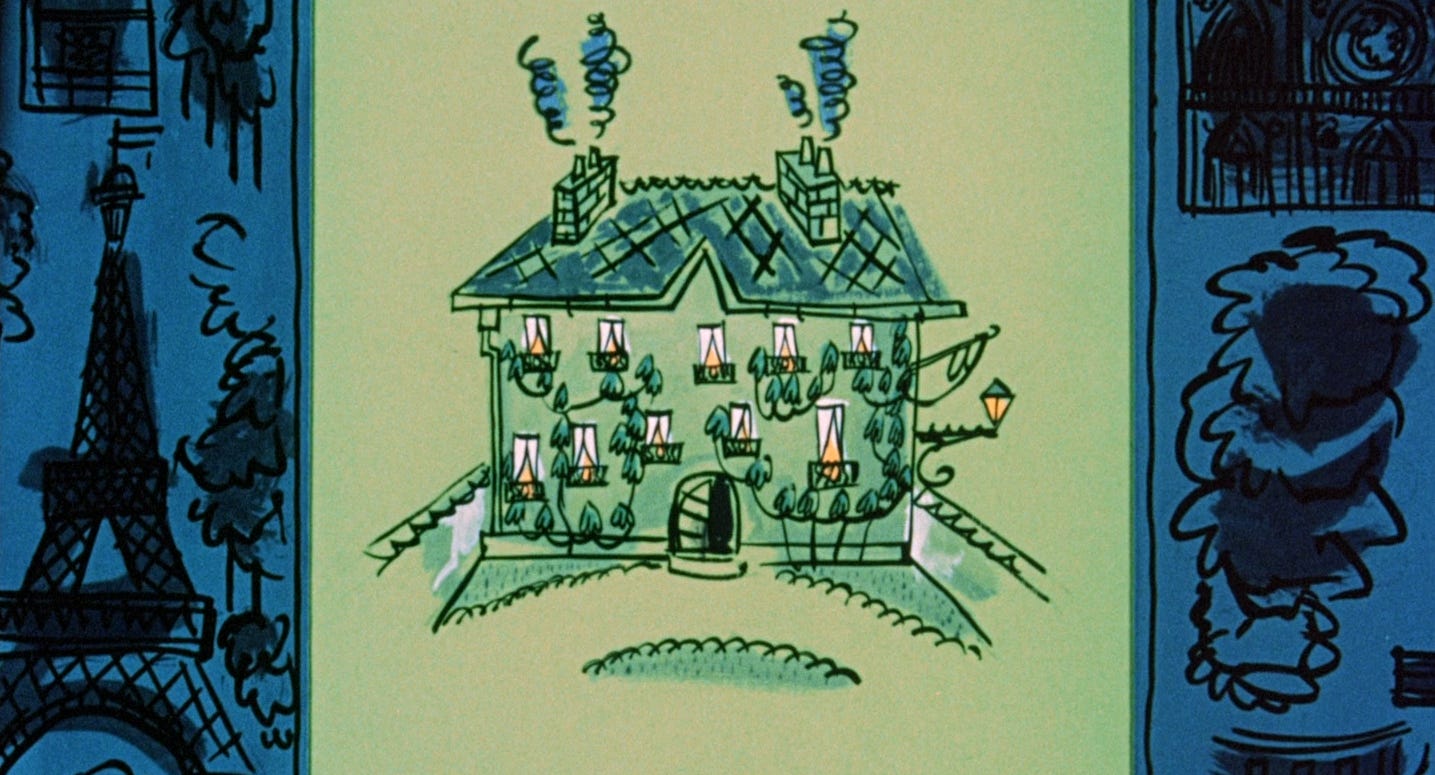
Welcome! It’s a new Sunday edition of the Animation Obsessive newsletter, and this is the slate:
1. Reviving the book Inside UPA.
2. Animation newsbits.
With that, let’s go!
1. A creative environment
Animation changed in the ‘40s and ‘50s. For years, the Disney studio had ruled. It was the benchmark, with its storybook worlds in which rounded figures moved with endless complexity. Yet some of its artists were feeling stifled.
A new generation was rising, and the limits of Walt Disney’s ideas were showing.
For one, people chafed against Disney’s way of running his business — his vast “plant” (his word) where his control was total. When his younger crew tried to unionize in the early ‘40s, he warned them, “[I]t’s the law of the universe that the strong shall survive and the weak must fall by the way, and I don’t give a damn what idealistic plan is cooked up, nothing can change that.”1
The same young people had fresh stories to tell, and fresh visual ideas to try, but they often couldn’t. Although Disney had pushed animation to amazing heights, he liked what he liked, and what he liked was increasingly old-fashioned.
In 1943, a new Hollywood animation studio began to absorb the Disney rebels. At first, it took the long, drab name Industrial Film and Poster Service. Then it became United Productions of America. Eventually, most knew it as UPA.2
UPA overturned Disney’s model. The studio was artist-driven, a place for open creativity. It went beyond fairy tales, cartoon animals, realism and hyper-complicated movement. And it was Walt Disney’s political opposite. UPA’s Bill Hurtz referred to himself and his peers as “thinly disguised Reds.” There’s a story that someone once sang the Song of the Red Air Fleet in the hall, only to be joined by much of the staff.3
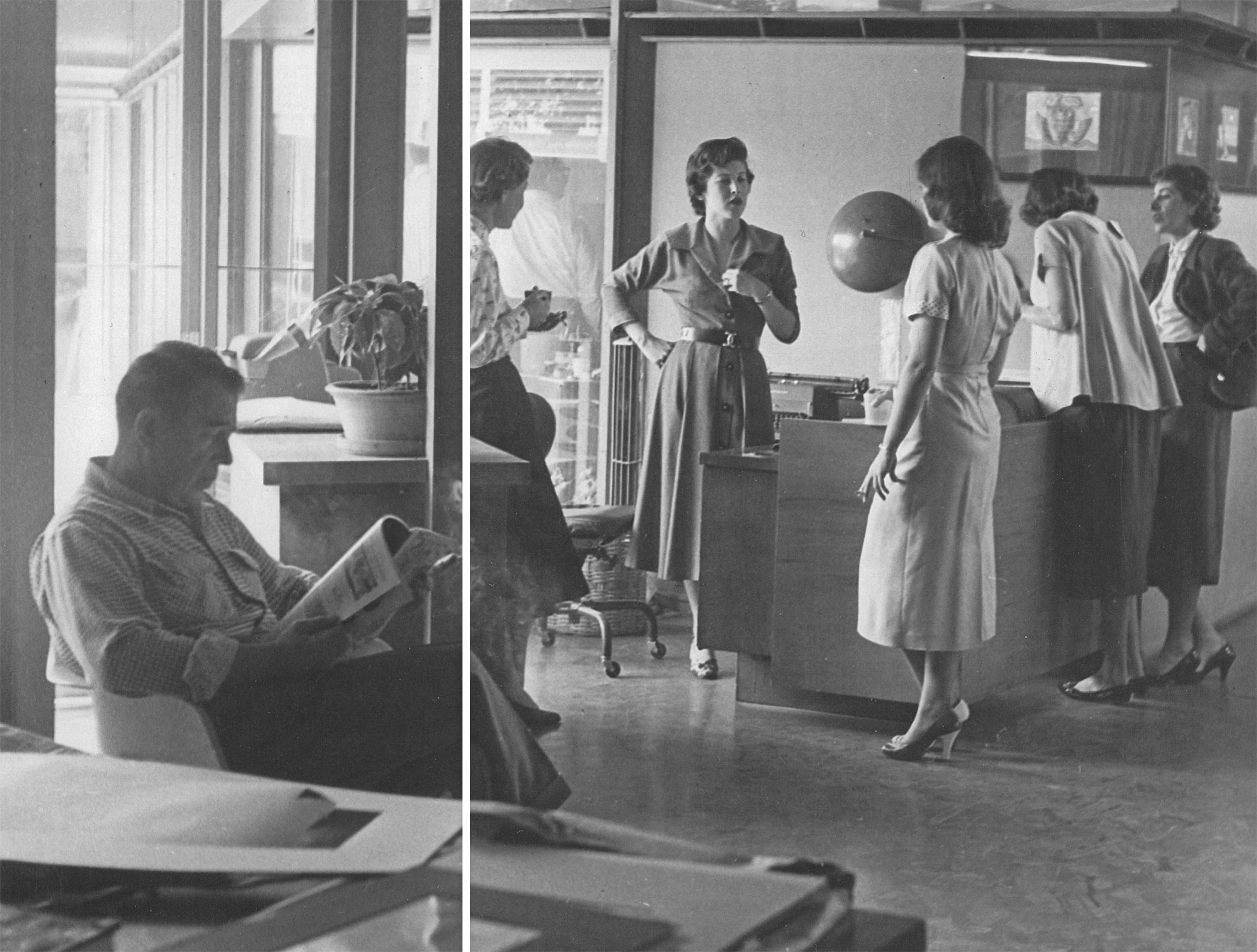
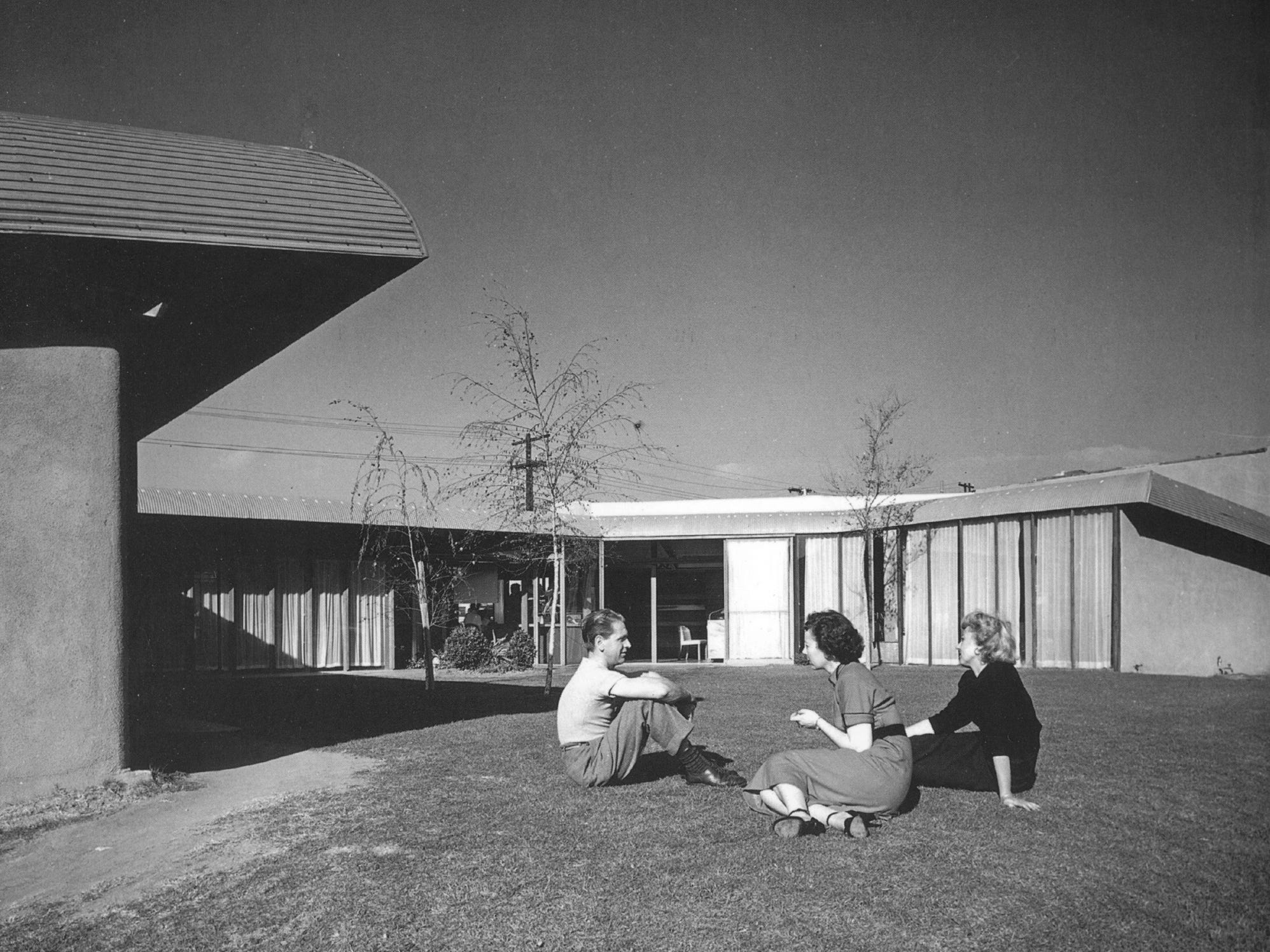
The most iconic UPA building sat in Burbank at 4440 Lakeside Drive. It was as new as the company’s spirit. “Far from being a monolith [like the Disney studio], it was a fluid and light structure,” wrote author Amid Amidi (now on Substack).4
That structure is gone today. But it’s still possible to step back into it — and into UPA’s other buildings. This is what Amidi’s book Inside UPA (2007) allows.
Inside UPA is a photobook about UPA’s spaces and the artists who worked in them. You might call it a companion to Amidi’s Cartoon Modern, which we scanned and posted with his permission in 2021. But a lot of people haven’t yet seen Inside UPA; its print run was small.
So, again with Amidi’s permission, we recently scanned it. And we’re sharing it for free in this issue. With the links below, you can download Inside UPA or read it via browser on the Internet Archive.
For a little more on UPA, and what this book contains, read on.
Read Inside UPA
Download Inside UPA (316 MB)
We’ve mentioned it before: UPA cartoons were different. It showed from an early stage in stuff like Hell-Bent for Election (1944), a pro-FDR film, and The Brotherhood of Man (1946), created to help a union integrate. That latter piece “rip[ped] the hide off Jimcrow,” in the words of The Daily Worker.5
The contrast with Disney’s work from the same period was visible. “Whereas Disney promoted a sort of small-town conservatism,” a writer once argued, “the artists of UPA were openly leftist and pro-union.”6
Backing up films like Brotherhood were forward-thinking visuals: modern design, limited animation and so on. The industry’s younger, often art-school-educated people were excited to test these things. Here’s David Hilberman, a UPA founder:
[Y]ou had designers who had art training who were beginning to push out and feel their oats. People who know who Picasso was and could recognize a Matisse across the room. And here they were at Disney, Warners, working with this really corny, cute stuff. They were ready. UPA was the first studio that was run by design people, and we were talking to an adult audience, to our peers. Not the family audience, not the kiddies. So given that the design just came out.7
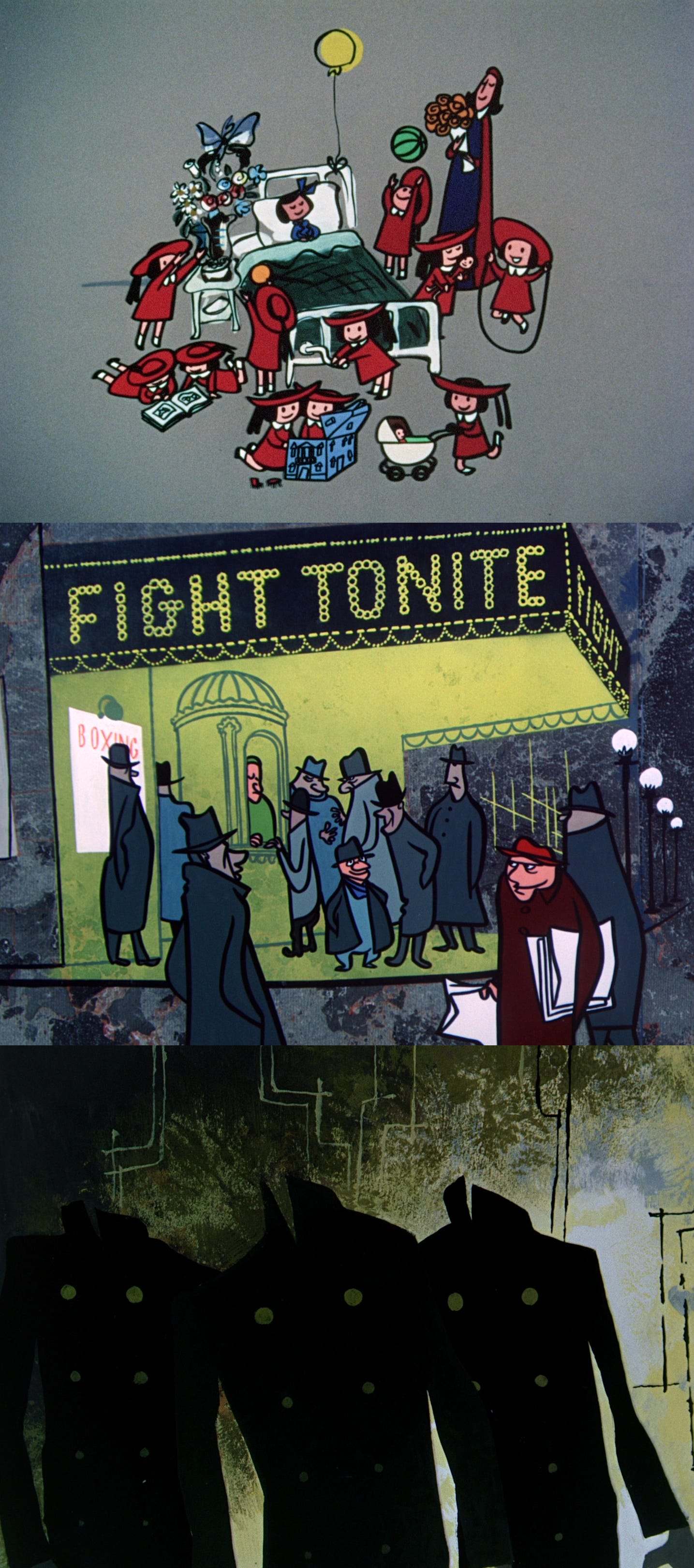
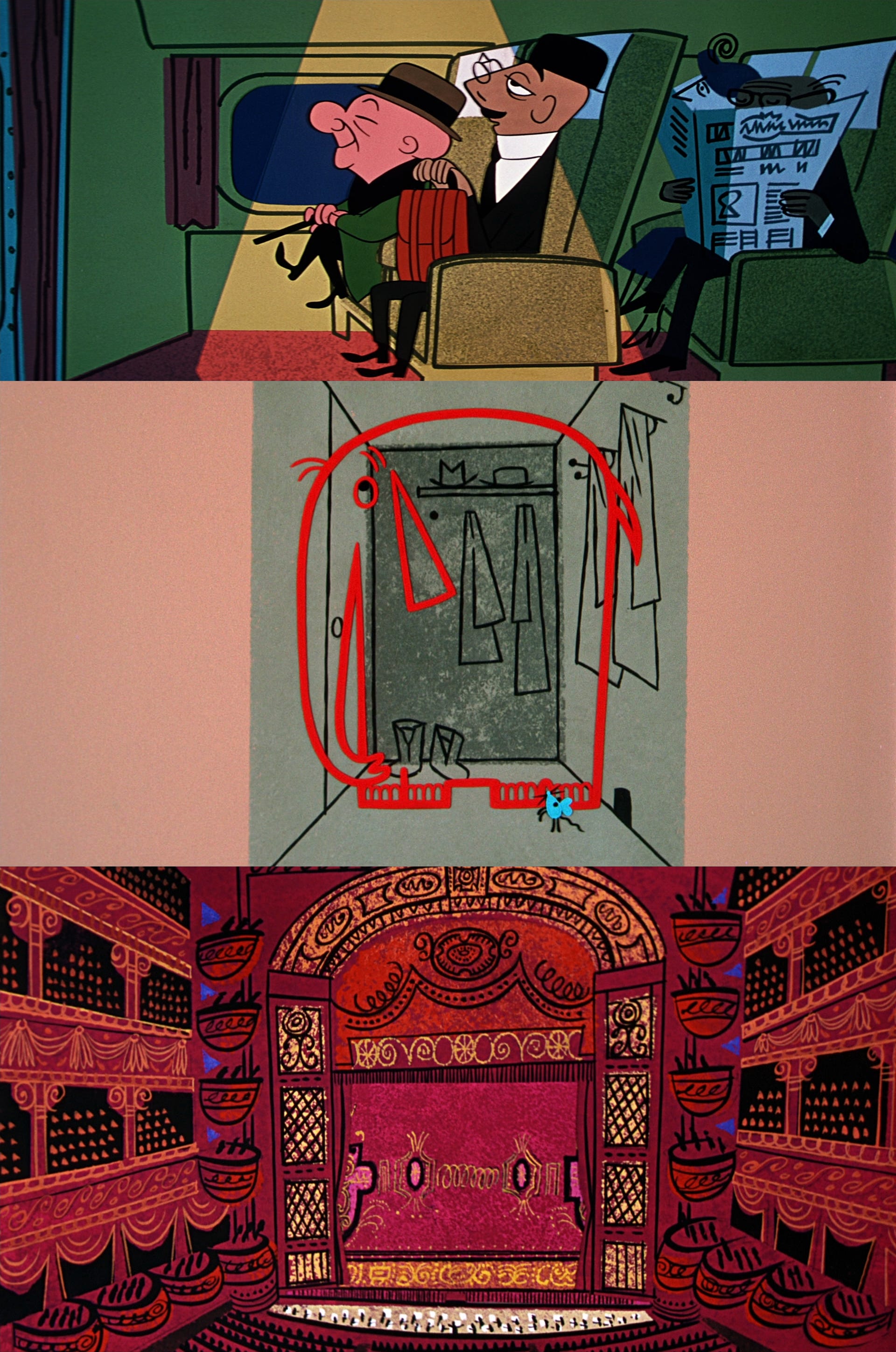
By the first half of the ‘50s, UPA pieces like Gerald McBoing-Boing, Rooty Toot Toot, Madeline and The Tell-Tale Heart stood with the best animated films in the world. That was true in their design, but also in their writing, motion and music.
UPA became a new model, copied worldwide, like Disney had been. “Without exaggeration,” wrote historian Giannalberto Bendazzi, “it can be inferred that the very idea of animation as an art form, in the United States as well as in other countries, became commonplace with UPA.”8
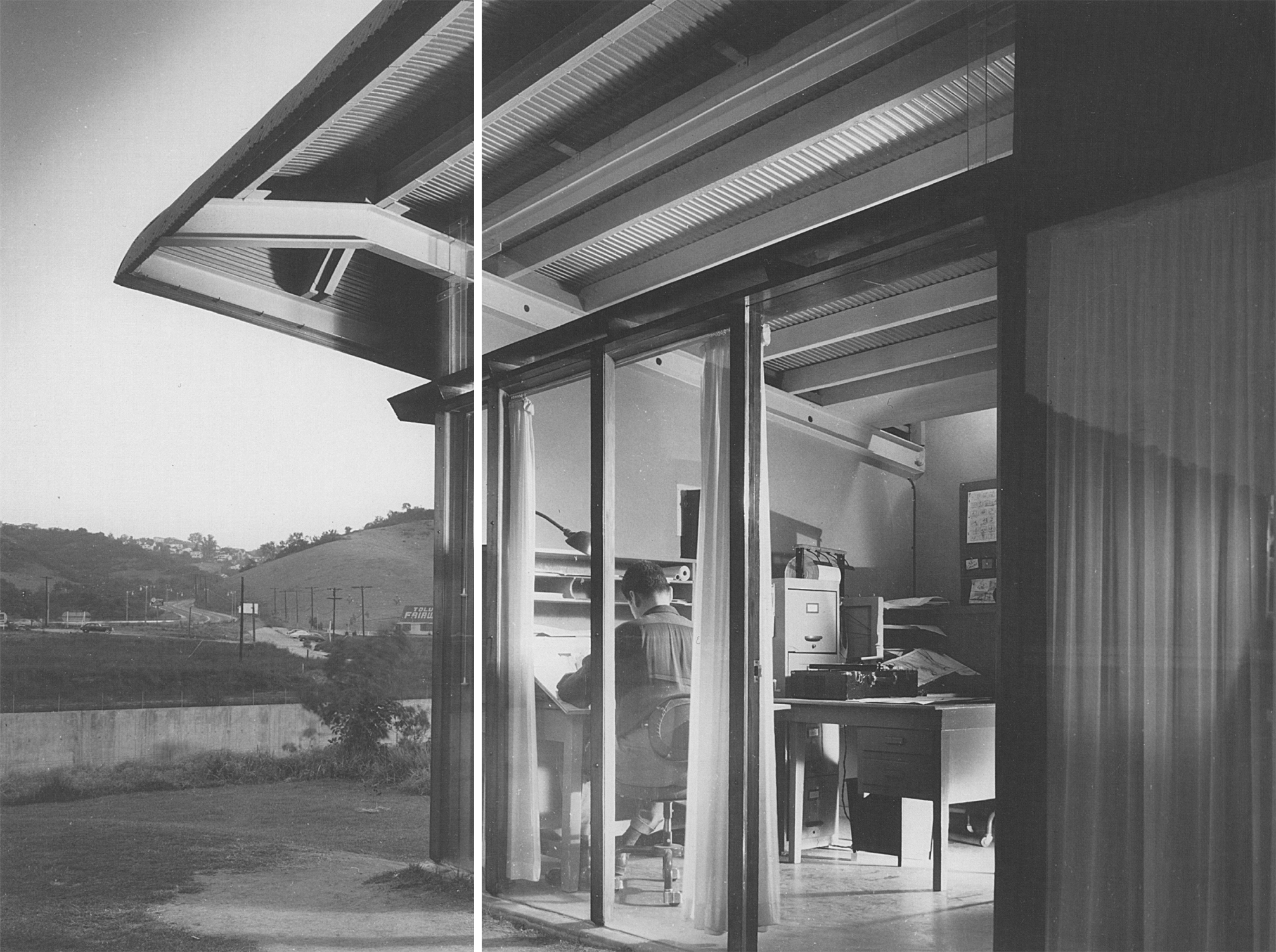
Most of the studio’s finest films were done at the Lakeside Drive location. It was built to order by John Lautner, a modernist architect. “[M]y challenge there was to get a decent artists’ working space for absolutely minimum money, and I did,” he said. The studio was constructed on the cheap — in the ballpark of $30,000, Lautner recalled. That would be well below $500,000 today.9
It was a “bright and optimistic” mid-century place.10 As it was underway, word got out that “all offices and artists’ rooms, with glass to the floor, open on a central patio, giving the illusion of working out of doors.” That was another contrast with Disney — a studio of “factory cubicles with artificial light and no view,” according to one director.11
Calling UPA a “plant” was a stretch. This single-story building, in which everyone was on the same level, felt like an artists’ space.
The UPA team moved to 4440 Lakeside Drive in early 1949, in the winter. Even though the windows weren’t fully installed yet, and the crew reportedly lit bonfires to stay warm, the vibe was good from the start.12 Once the building was finished, it was almost idyllic. Artist T. Hee recalled the experience this way:
There were lots of birds flying around, and we’d have our lunches out on the patio, and have music out there, with people bringing their instruments. There was a camaraderie. For lunch people would bring costumes, and we’d dance out there on the grass; everybody had a wonderful time.
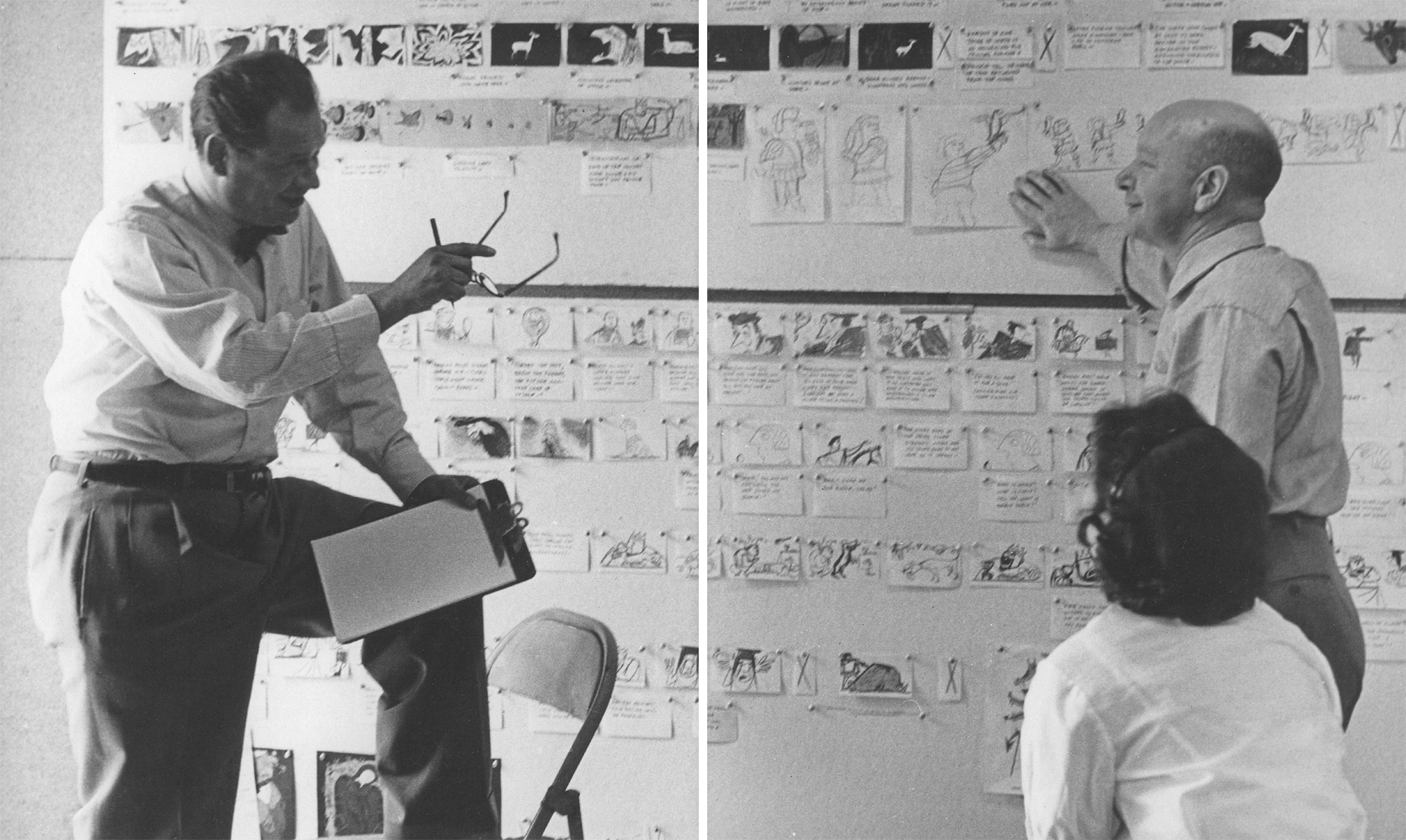
At UPA, there was no real house style. Its cartoons differed from each other — and from the wider animation world. Historian Adam Abraham noted that “the artists had the flexibility to give each seven-minute film its own look, appropriate to its subject.”13 The same was true of their sound and movement.
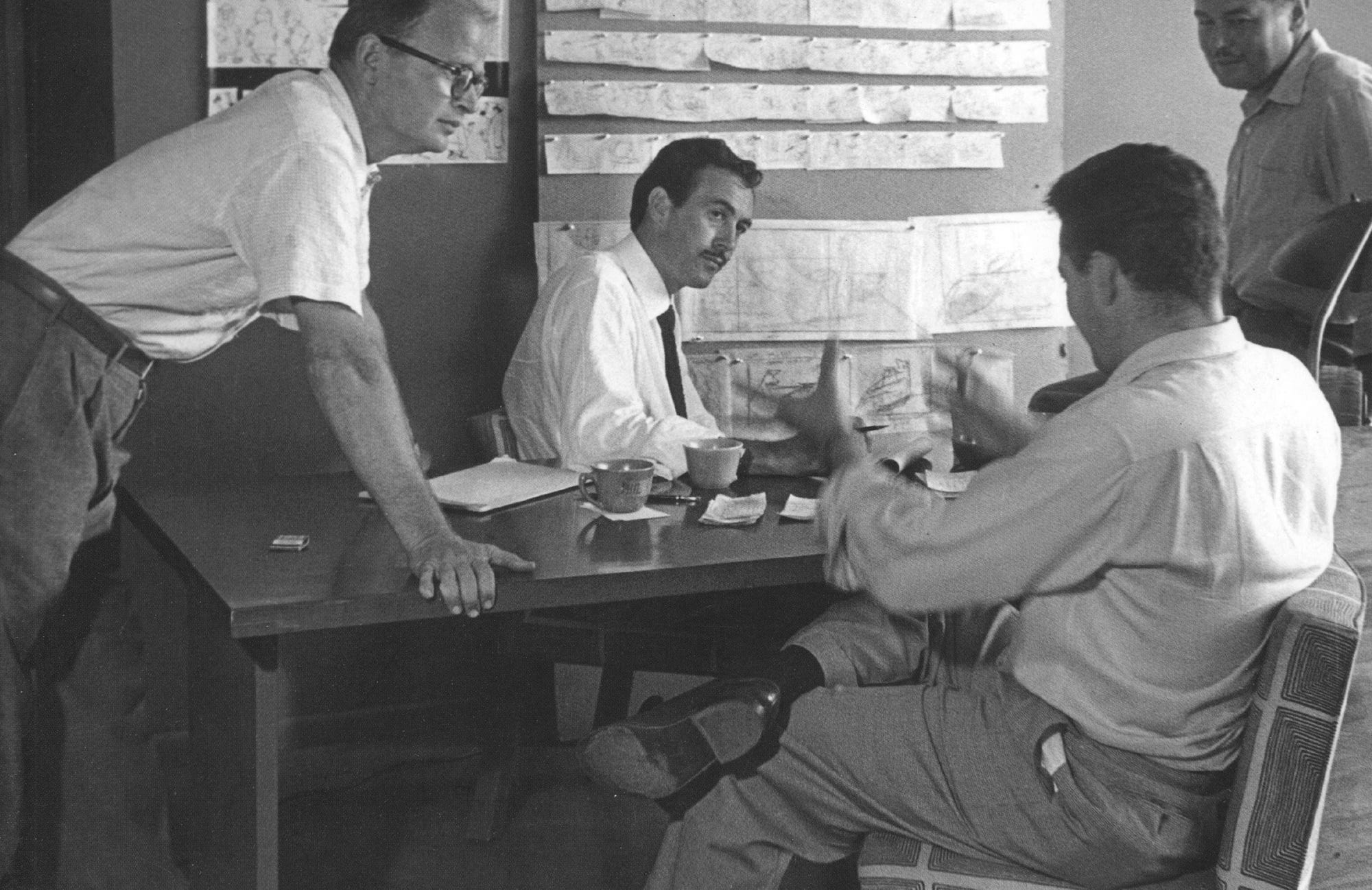
Legends worked at this place. Take Bill Melendez, who later oversaw A Charlie Brown Christmas. John Hubley was designing and directing. The grandmaster of limited animation, Bobe Cannon, was the team’s top animator. Even in the ‘90s, Genndy Tartakovsky was openly pulling from Cannon’s ideas (“I don’t think a week goes by that I don’t reference one of [UPA’s] films,” he said in 2012).14
The studio was popular, too. Films like Gerald McBoing-Boing, watched by some 25 million people by 1952, were magnetic. The Magoo films were a sensation. “[Our approach] hit audiences well; it was critically well received,” said John Hubley. “McBoing was a huge hit. The word started spreading that there was a new look to animation and Disney was finished!”15
Here’s The New York Times in the early ‘50s:
Staffed for the most part by artists with young minds and progressive ideas, whose talents extend beyond the field of the screen cartoon to the fine arts (many of them are exhibited in the galleries of Los Angeles and New York), the UPA studio out in Burbank, Calif., is a West Coast center of artistic industry. The whole place — a cheerful California ranch-type studio building — breathes freedom, imagination and taste.16
In many ways, UPA became the envy of the industry. Ward Kimball, one of Disney’s Nine Old Men, frequently stopped by. “I’d come over here to work in a minute if I could afford it,” he said.17
UPA was a leaner operation than the Disney studio; it couldn’t spend the fortunes that Walt Disney did. As Amidi wrote in Inside UPA, the studio “rarely paid above union scale and didn’t offer the amenities or glamour of the major studios like Disney or MGM.” But that didn’t seem to matter: “animation veterans and newcomers alike clamored for the opportunity to work there during the 1950s.”
In fact, two of UPA’s top animators had been top animators on Snow White: Art Babbitt and Grim Natwick. You see their mastery of the modernist approach in Rooty Toot Toot. Natwick argued that these films were “new, fresh, lively [and] lovable.” As he remembered, “I loved to work at UPA. They had a crazy system there, an idea, a community spirit. ... It really did innovate something there.”18
UPA opened a door. Throughout the ‘50s, many honed their craft at the studio’s Burbank and New York branches: Sterling Sturtevant (Magoo), Bill Scott and Shirley Silvey (Rocky and Bullwinkle), Roy Morita, Jimmy Murakami (When the Wind Blows), Gene Deitch (Munro), Tissa David — the list went on.
It should be said that the dream of UPA was relatively short-lived at the studio itself. The political climate put the team in a difficult spot.
Bill Melendez later wrote that UPA was “too liberal for the times” and for the “skunks” who ran Hollywood then. Its films, and especially the artists who made them, quickly grew suspect. The FBI was paying visits by the late ‘40s. When the military bought copies of The Brotherhood of Man for the denazification effort in Germany, after the war, it was a controversy. Those screenings were reportedly scuttled “out of fear of rubbing some Southern congressmen the wrong way.”19
As the Hollywood blacklist project ramped up, many at UPA were targeted for their affiliations on the left, real or imaginary. John Hubley lost his job. Then there was Phil Eastman, who’d worked on Brotherhood and Gerald and Magoo. Called before the House Un-American Activities Committee, Eastman refused to talk about any ties to communism — citing the Bill of Rights, and a distant relative persecuted in the Salem witch trials.
He spoke powerfully. Then a congressman quipped, “[T]here were no witches in Salem. There have been a number of communists identified in Los Angeles.” The hearing destroyed Eastman’s Hollywood career.20
Political persecution didn’t end UPA overnight. The studio kept doing great work — The Jaywalker (1956), for instance. But it was a blow, and other blows followed. Lots of people seen in Inside UPA were working elsewhere by 1960.
Even so, the spark ignited in 1943, which became a blaze at 4440 Lakeside Drive, kept going. As UPA’s people scattered, they took the experience with them.
John Hubley went indie; Bill Melendez became the driving force of the animated Peanuts specials. Phil Eastman switched to children’s books (as P. D. Eastman) and made Go, Dog. Go! and others. Rocky and Bullwinkle was stacked with UPA talent. Tissa David eventually turned into one of the world’s best animators. And, again, the list went on.
And their work at UPA left a mark on the wider world. You could see it in Disney films like One Hundred and One Dalmatians, and across the mid-century American industry.21 The impact of this new kind of animation was no smaller abroad — from Japan to Yugoslavia.
With Inside UPA, you can go inside the environment that allowed these great artists to grow in the first place. Like Amid Amidi wrote a few years ago:
Everyone who worked in the building remembered it fondly years later as a place where ideas flowed naturally and creativity flourished. … [T]oday, we can look back on it and remember that animation studios don’t need to look like generic office buildings where businesspeople work. Besides being functional for the purposes of production, an animation studio also has the capacity to be as beautiful, visually stimulating and creative as the work produced inside of it. Lautner’s UPA studio serves as a model for how it can be done.
We hope you’ll enjoy checking out Inside UPA.
2. Newsbits
Shanghai Animation Film Studio is about to release a feature in Chinese theaters: A Story About Fire. It’s a unique-looking production — see the trailer via Catsuka.
Cartoon Brew reports that the final episode of The Amazing Digital Circus, produced by Glitch in Australia, will premiere “on the big screen across the US in theaters nationwide.” (Also, new data shows that indie animation is overtaking studio projects for Generations Z and Alpha.)
The American artist Josh Fagin appeared on John Pomeroy’s channel to discuss his Spirit Jumper video and reveal the techniques behind it.
Junk World is a Japanese feature from last year, done in stop motion. Next month, it hits theaters in France.
An event in America: Los Angeles Filmforum shows the unusual collage films of Stacey Steers this coming Tuesday.
The venerable Russian studio Soyuzmultfilm is being pushed toward a “hybrid” GenAI pipeline.
In Britain, the BFI more than doubled the budget of its Global Screen Fund — which covers animation.
A Cuban animated film called Double Play recently had its premiere at Havana’s Cine Yara. Animados ICAIC put up photos of the event.
Mu-Ki-Ra, a full-length film from Colombia, will have its festival debut in a couple of days. You can see it in motion here.
Until next time!
Disney’s “plant” language appeared in Walt Disney: Conversations, among others. His speech is quoted in The Animated Man, used a few times.
See When Magoo Flew: The Rise and Fall of Animation Studio UPA, used throughout.
The quote comes from Cartoon Modern, a key source, while the story about the Soviet song appears in the book Drawing the Line.
There are questions about the latter one. Notably, Drawing the Line identifies the teller of the story, Jay Rivkin, as a “background painter” at UPA, although she doesn’t appear on Adam Abraham’s list of employees. Still, Rivkin was an artist active in Los Angeles by the late ‘40s and early ‘50s, and the Song of the Red Air Fleet had been sung by left-wing groups in America since the ‘30s — so major parts of the story do line up.
See Amidi’s piece about the UPA building in Cartoon Brew, cited several times.
From The Daily Worker (April 1, 1946).
From Cartoonist Profiles (December 1980).
Bendazzi wrote this in Animation: A World History (Volume 2).
From a long interview with Lautner.
Quote from When Magoo Flew.
The first quote comes from Top Cel (November 1948), while the second is John Whitney, quoted in Redesigning Animation: United Productions of America.
The detail about the fires comes from Animato (Winter/Spring 1999).
See this archived essay by Abraham.
Linda Simensky revealed Tartakovsky’s borrowings from Cannon in “The Revival of the Studio-Era Cartoon in the 1990s.” Tartakovsky’s quote comes from an archived Los Angeles Times article.
The New York Times published the Gerald viewership figures. Hubley’s quote comes from Animation: A Creative Challenge.
Quoted in Art Director & Studio News (April 1953).
See Cartoonist Profiles (March 1984).
From Cartoonist Profiles (March 1977).
These details come from Cartoon Research, Variety (October 27, 1948) and the book Hollywood Cartoons.
See the Los Angeles HUAC transcripts (March 23, 1953) and the book Forbidden Animation.
In Animato (Winter 1992), Walt Peregoy — one of the major contributors to Dalmatians’ look — said this about his personal approach:
The influence other than Disney’s was the original UPA group, which at that time was impressive, and was the other side of the coin. They were extremely contemporary, avant-garde. You could say they were really greatly influenced by the turn of the century, in international art design. That’s one studio I never worked for. But I was influenced by them.
Thank you, I always wanted to know what The inside looklike how they excute Thier drawings and processes, accompanied with resources, it's wonderful subject, 🔥📌
God please, let soyuzmultfilm just die with dignity