
It Always Amazes Us
Recapping our first half of the year.

Welcome! Glad you could join us for a new issue: a wrap-up of our first half of 2026.
Back in February, the Animation Obsessive newsletter reached its five-year anniversary. Running a publication for so long (with 73,000-plus readers signed up now) is never something we take for granted. We’ve been thinking a lot about how to keep things fresh and continue to push ourselves. It’s guided the work.
And we’re very lucky. Thanks to readers’ amazing kindness and support this year, we’ve gotten to do some of our favorite issues to date.
Today, we’re looking at a few standouts of the year so far. And, at the end, we’re rounding up great animation that’s come online for free in 2026. Let’s go!
Big moments
Most of the stories we publish begin as ideas on our list. A number of them linger on that list for years, as we gather research material and allow ourselves to bump into sources organically.
The first article of January, Miyazaki’s Sherlock, was stuck on the list for maybe four years. Finally pulling it together, in that last study-and-production rush, was tricky. But it’s a story we love, and one of our most popular of 2026 — right now, it ranks in the newsletter’s top 10.
Another addition to the top 10 this year: Designing One Hundred and One Dalmatians. The film has serious fans online, especially on Substack, but the response to this one still took us by surprise.
Even more surprising was How the Little Guy Moved, about the rotoscoping of Prince of Persia (1989). The newsletter tends not to cover video games, so we didn’t have high expectations — but the piece did extremely well, and the shout-out from creator Jordan Mechner was a highlight.1 We also cut a promo clip for social media that we enjoy rewatching:
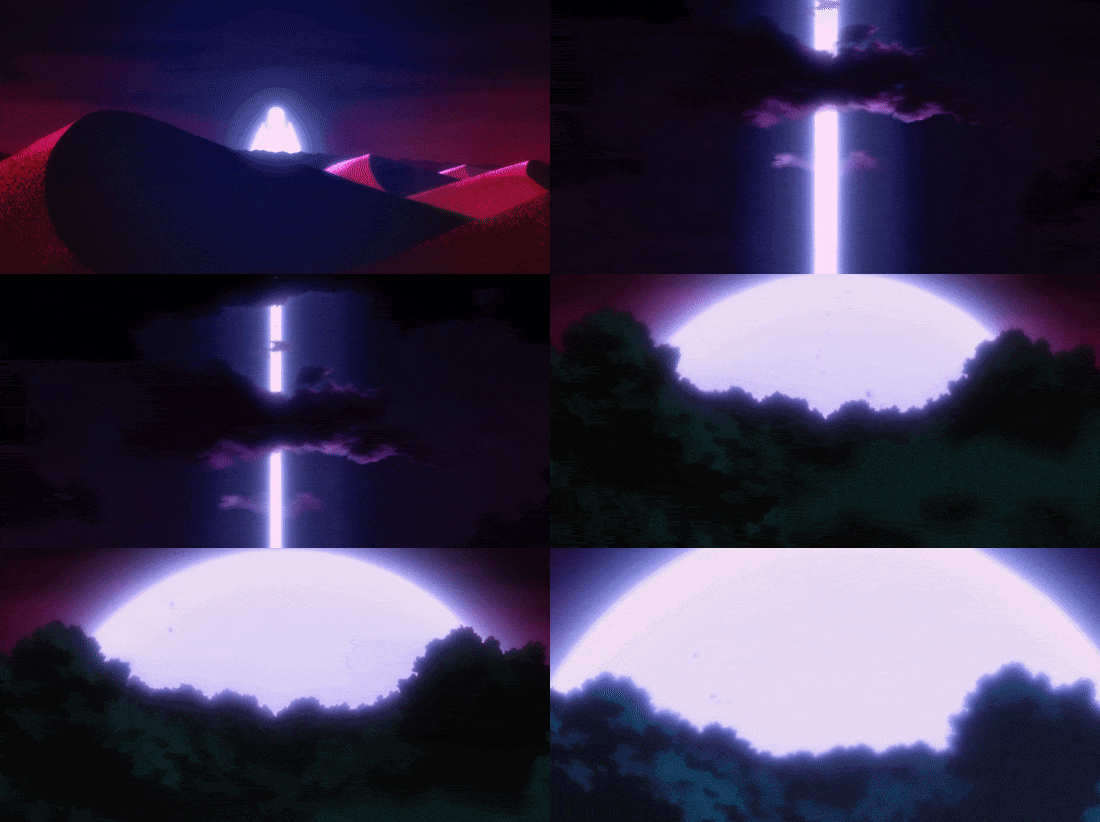
Yet the biggest surprise of the past six months was Dangerous Light. Artist Josh Fagin, or spktra, wrote it for us. The topic: that searing, glowing light you’ve seen in cel animation like The Secret of NIMH and Akira.
Josh uncovered its secrets and digitally recaptured its look for his music video Spirit Jumper (watch). His excellent article reveals what he learned. As he explained in one section:
My initial tests to recreate this, using stock glow effects, looked horrible. They were flat. They sat on top of the image instead of inside it. Researching how light falloff occurred made it clear why I was failing. Standard digital glows usually rely on a simple Gaussian blur, which is uniform. They fade gently and evenly, like a gradient. Real light is aggressive. It follows the inverse-square law. It stays hot and dense for a long time before falling off exponentially.
Josh’s technical breakdown spread farther than most could’ve foreseen — it was a lot of fun to watch.
It’s always a good time when an article takes off. For us, though, the big moments of 2026 haven’t only been about virality. Many come down to a specific person’s reaction, or to the feeling that we’ve done a particularly strong story, or to the completion of a longtime goal.
That last one was very much the case with Congolese Animation That Needs to Be Seen. For years, we’ve wanted to share the film Machini (2019) with more people — but it never came online. Finally, in January, we contacted the studio behind it, and the folks there kindly set up a free two-week release. The directors were generous enough to take time out for a few questions, too.
Getting everything in order was a six-month process, but this is the exact type of story we started the newsletter to publish. It was deeply meaningful to see the response. (As a note: the free release has ended, but Machini is on VOD now.)
Elsewhere in 2026, quite a few of our Thursday issues have been milestones for us. They’re for a smaller audience and allow us to tackle subjects that don’t always fit the Sunday slot.
For one, The Legends and Luxo Jr. is among our all-time favorite pieces in the newsletter — a fresh look at Luxo that aims to untangle decades of corporate myth-building, while reaffirming the film’s value. Similarly, The Serious Cartoon reassesses Animal Farm and the CIA’s infamous meddling in the project. And The Next in Line deals with the modern-day sabotaging of artist Anton Dyakov.
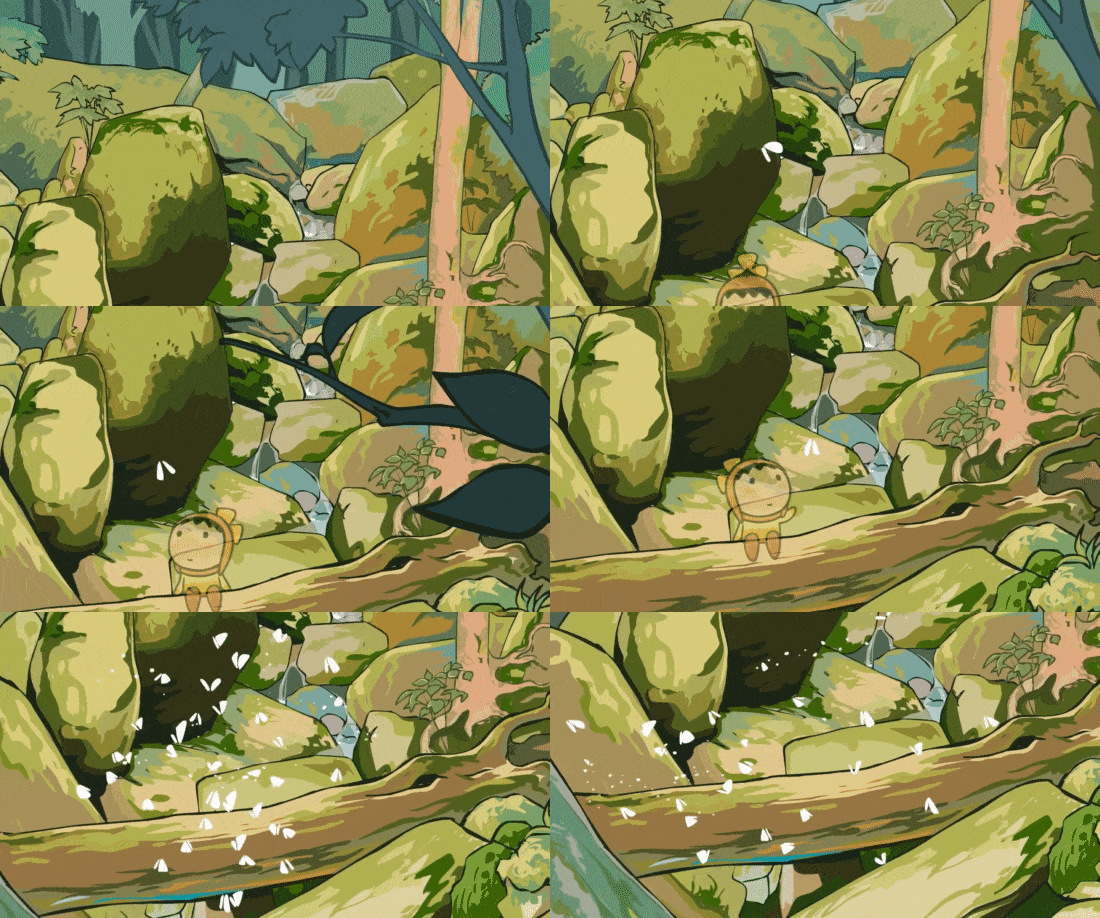
Meanwhile, The Roots of China’s Animation Boom links the old Chinese Flash scene to the recent rise of the country’s animation. Two pieces on Jiří Trnka — The Present in the Past and Exactly How They Did It — broke new ground in English coverage of his films. And Escaping Cartoons is a look at the emergence of the word “animation” in Japan. As we wrote:
When Japanese animation swept America in the ‘90s, the refrain that these films and series were “not cartoons” was hard to avoid. … A lot of work from Japan felt new. The loan word “anime” (a key tool of American marketers back then) came to represent animation amenable to many styles and tones, and stories that weren’t just for kids. …
Yet Japan wasn’t immune to limiting labels itself. A struggle had played out there, too — just a little bit earlier.
The exact terms were different, but the ideas were similar. Mid-century America had print cartoons and animated cartoons; in mid-century Japan, manga referred to both animation and comics. Notably, the word “manga” tends to get rendered in English as “cartoon.” And, decades ago, terms like manga eiga (cartoon movie) were in everyday use. They were loaded.
Animation Obsessive is a research project, ultimately. It’s a rare privilege to invest the time and the money (into old magazines, books and more) to chase stories like these. Digging and connection-drawing are the heart of our work, and we’re grateful that, almost five-and-a-half years in, we still get to do this.
A few others
During 2026, around 50 stories have run in the newsletter. For this recap, we whittled down the list to 21 that felt important to single out. This is the remainder of that list:
Stepping Inside UPA — sharing the entirety of the book Inside UPA, with the author’s permission.
The Character Designs of Mulan — on the brilliant work of Chen-Yi Chang.
Truth and the Budget Have the Last Word — an intro and viewing guide to the films of Faith and John Hubley.
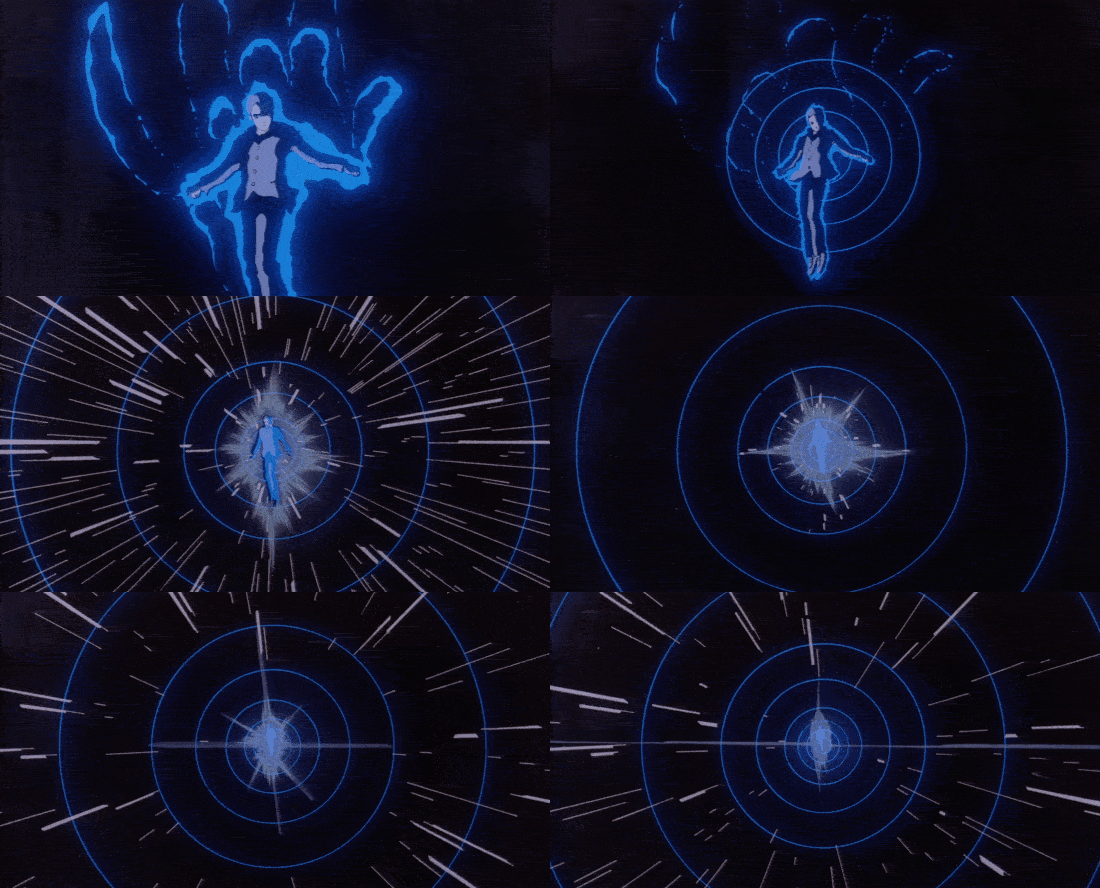
Pixar’s Believable People — on early attempts to make credible characters in 3D computer graphics.
The Music of Samurai Champloo — about the competition between image and music in that series.
The Visualist — a study of the filmmaking style of Rintaro.
The Origin of Yasuji Mori — about an artist who defined Japanese animation.
Making Artists — on the impact of Michael Sporn’s studio in New York.
More Than Moving Drawings — inside the movie magic and special artistic tricks that powered early Disney features.
The final four of those were released as paywalled Thursday issues. For the next few weeks, though, we’re unlocking More Than Moving Drawings for all readers. If you haven’t checked it out before, we hope you’ll enjoy it.
Closing out
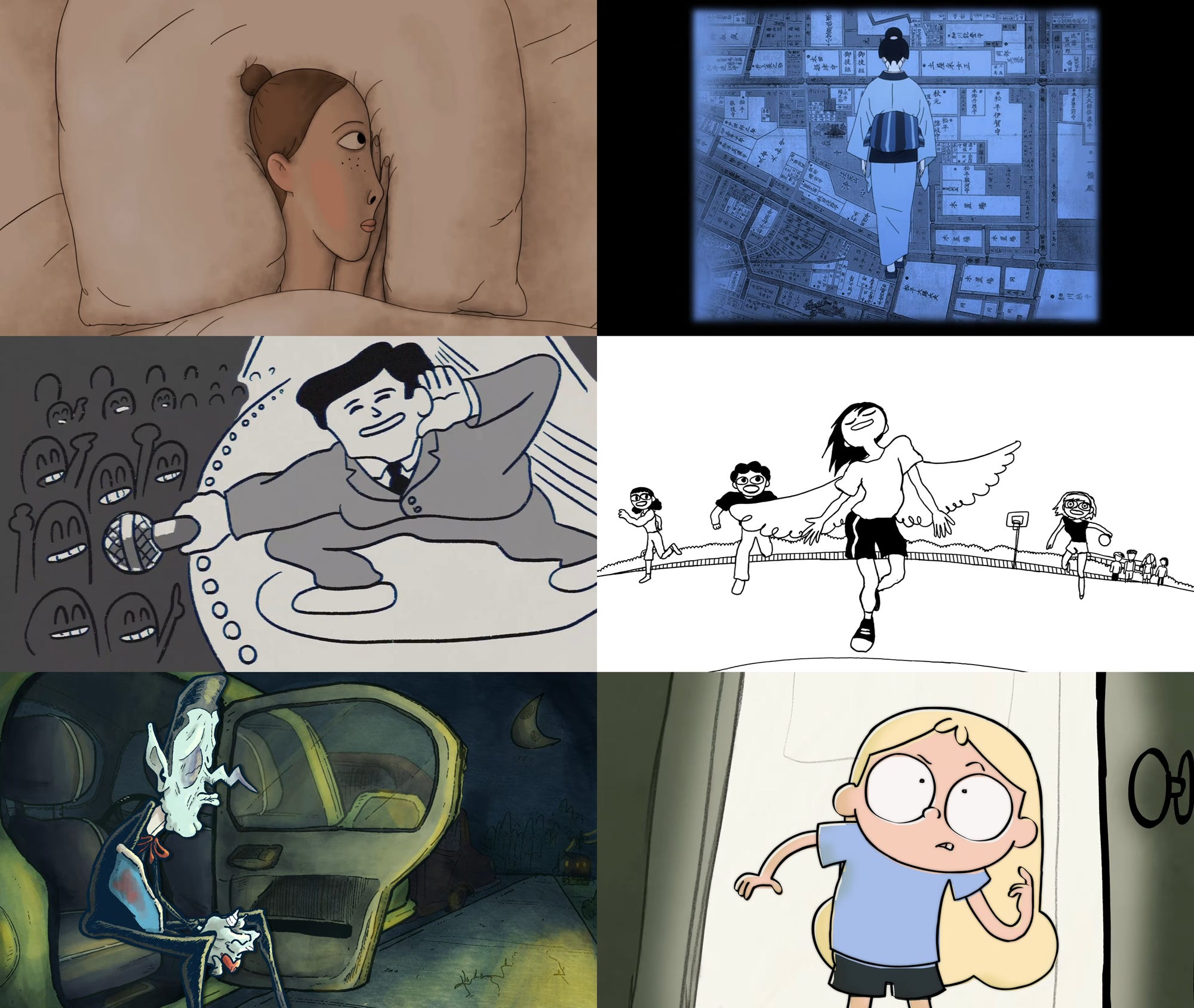
Occasionally, we get asked to make lists of animation we like. As we reach the end of the recap, it seems fitting to mention six remarkable animated films and music videos that hit YouTube during the past six months.
Most were made this year. Not all will be to everyone’s taste, and (as a note) some contain adult content. But each of them speaks to us, in one way or another:
Anton Dyakov’s BoxBallet (2020). One of the great short films of the decade, finally available to everyone.
AC-bu’s There’s Always Tomorrow (2026). For us, this hand-drawn music video stands with the group’s best-ever work.
Abby Mills’s My Older Brother Bought an Anime Figurine (2026). The full title is much longer and more aggressive, which matches this barbed, thoughtful student film — our favorite we’ve seen from CalArts this year.
Émilie Tronche’s it stings a little though (2026). Another music video we keep rewatching: its animation is deceptively simple, and the timing plays very creatively with the track.
Austin Kimmell’s Dracula 2: The Ride Home (2026). An adult comedy full of really, really funny animation — Kimmell is a filmmaker to watch.
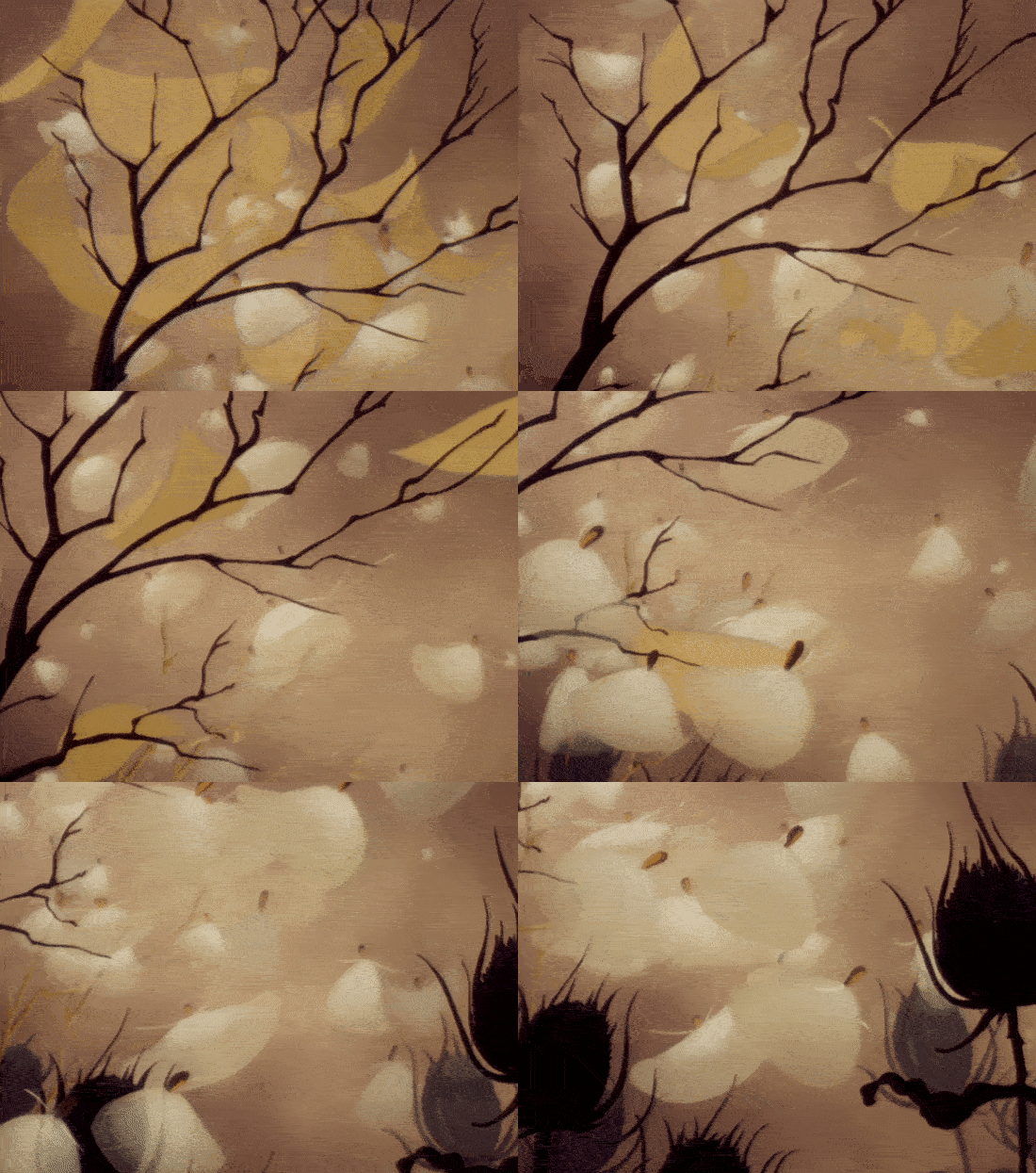
Rintaro’s Nezumikozo Jirokichi (2023). A reminder that Rintaro is one-of-one as a creator of film images. Even this far into his career, he’s still got it.
Pieces like these reveal how many possibilities animation still has. Samey GenAI slop videos take up tons of space, but there’s original, different-thinking work being done out there. That’s the future that excites us.
With another half-year of the Animation Obsessive newsletter wrapped, our regular July break is about to begin. You’ll receive our next issue on July 26th.
These breaks are partly about relaxing but more about getting ready. Because of our twice-weekly schedule, managing time is a challenge here — and certain articles take too long to prep and research in between deadlines. Breaks allow us to do that extra work, and to avoid running out of new material.
If you’re looking for an animation newsletter to read in the meantime, check out re:frame, Smear Frame and Watermelon Rind Boats. Also, Jamie Lang has been doing fantastic work at Cartoon Brew since taking up the torch as its new owner.
It’ll be exciting to get things done over the next few weeks — there’s a lot in the plans. Our thanks to everyone who’s been reading the newsletter this year, and everyone who’s sent kind messages or invested into this project. It always amazes us. We’ll be back with more before long!
Until next time!
To another great 6 months!